


What's Happening?
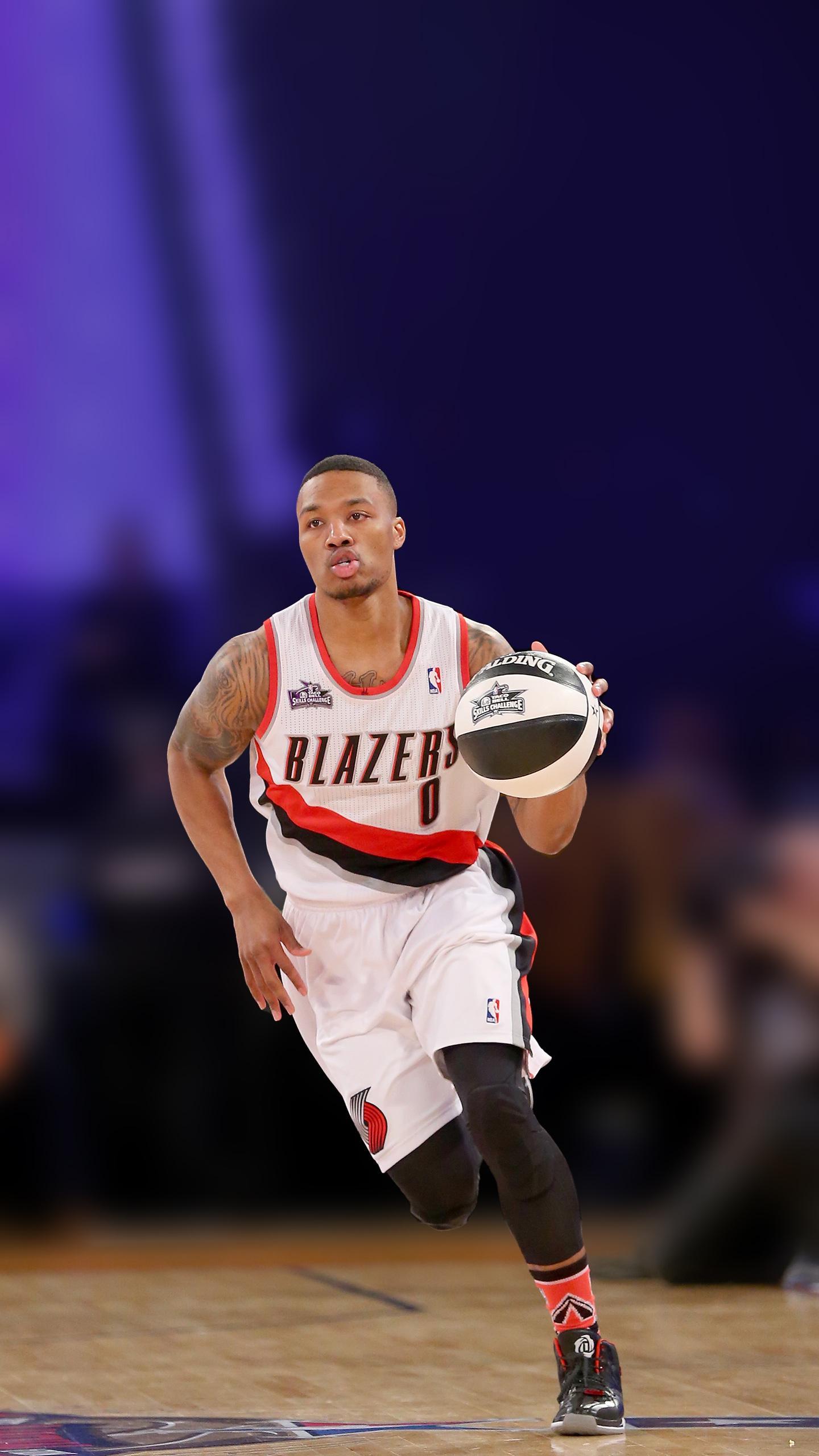
Damian Lillard, the star guard for the Portland Trail Blazers, is evolving into a more complete two-way player, significantly improving his defensive capabilities this season. This transformation is largely
attributed to the increased offensive depth of the Trail Blazers' roster, which has reduced Lillard's offensive burden. With more offensive weapons on the team, Lillard no longer feels the need to carry the scoring load on every possession, allowing him to expend more energy on the defensive end. He has demonstrated this commitment through plays like diving for loose balls and making crucial blocks and steals. Lillard's defensive statistics have improved, including nine steals in 14 games and the fewest fouls per game of his career. This shift marks a significant change from his previous reputation as primarily an offensive threat and a defensive liability, a label he has always sought to shed.
Why It's Important?
Damian Lillard's evolution into a two-way player is crucial for the Portland Trail Blazers' aspirations and could redefine his legacy in the NBA. For years, Lillard has been celebrated for his offensive prowess and clutch performances, but his defensive shortcomings were often cited as a limitation. By becoming a more engaged and effective defender, Lillard elevates his overall impact on the game, making the Trail Blazers a more formidable and balanced team. This development also highlights the strategic importance of roster construction; providing star players with sufficient offensive support can free them to contribute more in other areas of the game. This shift could inspire other offensively dominant guards in the league to focus more on their defensive contributions, potentially raising the overall defensive standard across the NBA. For the Trail Blazers, a two-way Lillard significantly increases their chances of competing at a higher level, especially in crucial playoff matchups where defensive stops are paramount.
What's Next?
Lillard will continue to refine his defensive game as he fully recovers from his Achilles injury and regains his offensive rhythm. The Trail Blazers will likely continue to leverage their roster depth to maintain Lillard's reduced offensive burden, allowing him to sustain his defensive effort. The team's coaching staff will focus on integrating Lillard's improved defense into their overall defensive schemes, potentially leading to more versatile and effective strategies. As Lillard's two-way play becomes more consistent, it could influence future roster decisions, with the team potentially prioritizing players who complement his enhanced defensive capabilities. The ongoing development of the team's younger players and their ability to consistently contribute offensively will be key to sustaining Lillard's defensive freedom and the team's overall success.
Beyond the Headlines
Lillard's transformation reflects a broader trend in the NBA where star players are increasingly expected to contribute on both ends of the floor to achieve championship success. This shift challenges the traditional notion of specialized offensive or defensive players, pushing athletes to develop a more comprehensive skill set. For Lillard, this personal evolution also speaks to his leadership and commitment to winning, demonstrating a willingness to adapt his game for the betterment of the team. It underscores the idea that even established superstars can evolve and add new dimensions to their play late in their careers. This development could also influence how player value is assessed in the league, with a greater emphasis placed on well-rounded contributions rather than just offensive statistics. Lillard's journey serves as an example of how strategic team building and a player's dedication can lead to significant individual and collective improvement.