



What's Happening?
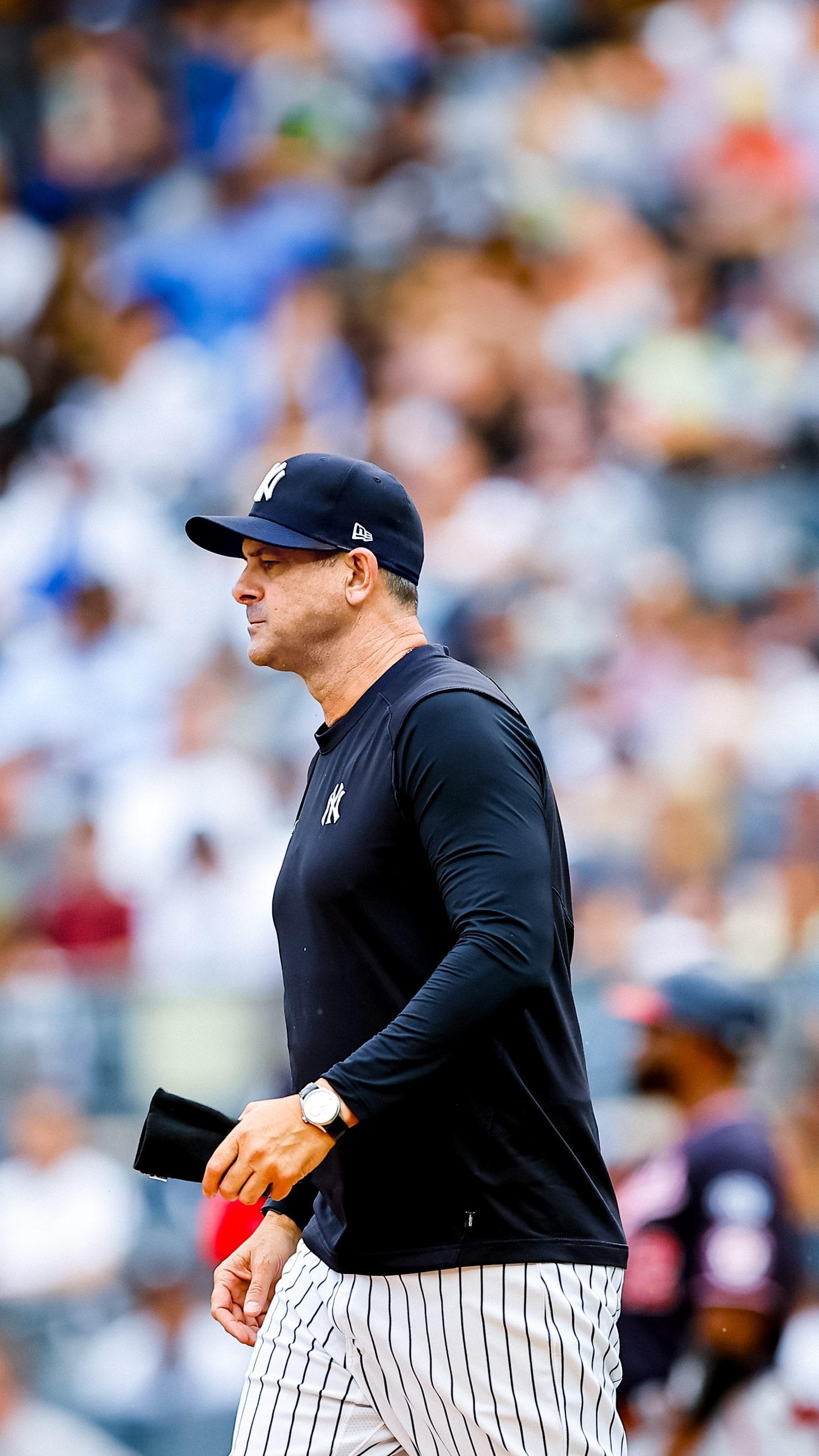
New York Yankees manager Aaron Boone and general manager Brian Cashman are under renewed scrutiny regarding their shared decision-making authority following another postseason disappointment. Despite a 93-win
season and reaching the 2026 playoffs, the Yankees were eliminated after three consecutive losses to the Tampa Bay Rays in the American League Division Series. This marks the ninth season of regular-season success but continued postseason frustration for the franchise, which has not won a championship since 2009. Yankees broadcaster Michael Kay recently fueled the debate, suggesting that modern managers, like Boone, often act as 'middle managers' executing orders from the front office rather than having full control. Kay highlighted Boone's lack of prior managerial experience before being hired by Cashman after the 2017 season, contrasting it with the traditional view of an independent field manager. Cashman remains responsible for player acquisitions and organizational direction, while Boone handles daily clubhouse, lineup, and in-game duties, leading to questions about the division of strategic authority.
Why It's Important?
The ongoing debate about the division of strategic authority between the Yankees' manager and general manager has significant implications for the team's performance and accountability. The Yankees' consistent postseason failures, despite regular-season success, raise questions about the effectiveness of their current organizational structure. If the manager's role is primarily to execute front-office directives, it blurs the lines of responsibility when the team underperforms in critical moments. This dynamic affects not only the team's ability to win championships but also fan perception and the long-term stability of the leadership. The situation highlights a broader trend in MLB where analytics-driven front offices increasingly influence on-field decisions, potentially diminishing the traditional role of the field manager. For the Yankees, a franchise with high expectations, clarifying this authority is crucial for future success and for addressing the persistent championship drought.
What's Next?
Aaron Boone is set to enter the final guaranteed year of his Yankees contract in 2027, while Brian Cashman will begin his third decade leading New York's baseball operations, having agreed in principle to a new contract. Owner Hal Steinbrenner has publicly defended Boone's performance, attributing the recent playoff failure to the offense. This continuity at the top means the same leadership tandem will be tasked with delivering a different postseason result. The ongoing discussion, amplified by Michael Kay's remarks, will likely intensify as the 2027 season approaches, with stakeholders closely watching how the Yankees navigate their strategic decisions and assign responsibility, especially if postseason struggles persist. The team's ability to adapt its decision-making process and achieve championship success will be a key focus.
Beyond the Headlines
The Yankees' situation reflects a broader philosophical shift within professional sports, particularly baseball, regarding the balance of power between traditional field management and analytics-driven front offices. The 'middle manager' concept, as described by Michael Kay, suggests a potential erosion of the manager's autonomy, raising ethical questions about leadership, accountability, and the human element in a data-driven environment. This trend could lead to a redefinition of what constitutes a successful manager in modern sports, favoring those who can effectively translate analytical insights into on-field execution rather than those with extensive traditional managerial experience. The long-term implications include potential changes in how managerial candidates are evaluated and hired across the league, and how organizations balance data-driven strategies with the nuanced, real-time decision-making required in competitive sports.