



What's Happening?
Indiana Fever star Caitlin Clark has publicly addressed the team's shortcomings following their first-round playoff exit, emphasizing that the primary issues were defensive performance and lack of bench
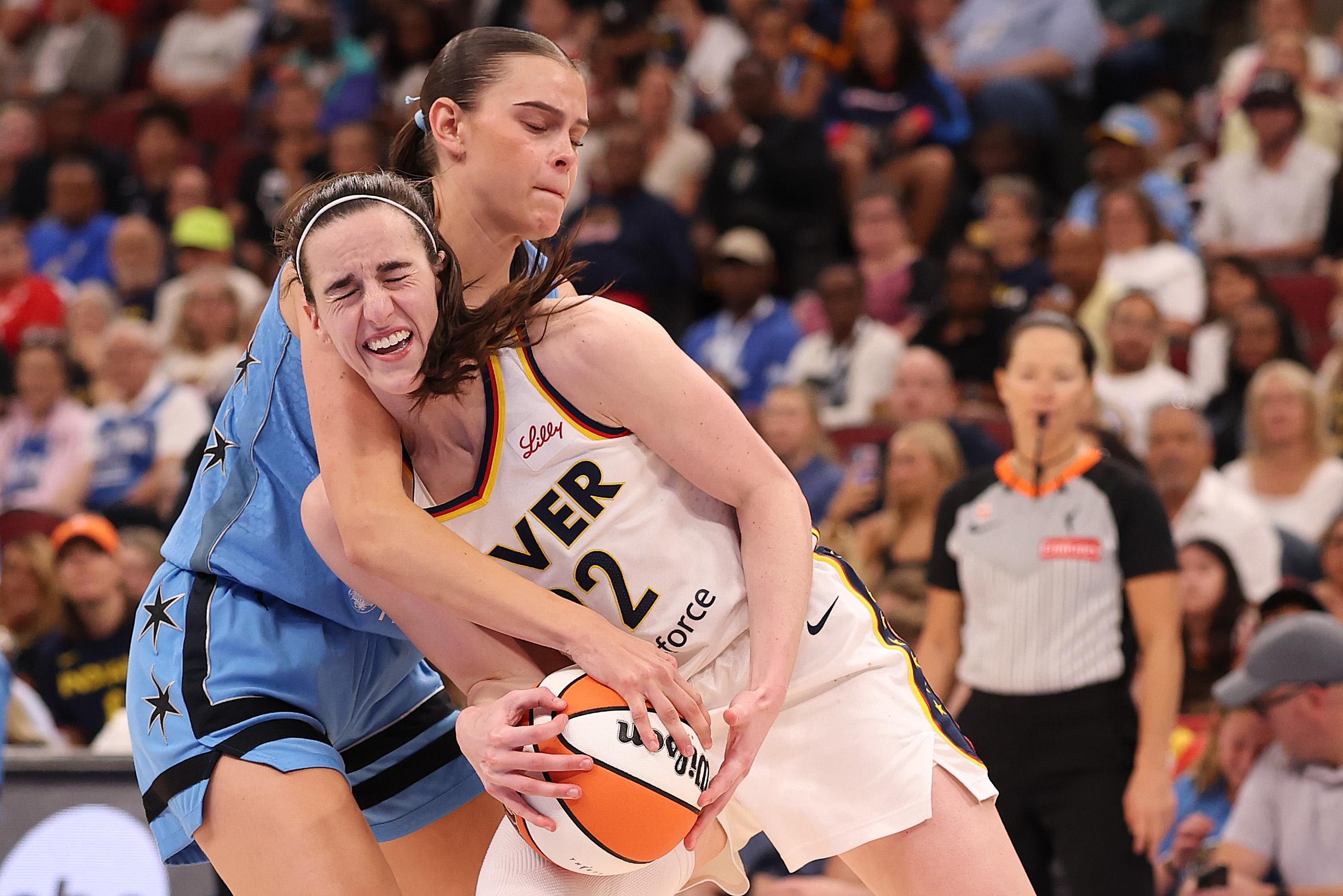
depth, not offense. During her third appearance on the 'New Heights' podcast with Travis and Jason Kelce, Clark stated that despite the Fever achieving a franchise-record 28-16 season, their defensive struggles ultimately led to their early playoff elimination. The team led the league in offensive metrics, averaging 96.0 points per game and a 117.0 offensive rating, with Clark and Kelsey Mitchell combining for a record-setting 47.0 points per game. However, they allowed 90.4 points per game and ranked ninth out of 15 teams defensively. Clark highlighted the need for a strong perimeter defender and more flexible, five-out oriented shooters to improve spacing and overall team performance. The Las Vegas Aces defeated the Fever 94-83 in Game 3 of their playoff series, with A'ja Wilson scoring 36 points, underscoring the defensive challenges faced by Indiana.
Why It's Important?
Caitlin Clark's candid assessment of the Indiana Fever's performance carries significant weight for the team's future and the broader WNBA landscape. As one of the league's most prominent players, her insights can influence team management decisions, particularly as the Fever search for a new general manager. Her call for improved defense and bench depth signals a strategic shift that could impact player acquisitions and development. The emphasis on a 'five-out' offense and more shooters reflects a league-wide trend towards versatile, high-scoring basketball, which could shape how other teams construct their rosters to compete. For the Fever, addressing these issues is crucial to capitalize on their offensive talent and translate regular-season success into deeper playoff runs. The potential departure of Kelsey Mitchell, who is headed for unrestricted free agency, further complicates the team's roster construction and highlights the urgency of finding complementary players who can contribute defensively and offensively.
What's Next?
The Indiana Fever faces critical decisions in the upcoming offseason, particularly with the search for a new general manager after Amber Cox's firing. This new GM will be tasked with addressing the defensive and depth issues highlighted by Caitlin Clark. A key challenge will be navigating Kelsey Mitchell's unrestricted free agency, as her potential departure would necessitate finding a new backcourt partner for Clark. The team will likely prioritize acquiring a strong perimeter defender and additional shooters to enhance their 'five-out' offensive strategy and improve floor spacing. The league's new collective bargaining agreement, which mandates carrying 12 players, will also influence roster decisions, emphasizing player development and strategic cap management. The success of these offseason moves will determine whether the Fever can build on their record-setting offensive season and become a more formidable contender in the WNBA.
Beyond the Headlines
Caitlin Clark's public commentary on team strategy and roster construction reflects a growing trend of star athletes using their platforms to influence organizational direction. This level of engagement from a high-profile player like Clark can empower other athletes to voice their perspectives on team needs, potentially leading to more player-driven decision-making in professional sports. Ethically, it raises questions about the balance between player input and management autonomy, and how teams can best integrate valuable feedback from their stars without undermining hierarchical structures. Culturally, Clark's remarks underscore the evolving nature of basketball, with a clear shift towards versatile, skilled players who can contribute on both ends of the court. This emphasis on 'five-out' offenses and defensive versatility could influence youth basketball development and coaching philosophies, shaping the next generation of players to meet these evolving demands.