


What's Happening?
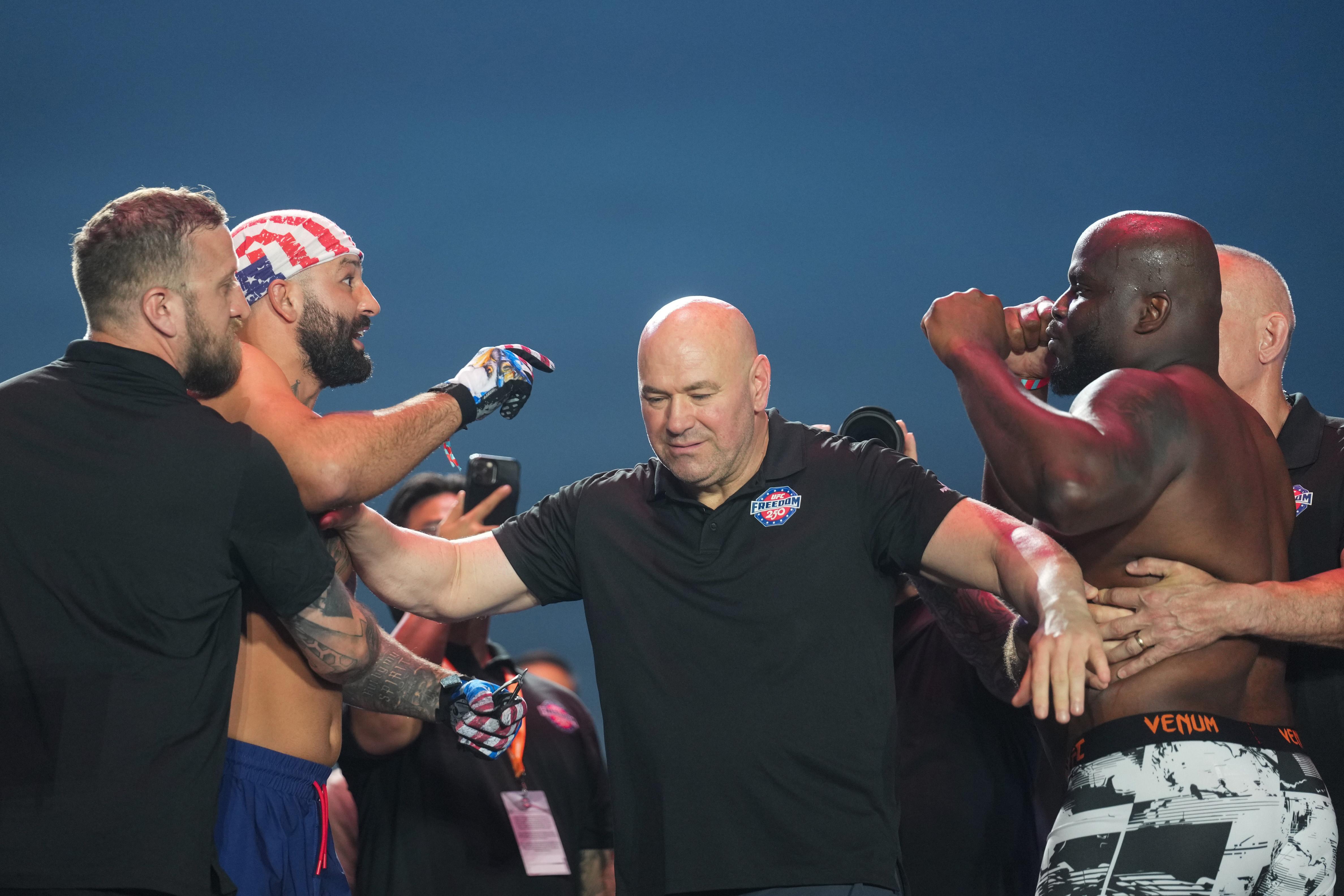
UFC CEO Dana White has publicly addressed a potential boxing match with Eddie Hearn, a prominent boxing promoter. White, who previously dismissed the idea, now states he would agree to fight Hearn under
one condition: Hearn must pick any gym, and the fight would occur for free, without a large production. This comes after reports that KSI's Misfits Boxing offered $10 million to each of them for a boxing fight, an offer White claims he did not receive directly. White, 57, acknowledged his age and lack of recent boxing experience, contrasting it with Hearn's lack of boxing background. The rivalry between White and Hearn intensified after White's entry into boxing with Zuffa Boxing, leading to Hearn's criticisms of UFC fighter pay and challenges to White.
Why It's Important?
This public exchange between two influential figures in combat sports highlights the ongoing rivalry between the UFC and traditional boxing, particularly concerning fighter pay and promotional strategies. Dana White's willingness to consider an unsanctioned, no-cost fight with Eddie Hearn, despite his age and lack of recent boxing experience, underscores a personal dimension to their professional disagreements. It also serves as a marketing tactic, drawing attention to both individuals and their respective organizations. For fans and stakeholders, this public challenge adds a layer of entertainment to the competitive landscape of combat sports. The rejection of a multi-million dollar offer for a sanctioned fight in favor of a 'for free' gym bout also speaks to White's persona and his approach to resolving disputes.
What's Next?
The ball is now in Eddie Hearn's court to respond to Dana White's challenge. If Hearn accepts White's condition, a private, unsanctioned fight could potentially occur, though details regarding its logistics and whether it would be publicly documented remain unclear. If Hearn declines, the public back-and-forth between the two promoters is likely to continue, further fueling their rivalry. This situation could also prompt other promoters or fighters to weigh in, adding more layers to the ongoing discourse about the state of combat sports and the personalities driving it. The focus will remain on whether this public dare translates into any actual physical confrontation or if it remains a war of words.
Beyond the Headlines
This public challenge transcends a mere personal spat, reflecting deeper tensions within the combat sports industry regarding promotional dominance and financial models. White's emphasis on a 'free' fight, devoid of the commercial spectacle, could be interpreted as a critique of the pay-per-view culture and the perceived over-commercialization of some boxing events. It also subtly reinforces the 'tough guy' image often associated with the UFC and its leadership. The interaction highlights how personal rivalries among executives can become a significant part of the public narrative in sports, influencing fan engagement and media coverage. It also raises questions about the ethical implications of promoting unsanctioned fights, even if framed as personal challenges, given the potential for injury and the influence these figures wield.