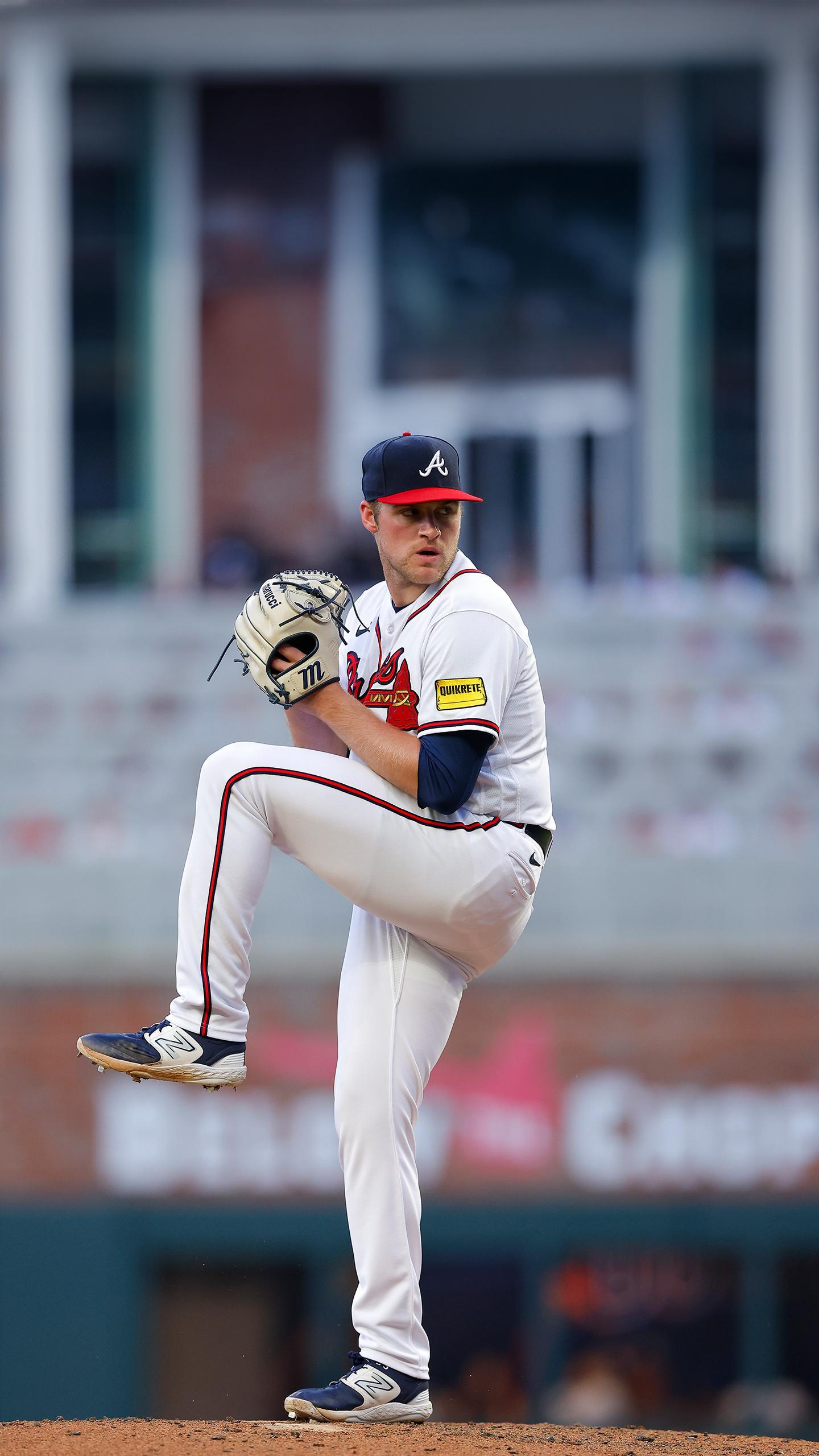




What's Happening?
Atlanta Braves third baseman Austin Riley is looking ahead after a challenging 2026 season, with certain metrics offering hope for a rebound. Despite a 'roller coaster' year, Riley demonstrated strong
underlying statistics, including a hard-hit rate in the 82nd percentile and a barrel rate in the 74th percentile. His average exit velocity stood at 91.3 mph, placing him in the 84th percentile. Post-All-Star break, his batting average on balls in play (BABIP) improved to .336, aligning with his All-Star season performances. Furthermore, his OPS increased by nearly 100 points, from .618 to .711, and his slugging percentage rose from .329 to .417. Defensively, Riley also showed improvement, posting a plus-2 in outs above average (OAA), a career high. These figures suggest that while his overall offensive output was not what was expected, there are positive indicators for his future performance.
Why It's Important?
Austin Riley's performance is crucial for the Atlanta Braves, given his long-term contract extending until after the 2032 season, with a club option for 2033, valued at $22 million per season. His ability to return to form directly impacts the team's competitive strength and financial investment. The metrics indicating strong contact quality and defensive improvement suggest that his struggles might be partially attributed to bad luck or areas that can be addressed with plate discipline adjustments. If Riley can consistently curb his high strikeout rate (31.9%) and whiff rate (31.9%), which are significant concerns, he could unlock his full potential. His long-term presence on the team means that any improvement in his play would be a substantial boost for the Braves, validating their significant financial commitment and enhancing their chances for future success.
What's Next?
The focus for Austin Riley and the Atlanta Braves will be on improving his plate discipline in the upcoming season. While his walk rate rebounded in 2026, the casualty was balls in play, indicating a need to reduce chases and strikeouts. Riley himself has acknowledged the need to simplify his approach, stating that he was 'trying to fix too many things.' The team will likely work with him to translate his strong underlying metrics and improved second-half performance into consistent offensive production. Given his secure contract, Riley has the time and opportunity to make these adjustments. The Braves will be looking for him to build on his defensive improvements and leverage his hard-hit and exit velocity numbers to achieve a more complete return to his All-Star caliber performance.
Beyond the Headlines
The situation with Austin Riley highlights a common challenge in professional sports: balancing long-term contracts with fluctuating player performance. While Riley's contract provides job security, it also places significant pressure on him to perform at a high level. The reliance on advanced metrics to evaluate a player's potential, even during a down year, reflects a growing trend in sports analytics. This approach allows teams to look beyond surface-level statistics and identify underlying strengths that can be developed. For the Braves, their investment in Riley signifies a belief in his talent and potential for a rebound, emphasizing the strategic importance of player development and adaptation within a high-stakes professional environment. The narrative also touches on the mental aspect of the game, as Riley's comments about simplifying his approach suggest the psychological challenges athletes face when trying to correct performance issues.