
What's Happening?
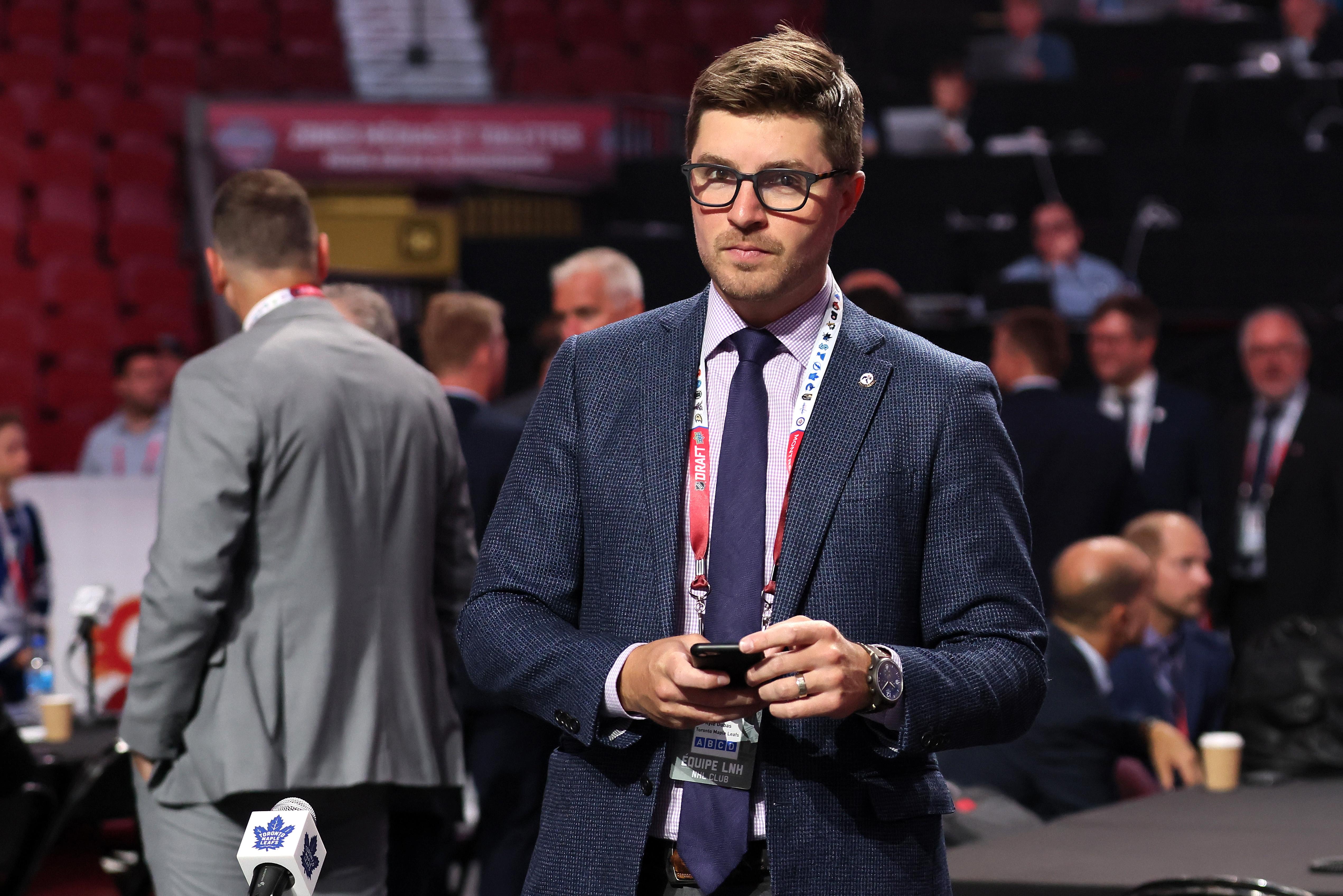
Pittsburgh Penguins General Manager and President of Hockey Operations Kyle Dubas has identified the team's lack of consistency as their primary issue during the 2026-27 season. Dubas noted that the team exhibits
strong play in brief moments but struggles to sustain it, leading to continued losses. This assessment was underscored by the Penguins' 5-2 loss to the St. Louis Blues, where they played a strong first period but followed it with a 'lifeless' 40 minutes, being outscored 5-1. Dubas indicated that if this trajectory continues, roster changes, likely involving trades focused on long-term and future assets, will be necessary. A rumored trade involving Rickard Rakell and the Chicago Blackhawks, which would have brought a 2027 first-round pick, veteran forward Teuvo Teravainen, and an AHL prospect, was reportedly nixed by Rakell using his no-trade protections.
Why It's Important?
The potential for significant roster changes within the Pittsburgh Penguins organization carries substantial implications for the team's future and the broader NHL landscape. A shift towards 'long-term and futures based' trades signals a strategic pivot towards a rebuild, moving away from the current veteran core. This could impact player movement across the league, as other teams might look to acquire Penguins' assets. For fans and stakeholders, this indicates a period of uncertainty and potential decline in immediate competitiveness, but also the promise of future success through younger talent. The decision to potentially trade high-value players like Erik Karlsson or even, hypothetically, Sidney Crosby, would reshape the team's identity and competitive outlook for years to come, affecting ticket sales, merchandise, and local economic activity tied to the team's performance.
What's Next?
Following General Manager Kyle Dubas's statements, the Pittsburgh Penguins are expected to continue evaluating their roster and performance. If the team's inconsistency persists, Dubas is likely to pursue trades to acquire future assets, potentially involving key veteran players. While a trade involving Sidney Crosby is considered unlikely, other high-value players like Erik Karlsson, Tommy Novak, and even Evgeni Malkin could become trade candidates. Karlsson, despite a drop in performance, is still seen as a valuable asset for a contender, potentially fetching a first-round pick and a mid-level prospect. Tommy Novak, with his strong season and cheap contract, is also identified as a player who could bring a surprisingly strong return. The team will need to navigate player no-trade clauses and market demand as they consider these potential moves.
Beyond the Headlines
The Penguins' current situation highlights a common challenge in professional sports: managing the transition from a highly successful, veteran-led era to a new phase of team building. The potential trading of long-standing franchise icons, even if hypothetical, raises questions about loyalty, legacy, and the cold realities of professional sports management. The reported attempt to trade Rickard Rakell, and his subsequent use of no-trade protections, underscores the power dynamics between players and management, especially for veteran players with contractual safeguards. This period of evaluation and potential change could redefine the Penguins' organizational philosophy, emphasizing youth development and long-term sustainability over immediate contention, a trend observed in many sports franchises facing similar crossroads.