


What's Happening?
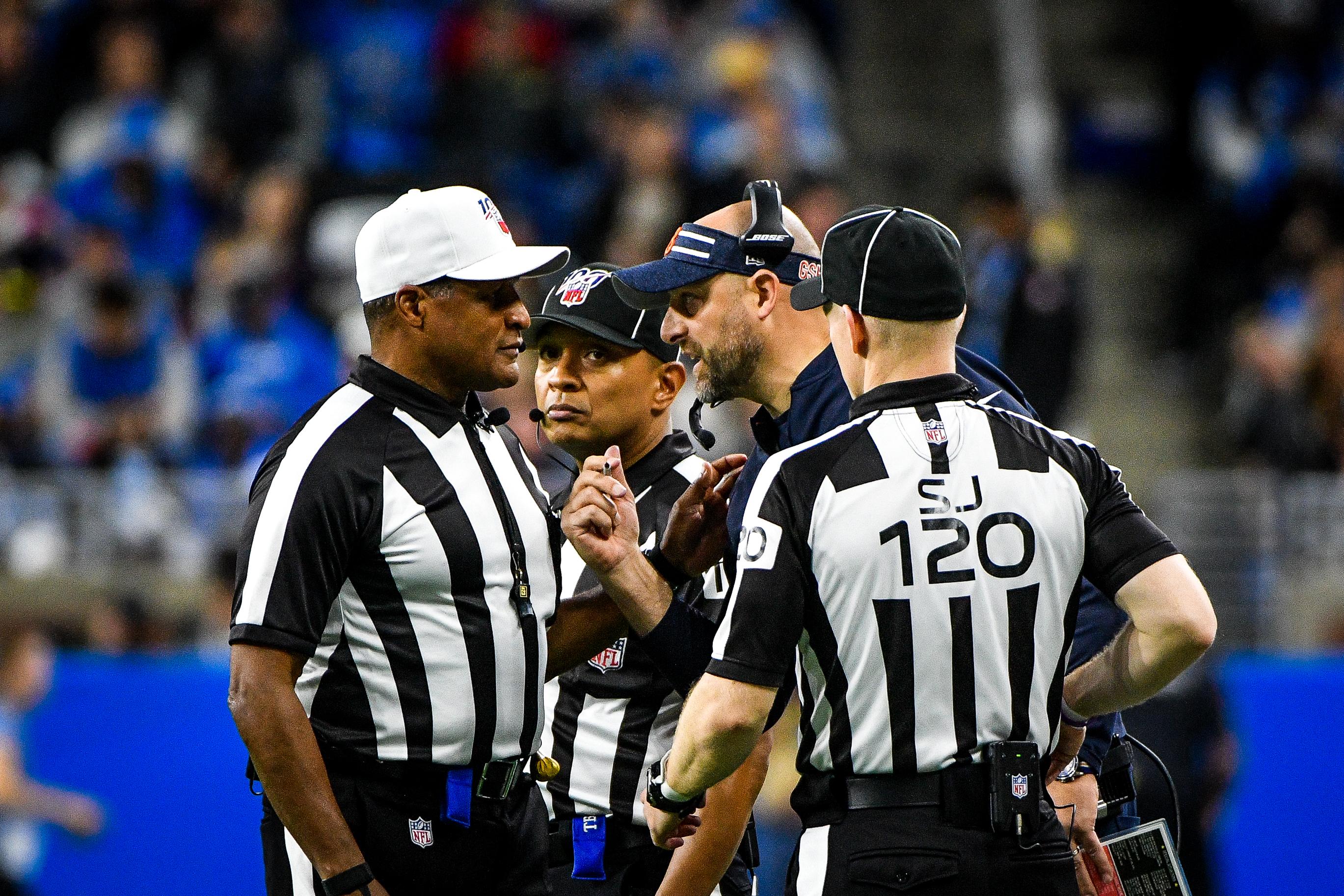
The NFL has a history of controversial officiating decisions that have directly influenced the outcomes of critical games, particularly in the playoffs, and led to significant rule changes. Notable incidents
include the 'Tuck Rule' game in 2002 between the Oakland Raiders and New England Patriots, where a fumble by Tom Brady was controversially overturned, allowing the Patriots to advance. Another instance involved the 2012 'Fail Mary' during a Green Bay Packers vs. Seattle Seahawks game, where replacement referees made a disputed touchdown call that the NFL later admitted was incorrect. The 2019 NFC Championship Game saw a clear pass interference non-call against the New Orleans Saints, which the NFL and even the involved player, Nickell Robey-Coleman, acknowledged as a mistake. These incidents highlight how referee errors can alter team trajectories and championship aspirations. The article also details other significant blown calls, such as the Bert Emanuel catch in 1999, which led to a rule clarification, and the Calvin Johnson non-catch in 2010, which similarly prompted a redefinition of what constitutes a completed catch.
Why It's Important?
These officiating blunders carry immense importance due to their direct impact on the integrity of the sport, team fortunes, and the financial implications tied to playoff success. For teams like the Oakland Raiders, New Orleans Saints, and Green Bay Packers, these calls represented missed opportunities for Super Bowl appearances or victories, which can have lasting effects on franchise legacy, fan morale, and revenue. The 'Tuck Rule' game, for example, is cited as a pivotal moment that launched the New England Patriots' dynasty. Beyond individual game outcomes, these controversies have often forced the NFL to re-evaluate and clarify its rulebook, leading to significant changes in how plays are officiated. This continuous refinement of rules, while necessary, also underscores the challenge of achieving perfect officiating in a high-stakes environment, affecting how the game is played and perceived by millions of fans and stakeholders.
What's Next?
The ongoing scrutiny of officiating in the NFL suggests that discussions around rule interpretations and the use of technology to aid referees will continue. While the league has implemented measures like instant replay and clarified rules following past controversies, the human element of officiating remains a subject of debate. Future developments might include further technological advancements to assist officials, potentially reducing the margin for error in critical moments. The NFL's track record of acknowledging mistakes and adjusting rules indicates a commitment to improving fairness, but the inherent challenges of live-action sports officiating mean that controversial calls are likely to remain a part of the game. Stakeholders, including team owners, coaches, players, and fan bases, will continue to advocate for greater consistency and accuracy in officiating, potentially driving further procedural changes or technological integrations.
Beyond the Headlines
The deeper implications of these officiating controversies extend beyond the immediate game results, touching upon the psychological impact on players and coaches, the erosion of fan trust, and the broader narrative of fairness in professional sports. For players like Calvin Johnson and teams like the Saints, a single call can define careers or seasons, leading to lingering 'what if' scenarios. The public's reaction to these blunders often fuels intense debate, highlighting the emotional investment fans have in their teams and the perceived justice of the game. Ethically, these incidents raise questions about accountability for officials and the balance between human judgment and technological intervention. Culturally, they become part of NFL lore, discussed for decades, shaping how fans remember iconic games and eras. The league's response to these events, including apologies and rule changes, reflects an ongoing effort to maintain credibility and uphold the competitive spirit of the sport.