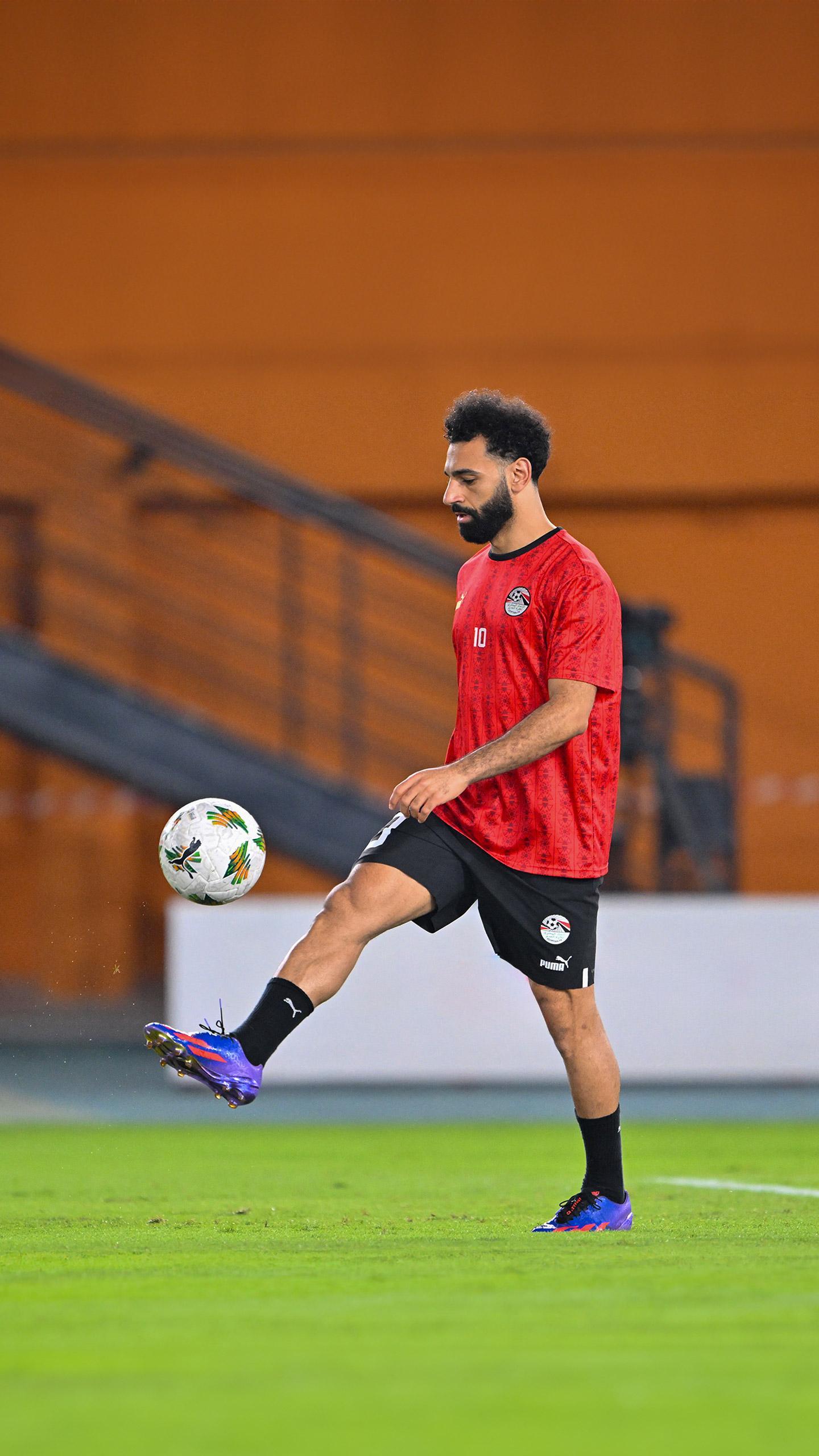




What's Happening?
A discrepancy has emerged regarding Mohamed Salah's official international goal count for the Egyptian national team. While the Egyptian Football Association (EFA) celebrates Salah reaching 70 goals, FIFA's
official records list his tally at 68. This dispute stems from a friendly match in March 2013 against Swaziland (now Eswatini), which Egypt won 10-0. Salah scored twice in that game, but FIFA does not recognize these goals due to a high number of substitutions made by Egypt, which rendered the fixture ineligible as an official full international match. The EFA recently honored Salah with a cake bearing the number 70, acknowledging him as Egypt's all-time leading scorer, surpassing Hossam Hassan's 69 goals. However, FIFA's revised data maintains Hassan as the top scorer. Inconsistencies in FIFA's own published data have further complicated the situation, with figures fluctuating even before Salah's recent brace against Malawi.
Why It's Important?
This dispute over Mohamed Salah's goal tally carries significant weight for both the player's legacy and the integrity of football record-keeping. For Salah, achieving the status of all-time leading scorer for his national team is a monumental career milestone, solidifying his place in Egyptian football history. The differing counts create confusion and potentially diminish the recognition of his achievements. For national football associations and FIFA, consistent and transparent record-keeping is crucial for credibility. Discrepancies can lead to debates and undermine the official statistics that fans, media, and historians rely upon. The situation highlights the challenges in standardizing international match criteria and how past decisions can impact historical records, affecting how players are remembered and celebrated in their respective countries.
What's Next?
The immediate next steps involve potential clarification or reconciliation efforts between the Egyptian Football Association and FIFA. The EFA may continue to advocate for the inclusion of the disputed goals, potentially presenting further evidence or arguments to FIFA regarding the legitimacy of the 2013 friendly. Conversely, FIFA may stand firm on its current criteria for official international matches, maintaining its current record. This ongoing disagreement could lead to continued debate among football fans and media in Egypt and globally. For Mohamed Salah, regardless of the official count, his status as a national hero and one of Africa's greatest footballers remains largely undisputed, but the official record will continue to be a point of contention until a definitive resolution is reached.
Beyond the Headlines
The controversy surrounding Mohamed Salah's goal count extends beyond mere statistics, touching upon broader themes of national pride, historical narrative, and the evolving nature of sports record-keeping. For Egypt, Salah represents a symbol of national achievement and global recognition, and the desire to see him officially recognized as the all-time top scorer is deeply rooted in national sentiment. This situation also underscores the complexities of international football governance, where rules and interpretations can vary and evolve, sometimes retroactively impacting historical data. It raises questions about the flexibility of official bodies to adapt to unique circumstances or to re-evaluate past decisions in light of new information or perspectives. Ultimately, this dispute highlights the emotional and cultural significance attached to sporting records, which often transcend the simple numbers themselves.