
What's Happening?
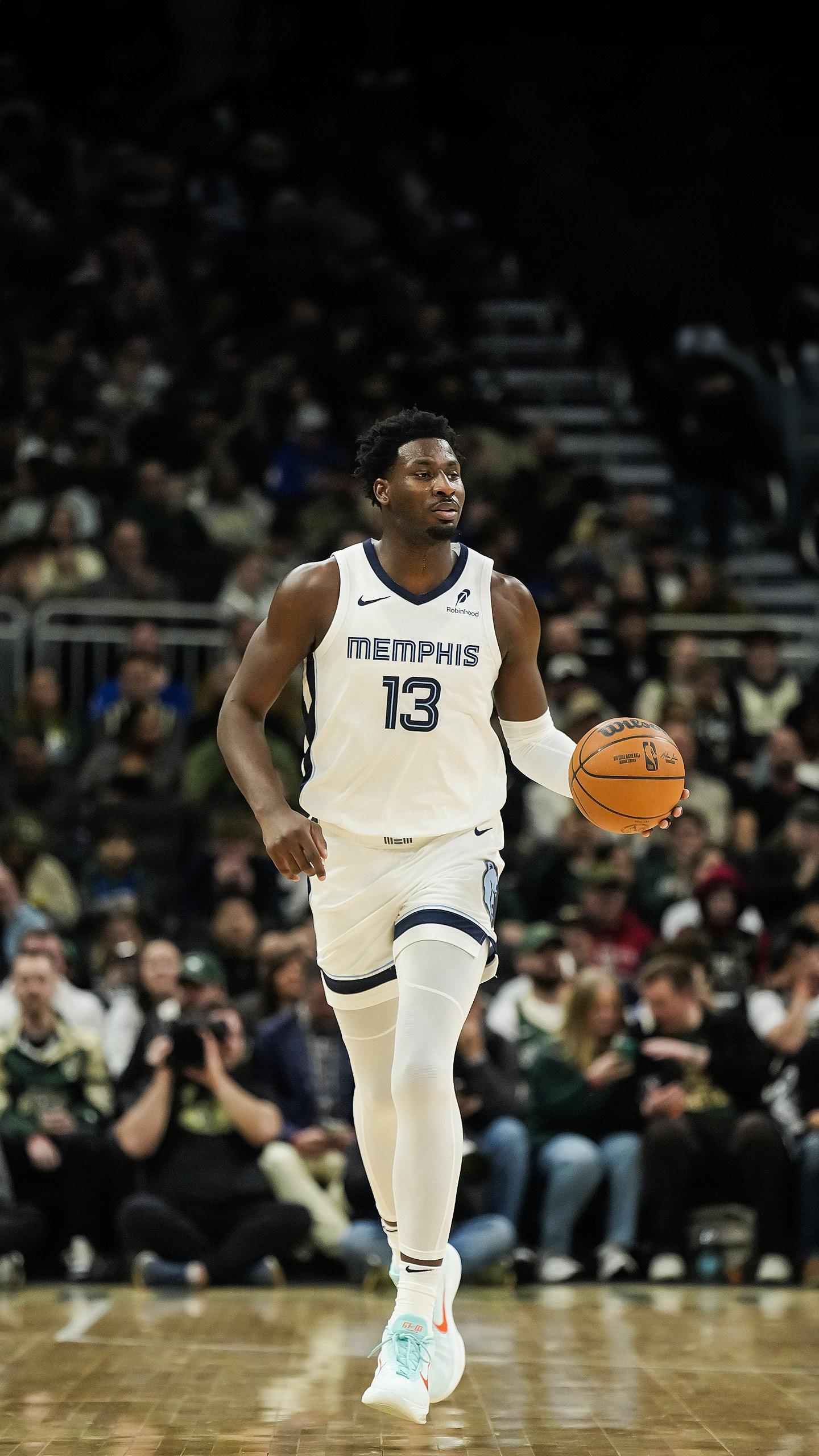
The Utah Jazz's acquisition of Jaren Jackson Jr. in February 2026 is facing increasing scrutiny as the team struggles with a 1-11 record in the 2026-27 NBA season. Jackson Jr. has played fewer than a dozen
games due to multiple knee injuries, including a torn MCL in his right knee that has sidelined him for 6-8 weeks. Despite his limited appearances, Jackson Jr. has maintained solid statistics, averaging 18.9 points, 4.7 rebounds, and 2.3 assists per game, similar to his performance with the Memphis Grizzlies. The trade involved the Jazz giving up significant assets, including three first-round picks (one of which is their own 2027 first-round pick), Walter Clayton Jr., and Taylor Hendricks. The team's current poor standing, coupled with Jackson Jr.'s ongoing injury issues and a recent hand fracture to Lauri Markkanen, has led to questions about the trade's effectiveness and the team's future outlook.
Why It's Important?
This situation is important for the Utah Jazz as it highlights the risks associated with high-stakes trades involving valuable draft assets and established players. The team's current 1-11 record, tied for the worst in the NBA, is exacerbated by the absence of key players like Jackson Jr. and Markkanen. The trade's impact extends beyond the Jazz, affecting the Memphis Grizzlies, who received the Jazz's 2027 first-round pick. However, new NBA draft lottery rules, which prevent a team from securing a top-five pick in three consecutive years, mean the Grizzlies may not benefit as much as initially anticipated from the Jazz's poor performance. This scenario could influence future trade strategies across the league, particularly regarding the valuation of draft picks and the assessment of player injury risks.
What's Next?
Jaren Jackson Jr. is expected to be sidelined for another several weeks due to his torn MCL, with Lauri Markkanen also out for at least a month with a broken hand. The Jazz will continue to navigate the season without two of their key players, likely impacting their ability to improve their record. The team's performance in the coming weeks will be crucial in determining the long-term perception of the Jackson Jr. trade. The Grizzlies, holding the Jazz's 2027 first-round pick, will be closely watching the Jazz's trajectory, though the new lottery rules limit the potential upside of that pick. The Jazz's front office will face pressure to demonstrate how this trade will ultimately contribute to the team's success once Jackson Jr. is fully healthy and consistently available.
Beyond the Headlines
The Jazz's current predicament underscores a broader challenge in professional sports: balancing immediate competitiveness with long-term team building through draft assets. The decision to trade multiple first-round picks for an established player like Jackson Jr. was a 'big swing' aimed at accelerating their competitive timeline. However, unforeseen injuries and the team's subsequent struggles have complicated this strategy. This situation could lead to a re-evaluation of risk assessment in player acquisitions, especially for teams in rebuilding phases. The new draft lottery rules also introduce a layer of complexity, potentially disincentivizing extreme 'tanking' for top picks and forcing teams to consider alternative strategies for acquiring talent and improving their rosters.