
What's Happening?
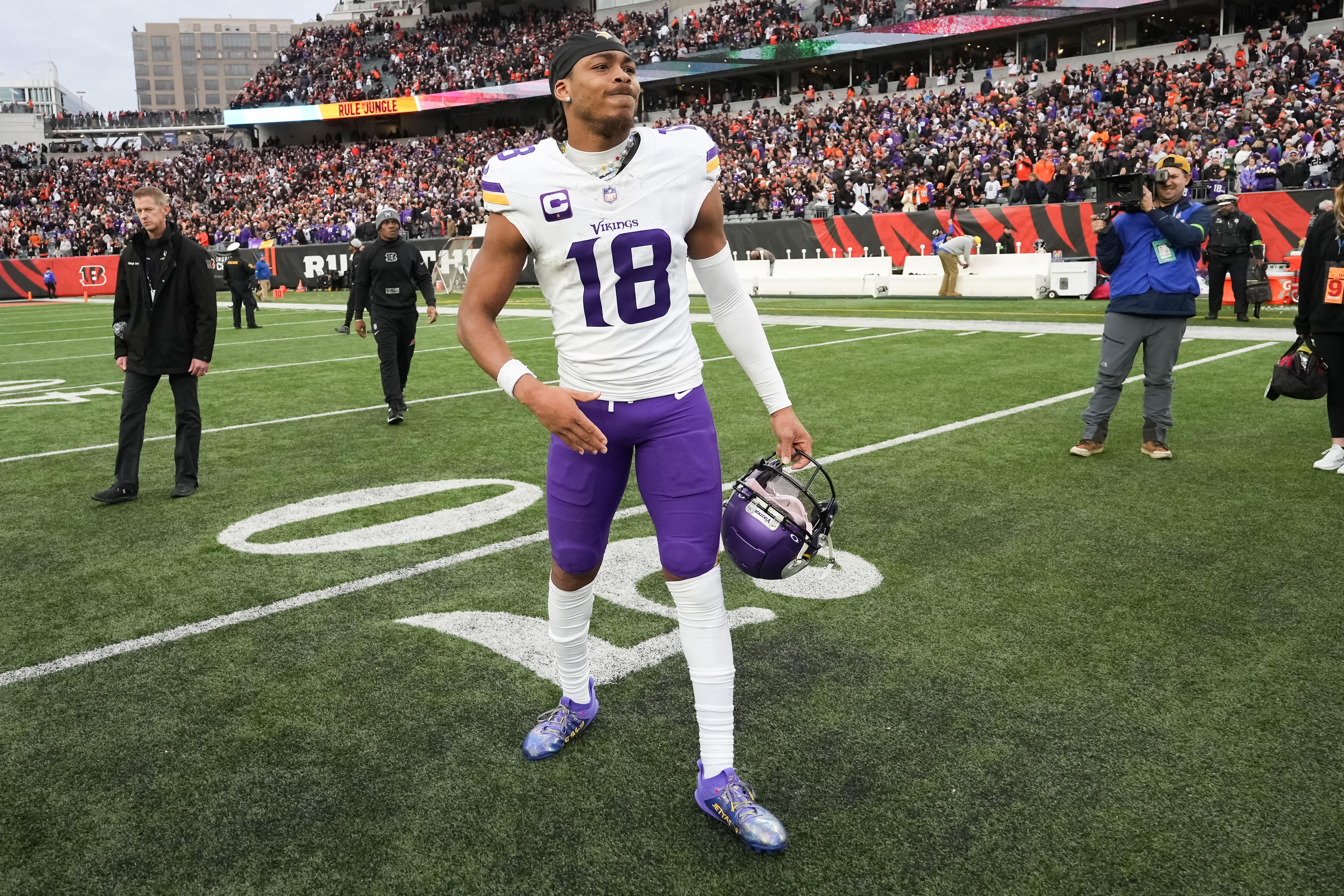
Kirk Cousins has been traded back to the Minnesota Vikings from the Las Vegas Raiders, a move that occurred before the NFL trade deadline. This trade reunites Cousins with star wide receiver Justin Jefferson,
with whom he previously played from 2020 to 2023. During their initial four seasons together, Jefferson achieved significant statistics, including 392 receptions for 5,899 yards and 30 touchdowns. His 2022 campaign, with Cousins as the starting quarterback, saw him record 128 receptions, 1,809 yards, and eight touchdowns. Cousins expressed his intent to continue feeding Jefferson the ball, acknowledging Jefferson's ability to make plays. The Vikings acquired Cousins by surrendering a 2027 third-round pick. This move is expected to address the Vikings' recent quarterback struggles and potentially improve their offensive performance.
Why It's Important?
The return of Kirk Cousins to the Minnesota Vikings carries significant implications for the team's immediate future and its key players. For Justin Jefferson, this reunion is particularly beneficial, as his past performance with Cousins demonstrates a strong on-field connection and consistent production. The Vikings' defense has been performing well, and the reacquisition of Cousins aims to provide more consistent offensive support, preventing the defense from being repeatedly put in difficult situations. This trade signifies the Vikings' commitment to competing in the NFC, despite the substantial investment in a 38-year-old quarterback. The move also impacts other quarterbacks like Kyler Murray and Carson Wentz, whose opportunities with the Vikings are now diminished. The Raiders, on the other hand, gained a 2027 third-round pick and valuable evaluation time for rookie Fernando Mendoza, making the trade a strategic win for them.
What's Next?
Kirk Cousins is expected to start for the Minnesota Vikings in their upcoming game against the Green Bay Packers, despite the short turnaround time. His familiarity with Kevin O'Connell's offense is anticipated to aid in this quick transition. The immediate focus will be on how quickly Cousins and Jefferson can re-establish their on-field chemistry and if this reunion can translate into immediate victories for the Vikings. The team's performance in the coming weeks will be crucial in determining the success of this trade and whether it can lead to a serious playoff run. If the Vikings fail to make a significant impact, the front office may face scrutiny for sacrificing future draft capital for a short-term solution at quarterback.
Beyond the Headlines
This trade highlights the dynamic and often unpredictable nature of NFL team management, particularly concerning quarterback decisions. The Vikings' decision to reacquire Cousins, despite his age and the cost of a future draft pick, underscores the perceived value of an established quarterback-receiver connection in a league where offensive synergy is paramount. It also reflects a broader trend of teams prioritizing immediate competitiveness over long-term draft capital, especially when a strong defense is already in place. The Raiders' strategy of using Cousins as a bridge quarterback to develop a rookie, while simultaneously acquiring draft assets, showcases a different but equally valid approach to roster management. This move could influence future trade deadlines, as teams weigh the benefits of short-term gains against the long-term implications of draft pick expenditure.