
What's Happening?
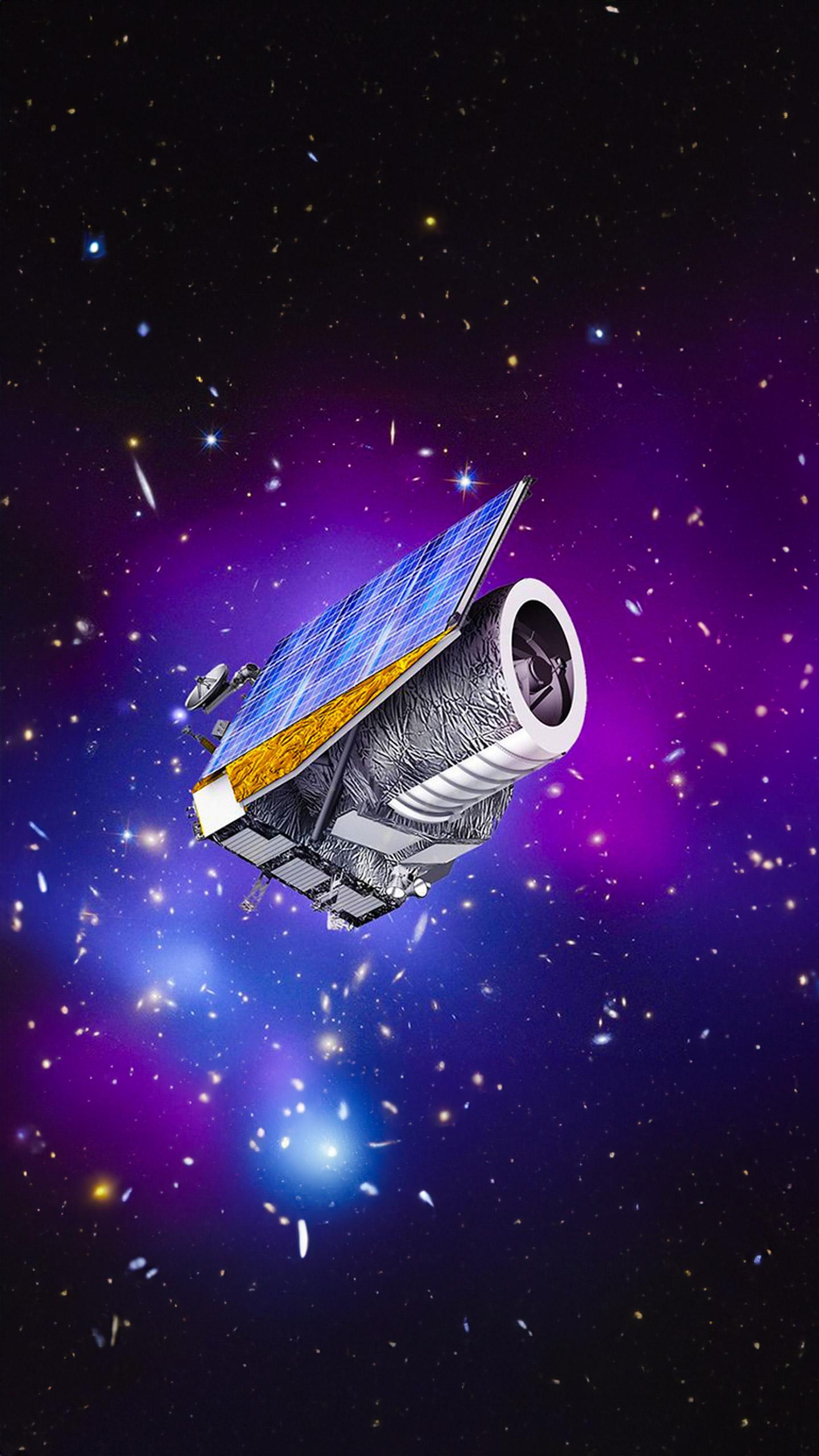
The European Space Agency's (ESA) Euclid space telescope has released its first major dataset, providing an unprecedented view of the Universe. This initial release includes images covering an area of sky
nearly 10,000 times the size of the full Moon, containing approximately 900 million galaxies and 60 million quasars. The dataset comprises about 2.5 trillion pixels and 1.7 million gigabytes of data. Launched on July 1, 2023, Euclid's mission is to create the largest and most detailed map of the Universe ever made. According to Leiden astronomer Koen Kuijken, Euclid is a wide-field telescope, capturing over a hundred times more sky in a single image than the Hubble or James Webb Space Telescopes. It produces around 20 new images daily and aims to map a third of the entire sky over its six-year mission. These observations allow astronomers to look far back in time, with some galaxies in the dataset existing when the Universe was only 700 million years old.
Why It's Important?
This data release is crucial for advancing modern physics and cosmology, particularly in understanding the Universe's biggest mysteries: dark matter and dark energy. These two components constitute about 95% of the Universe, with dark matter making up roughly 27% and dark energy accounting for about 68%. Everything visible, from stars to galaxies, represents only about five percent of the Universe's total contents. Euclid is specifically designed to unravel these mysteries by mapping the positions of billions of galaxies to reveal how cosmic structures have evolved and by measuring tiny distortions in their shapes caused by gravitational lensing, which helps detect invisible matter like dark matter. According to Leiden professor Alessandra Silvestri, the data will also be used to test the completeness of our current understanding of gravity on cosmic scales. The sheer volume and detail of the data provide an unparalleled opportunity for researchers to reconstruct the Universe's evolution and test fundamental physics.
What's Next?
This first data release marks a significant milestone, but it is only the beginning of Euclid's scientific journey. Astronomers have already published around 20 scientific papers based on this initial data and their first analyses, with many more expected. The next major step involves combining these observations into detailed cosmological analyses, which are anticipated to be published in June 2027. The first results of tests on the laws of physics on cosmic scales are also expected around the same time. Euclid will continue its mission, producing more images and data, with the goal of mapping a third of the entire sky. Researchers will continue to study patterns in the positions and shapes of billions of galaxies to reconstruct the Universe's evolution and test the underlying physics.
Beyond the Headlines
The Euclid mission represents a profound shift in our ability to observe and understand the cosmos. By providing such a vast and detailed map of the Universe, it not only addresses specific scientific questions but also opens new avenues for discovery that were previously unimaginable. The ethical implications of such powerful observational tools lie in ensuring responsible data sharing and collaboration among the global scientific community. Culturally, these discoveries can reshape humanity's perception of its place in the Universe, fostering a deeper appreciation for the complexity and mystery of cosmic phenomena. The long-term shift triggered by this development could be a more unified and comprehensive model of cosmology, potentially leading to new theories of physics that extend beyond our current understanding of gravity and matter.