



What's Happening?
Anton Artemyev, an associate professor of physics at The University of Texas at Arlington (UTA), has been awarded a four-year, $380,322 grant from the National Science Foundation’s Office of Polar Programs.
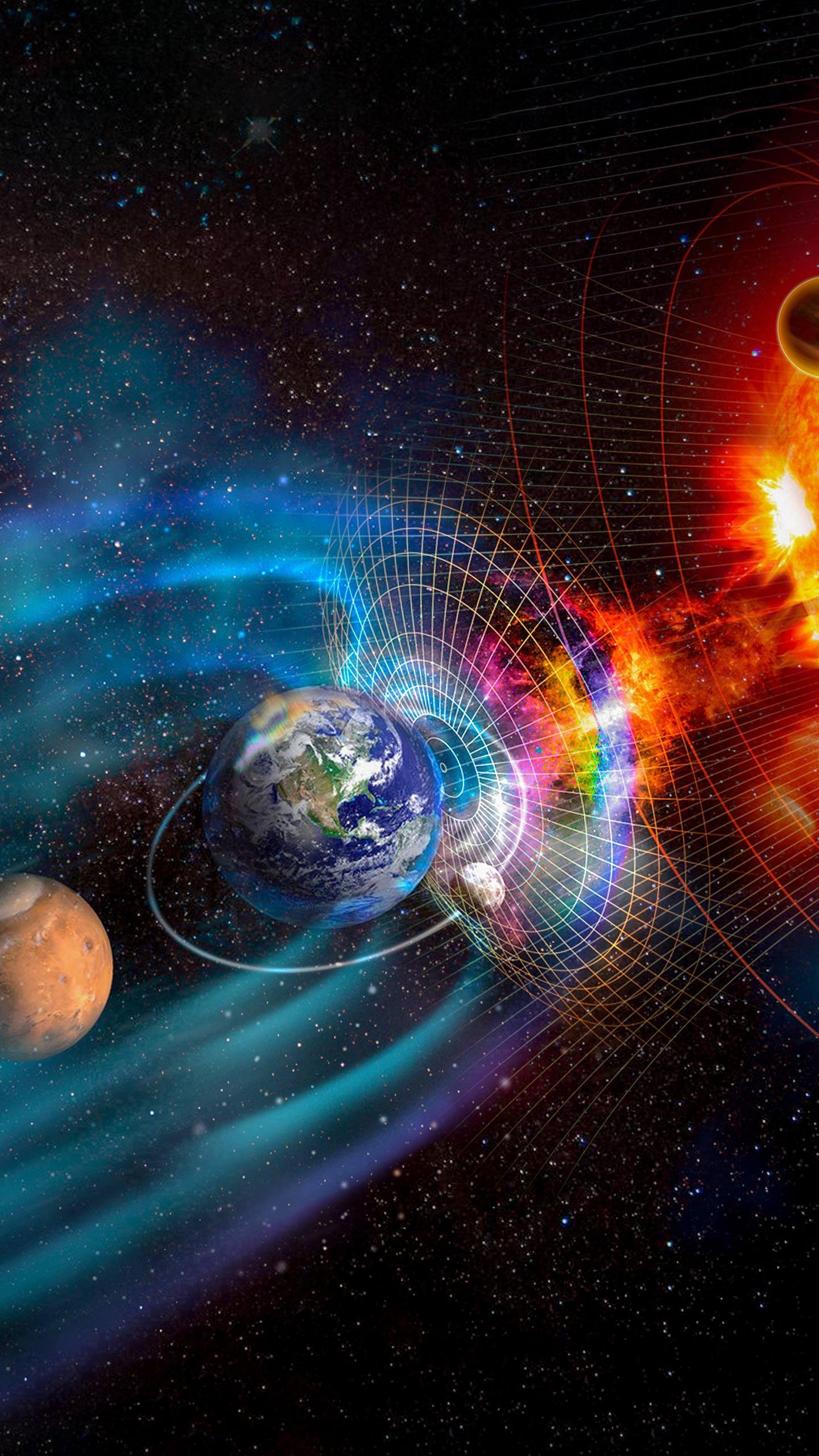
The funding will support a study aimed at developing a new model to describe the energy and intensity of electrons entering Earth’s atmosphere. This research, titled “Collaborative Research: Exploring Polar Ionospheric Precipitation Using Antarctic X-ray Observations,” seeks to improve the prediction of space weather events. Space weather is caused by energetic particles, primarily electrons, from the Sun’s solar wind that penetrate Earth’s magnetosphere and precipitate into the upper atmosphere. These particles release energy, leading to space weather storms that can disrupt critical infrastructure and alter atmospheric chemistry. Artemyev's study will investigate the mechanisms behind the loss of these high-energy electrons from Earth’s magnetic environment and their precipitation into the atmosphere. The project will utilize X-ray measurements from scientific balloons over Antarctica, comparing them with data from NASA-funded satellite missions to identify and quantify different precipitation processes under various space weather conditions.
Why It's Important?
This research is crucial for enhancing the accuracy of space weather predictions, which have significant implications for national security, economic stability, and technological infrastructure. Improved predictions can help protect vital assets such as satellites, which are essential for communication, navigation (GPS), and Earth observation. Power grids on land are also vulnerable to space weather-induced disruptions, potentially leading to widespread outages. Furthermore, ship communications on oceans can be affected, impacting global trade and maritime safety. By understanding how electrons deposit their energy in the atmosphere, scientists can better assess the impact on the surrounding environment and refine computer models used for space weather forecasting. The study's focus on Antarctica provides a unique vantage point for collecting extensive balloon measurements, contributing to a more comprehensive understanding of these complex phenomena. The findings will ultimately lead to more reliable information for safeguarding critical systems and mitigating the adverse effects of space weather.
What's Next?
The immediate next steps involve Artemyev and his team initiating the research project, which will span four years. This will include the detailed analysis of existing X-ray measurements from Antarctic scientific balloons and their correlation with data from various NASA-funded satellite missions. The researchers will work to identify the different processes by which energetic electrons precipitate into the atmosphere and determine their frequency under varying space weather conditions. The ultimate goal is to develop a new statistical model that quantifies the energy and intensity of these electrons for each process. This model will then be used to estimate the atmospheric energy deposition and its environmental impact. All curated datasets and supporting documentation generated from this study will be made publicly accessible, allowing other researchers to build upon these findings and further refine their own models, thereby contributing to a broader scientific understanding of space weather and its impacts.
Beyond the Headlines
The implications of this research extend beyond immediate space weather forecasting to a deeper understanding of Earth's climate and atmospheric chemistry. The energetic electron precipitation studied by Artemyev can alter the chemical composition of the upper atmosphere, which in turn influences Earth’s climate system. By providing a more precise understanding of how these particles interact with the atmosphere, the study could contribute to more accurate climate models and a better grasp of long-term atmospheric changes. Furthermore, the collaborative nature of the research, involving the National Science Foundation and NASA-funded missions, highlights the interagency effort required to tackle complex scientific challenges with global implications. The commitment to making all datasets publicly available underscores a broader scientific principle of open access and collaboration, fostering accelerated progress in the field of space physics and its related disciplines. This work also reinforces the critical role of fundamental research in protecting and advancing technological capabilities in an increasingly space-dependent world.