



What's Happening?
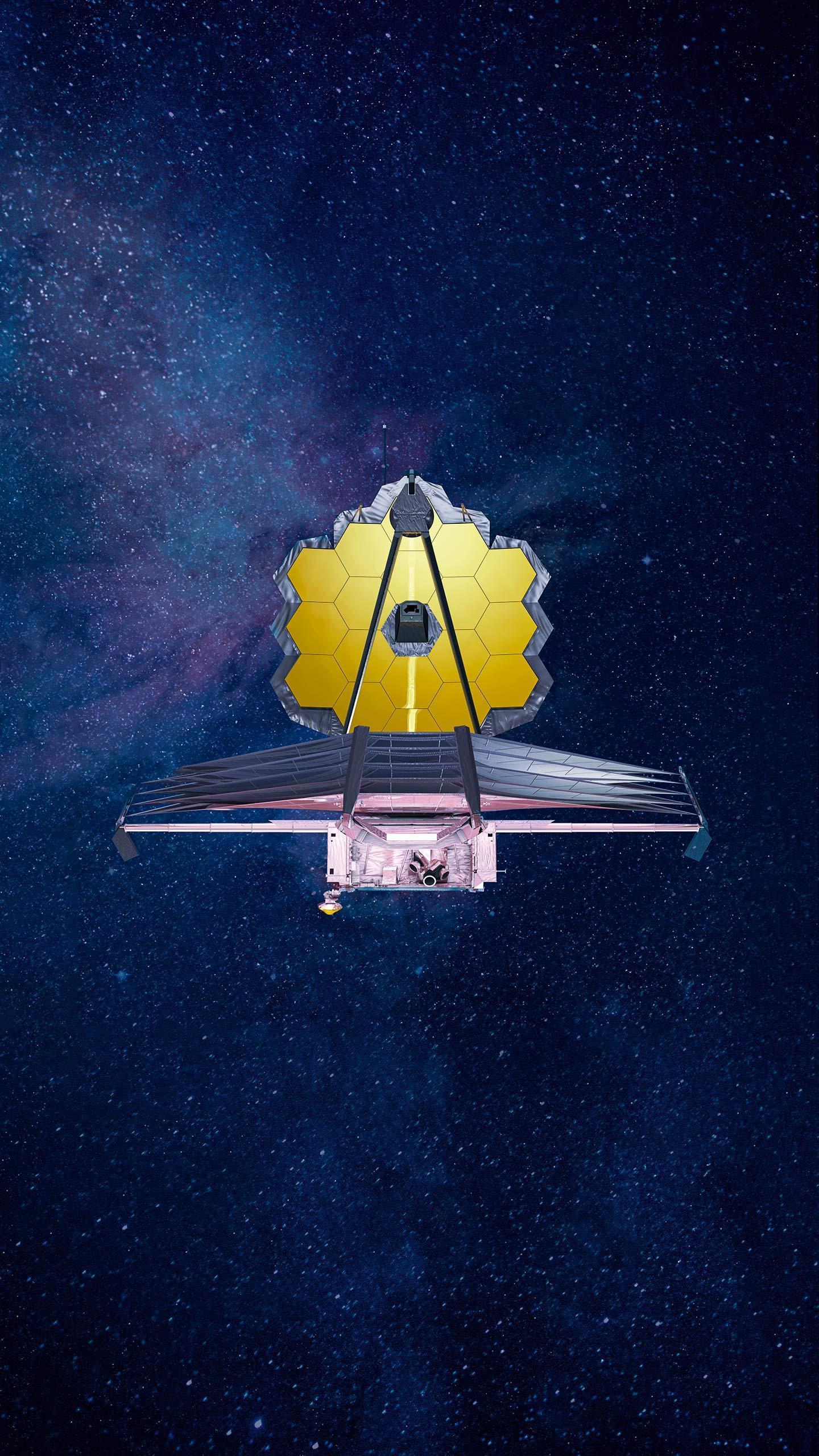
Atmospheric retrievals using time-resolved JWST/NIRSpec PRISM spectrophotometry of the white dwarf (WD)-brown dwarf (BD) binary SDSS J141126.20+200911.1 (SDSS1411) have provided new insights into the brown dwarf's
atmosphere. Non-irradiated forward models under chemical equilibrium failed to reproduce the observed phase-resolved SDSS1411B spectra, indicating significant deviations from typical isolated-BD atmospheric structures. However, atmospheric retrievals successfully replicated both the dayside and nightside spectra. These retrievals revealed a prominent dayside temperature inversion, suggesting a cloud-free atmosphere, and provided evidence for CO2 disequilibrium chemistry. An energy-budget analysis indicated low day-to-night heat redistribution efficiency and constrained the brown dwarf's cooling age to approximately 3 billion years. The inferred radius of the brown dwarf was found to be significantly more compact than predicted by current brown dwarf evolutionary models. The study measured strong wavelength-dependent variability, with day-night relative flux variations reaching around 280%.
Why It's Important?
This research significantly advances the understanding of substellar atmospheres, particularly those subjected to intense stellar irradiation. The findings challenge existing brown dwarf evolutionary models by revealing a more compact radius than previously predicted, which could lead to a re-evaluation of how these objects form and evolve. The detection of a prominent dayside temperature inversion and CO2 disequilibrium chemistry provides crucial data for refining atmospheric models of exoplanets and brown dwarfs. Understanding the atmospheric dynamics and chemical processes in such extreme environments is vital for the broader field of astrobiology, as it informs the potential habitability of other celestial bodies. The low day-to-night heat redistribution efficiency also offers insights into energy transport mechanisms in irradiated atmospheres, which has implications for climate modeling of various planetary and substellar objects.
What's Next?
The results from this study are expected to stimulate further research into the atmospheric physics of strongly irradiated substellar objects. Future investigations may focus on refining brown dwarf evolutionary models to account for the observed compact radius and low heat redistribution efficiency. Scientists will likely use these findings to develop more accurate atmospheric retrieval techniques and models for other exoplanets and brown dwarfs. The evidence for CO2 disequilibrium chemistry could prompt more detailed spectroscopic studies to identify other disequilibrium species and understand their formation mechanisms. Continued observations with advanced telescopes like JWST will be crucial for gathering more data on similar systems, allowing for comparative studies and a more comprehensive understanding of substellar atmospheric diversity.
Beyond the Headlines
The ability to conduct detailed atmospheric retrievals on distant brown dwarfs has profound implications for the search for life beyond Earth. While brown dwarfs themselves are not considered habitable, the techniques developed to characterize their atmospheres can be applied to exoplanets, including those within habitable zones. The insights gained into atmospheric composition, temperature profiles, and chemical processes are foundational for identifying biosignatures in exoplanet atmospheres. This research also highlights the power of advanced observational instruments like JWST in pushing the boundaries of astronomical discovery, enabling scientists to probe the intricate details of celestial bodies that were previously inaccessible. The ongoing refinement of these techniques will be critical for future missions aimed at directly imaging and characterizing potentially habitable exoplanets.