
What's Happening?
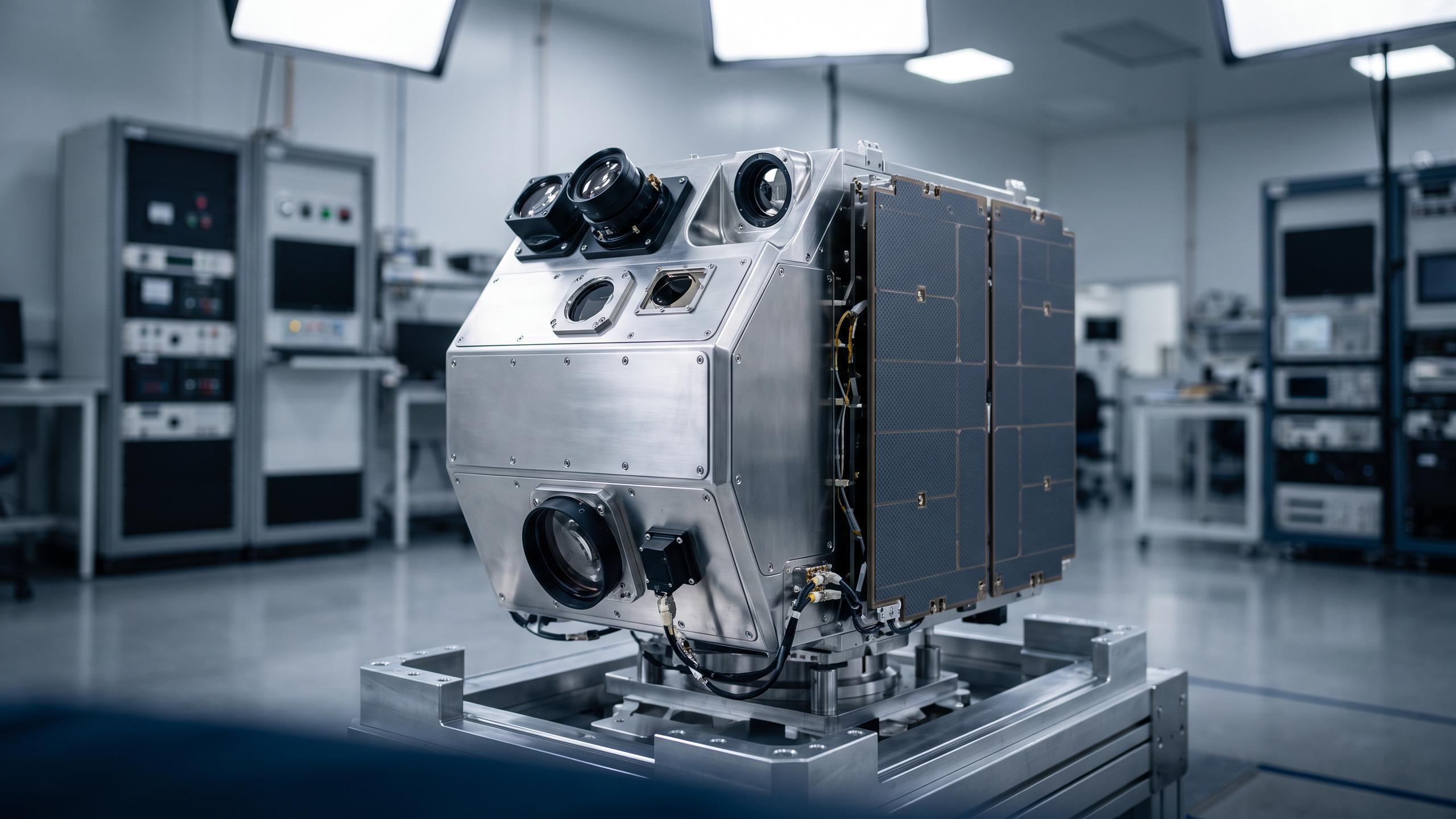
NASA has successfully completed the instrument calibration for Hydrosat Osiris, a new fleet of four satellites designed to capture detailed images of Earth's surface. On October 30, the agency finalized
testing for the refrigerator-sized satellites, each equipped with visible-near-infrared and long-wave-infrared sensors. These advanced sensors are capable of detecting light imperceptible to the human eye, allowing them to gather data on subtle changes across Earth's surface. The calibration process, conducted at NASA's Goddard Space Flight Center in Greenbelt, Maryland, involved exposing the sensors to various light wavelengths and brightness levels to ensure data accuracy. This rigorous testing aims to guarantee the reliability of the data collected, which will have broad applications, including monitoring crop health and assessing infrastructure damage after natural disasters. The Hydrosat Osiris mission builds upon previous Hydrosat satellites, VanZyl-1 and VanZyl-2, launched in 2024 and 2025, respectively, and will provide enhanced resolution for Earth surface studies.
Why It's Important?
The successful calibration of the Hydrosat Osiris satellites is crucial for advancing Earth observation capabilities and has significant implications for various U.S. industries. For agriculture, the ability to detect early signs of crop stress, such as drying or yellowing, will enable farmers to optimize irrigation, leading to more efficient water use, increased yields, and reduced costs. This precision agriculture approach can bolster food security and economic stability for farmers. Beyond agriculture, the data from Osiris can be vital for disaster response and infrastructure management, allowing for quicker and more accurate assessments of damage following events like hurricanes. This can improve recovery efforts and inform better urban planning. Furthermore, this collaboration between NASA and Hydrosat exemplifies a growing trend in the commercial satellite industry, where private companies provide science-grade data for research and applications, potentially setting a blueprint for future public-private partnerships in space technology and Earth science.
What's Next?
Following the successful prelaunch instrument testing, the Hydrosat Osiris satellites are expected to proceed towards their launch. Once operational, the data collected by Osiris will be made accessible to authorized users through NASA’s Commercial Satellite Data Acquisition (CSDA) program. This program aims to integrate commercial data into scientific research and applications, fostering a broader understanding of Earth's systems. The enhanced resolution provided by this new constellation will allow scientists to conduct more detailed studies of Earth's surface, potentially leading to new discoveries and improved environmental monitoring. The collaboration between NASA and Hydrosat also suggests a future where commercial entities play a larger role in providing critical Earth observation data, potentially accelerating scientific progress and innovation in the field.
Beyond the Headlines
The Hydrosat Osiris mission represents a significant step in the evolution of Earth observation, moving towards more granular and precise data collection. The ability to detect 'imperceptible' changes on Earth's surface highlights a technological leap that could have profound long-term impacts. Ethically, this increased surveillance capability raises questions about data privacy and access, particularly as commercial entities become more involved in data collection. Legally, frameworks for data sharing and usage will need to adapt to accommodate the growing volume and detail of commercially sourced satellite data. Culturally, a more detailed understanding of environmental changes could shift public perception and policy priorities regarding climate change and resource management. This development also underscores a broader shift towards integrating advanced sensor technology and AI-driven analysis to address complex global challenges, from food security to climate resilience.