



What's Happening?
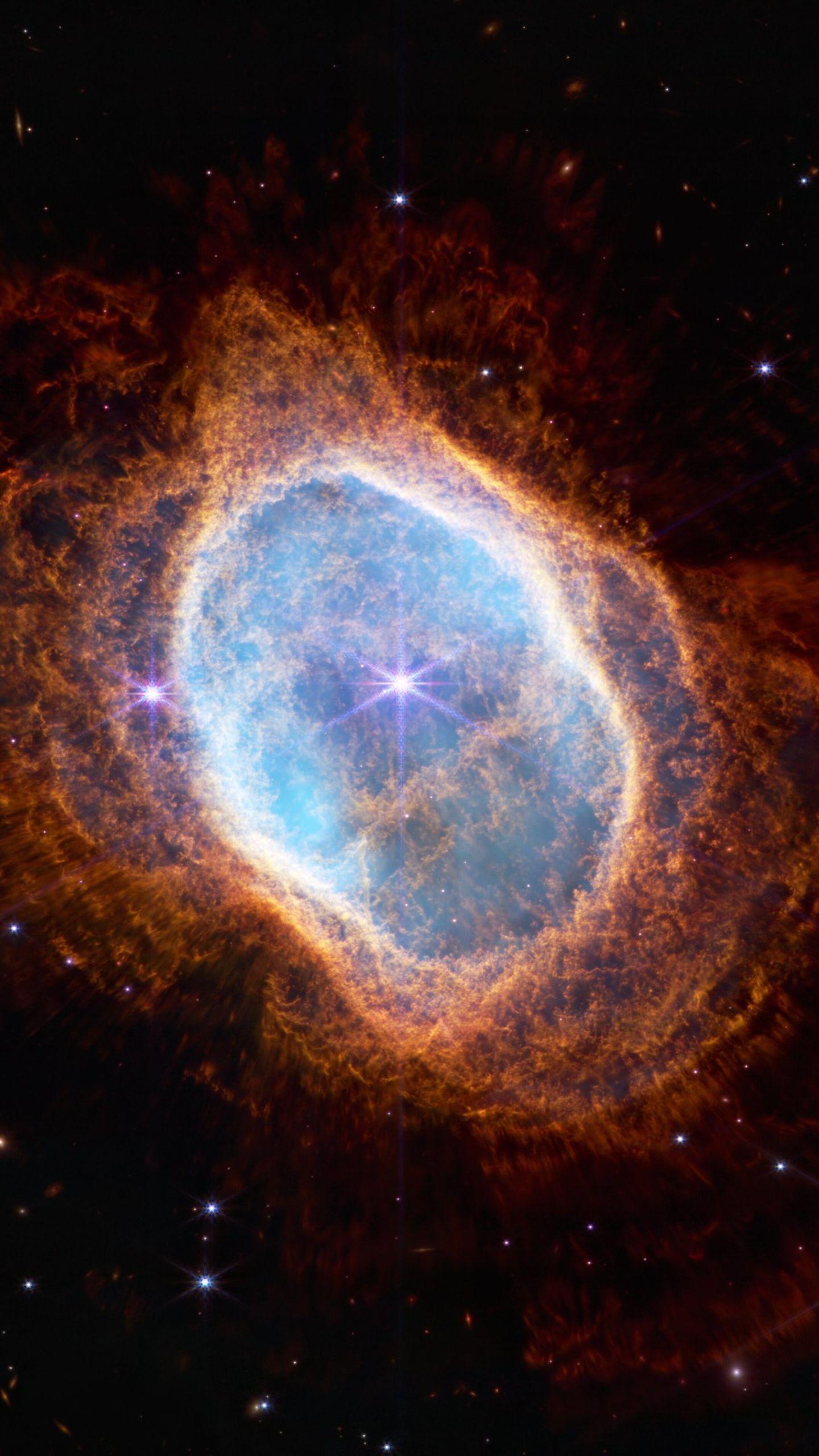
NASA has selected an image of the star-forming region NGC 7129, captured by the James Webb Space Telescope, as its Astronomy Picture of the Day for November 16, 2026. This nebula, located approximately
3,300 light-years from Earth in the constellation Cepheus, provides a detailed infrared view of stars at various developmental stages within a single cluster. The image showcases a luminous central star, dusty protostars emitting red jets, and gas shaped into filaments by outflows and stellar winds. Data for this image was collected by Webb's Near Infrared Camera (NIRCam) on December 17, 2025, and released by NASA on October 6, 2026. The processing of the raw data into the final color composite was performed by Alyssa Pagan of the Space Telescope Science Institute, with credit to NASA, the European Space Agency, and the Canadian Space Agency. The image is particularly valuable for illustrating the diverse developmental stages of stars, with more massive stars forming and evolving at a faster rate.
Why It's Important?
This image from the James Webb Space Telescope is crucial for advancing our understanding of star formation. Young stars are frequently obscured by dense dust cocoons, making them difficult to observe with telescopes that cannot detect infrared light. Webb's infrared sensitivity allows astronomers to penetrate this dust, offering unprecedented views into the early stages of stellar life cycles. The ability to observe stars at different developmental phases within one cluster provides a unique opportunity to study how mass influences the pace of stellar evolution. By comparing the effects of outflows and winds from stars of varying masses and ages, scientists can gain deeper insights into the physical processes that govern star birth and the subsequent shaping of their surrounding environments. This contributes significantly to fundamental astrophysics and our comprehension of the universe's origins.
What's Next?
The detailed observations of NGC 7129 by the James Webb Space Telescope are expected to lead to further research and analysis by astronomers worldwide. The data collected by NIRCam will likely be used to develop more refined models of star formation, particularly concerning the role of stellar outflows and winds in shaping molecular clouds. Future studies may focus on the specific characteristics of the protostars identified in the red jets and the central pre-main-sequence star, LkHα 234. The comparison with data from the retired Spitzer Space Telescope highlights Webb's superior resolution and sensitivity, suggesting that similar detailed observations of other star-forming regions will follow, continually enhancing our understanding of these complex cosmic nurseries. This ongoing data collection and analysis will contribute to a more comprehensive picture of stellar evolution.
Beyond the Headlines
The Webb Telescope's capacity to peer through cosmic dust has profound implications beyond just observing star formation. This technological advancement allows scientists to explore previously hidden regions of the universe, potentially revealing new insights into the conditions under which planets form and the early universe. The ability to differentiate between various stages of stellar development within a single image provides a 'snapshot' of cosmic evolution, offering a unique laboratory for theoretical models. Furthermore, the detailed imaging capabilities of Webb contribute to a broader public engagement with science, inspiring future generations of astronomers and engineers. The continuous stream of high-resolution images and data from Webb is not only expanding scientific knowledge but also reshaping our visual and conceptual understanding of the cosmos, pushing the boundaries of human exploration and discovery.