



What's Happening?
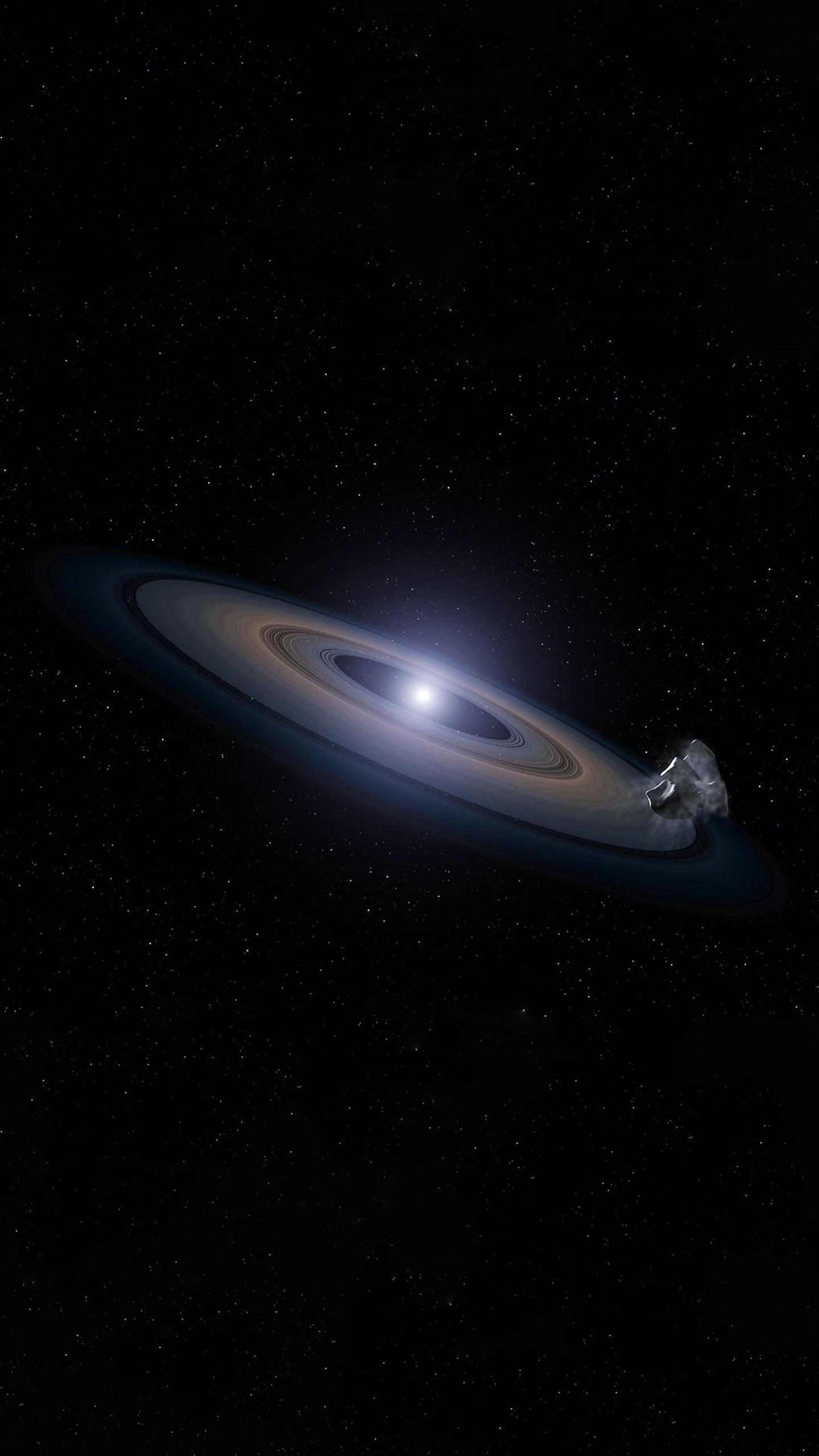
Astronomers utilizing the European Southern Observatory’s Very Large Telescope (ESO’s VLT) have identified an unprecedented double debris disk system orbiting a white dwarf star named J1328−1450. This
system features two distinct rings of planetary debris separated by a clear gap, a structure believed to be maintained by two surviving planetary bodies. One of these bodies could be as large as Pluto or Earth's Moon. This discovery marks the first instance of such a complex system with a double debris disk and potentially two surviving planetesimals around a dead star. White dwarfs are the dense remnants of stars similar to our Sun after they have exhausted their nuclear fuel. The rings contain elements like calcium, oxygen, magnesium, and iron, common in rocky planetary material, and exhibit different chemical compositions, suggesting distinct origins for the debris. This observation provides a unique insight into the aftermath of a star's death and the potential fate of planetary systems, including our own.
Why It's Important?
This discovery holds significant implications for understanding the long-term evolution of planetary systems, including our own Solar System. The complex double debris disk around J1328−1450 offers a rare glimpse into the future, as our Sun is expected to undergo a similar transformation into a white dwarf billions of years from now. The presence of surviving planetary bodies shaping these debris disks suggests that even after a star's catastrophic end, some planetary remnants can persist and influence the surrounding material. This challenges previous assumptions about the simplicity of debris disks around white dwarfs, indicating that these post-stellar environments can be far more intricate than previously thought. The differing chemical compositions of the rings also provide clues about the original planets that were destroyed, offering insights into planetary formation and composition in other star systems. This research contributes to a broader understanding of stellar and planetary lifecycles.
What's Next?
Future research will likely focus on confirming the presence and characteristics of the two suspected planetary bodies that are believed to be sculpting the debris disks around J1328−1450. Astronomers will aim to gather more observational data to directly detect these objects or further constrain their properties through their gravitational influence on the disks. Additionally, detailed spectroscopic analysis of the debris rings could provide more precise information about the chemical composition of the destroyed planets, potentially revealing insights into their internal structure and formation history. This discovery may also prompt astronomers to re-examine other known white dwarf systems for similar complex debris disk structures, potentially leading to the identification of more such systems and a better understanding of their prevalence and diversity. The findings will also inform theoretical models of planetary system evolution and survival after stellar death.
Beyond the Headlines
The observation of a complex, structured debris disk around a white dwarf, maintained by surviving planetary bodies, extends beyond a mere astronomical finding. It offers a profound perspective on the resilience and transformative nature of planetary systems. This system serves as a cosmic 'fossil record,' illustrating that even after immense stellar upheaval, the remnants of a planetary system can retain a degree of organization and interaction. It prompts deeper questions about the ultimate fate of matter in the universe and the potential for life to persist or re-emerge in such extreme environments, albeit in vastly different forms. The differing chemical compositions in the rings could also hint at the diversity of planetary compositions within a single system, suggesting complex formation histories. This discovery underscores the dynamic and often violent processes that shape the cosmos, reminding us that even in stellar death, there is a complex and evolving aftermath.