



What's Happening?
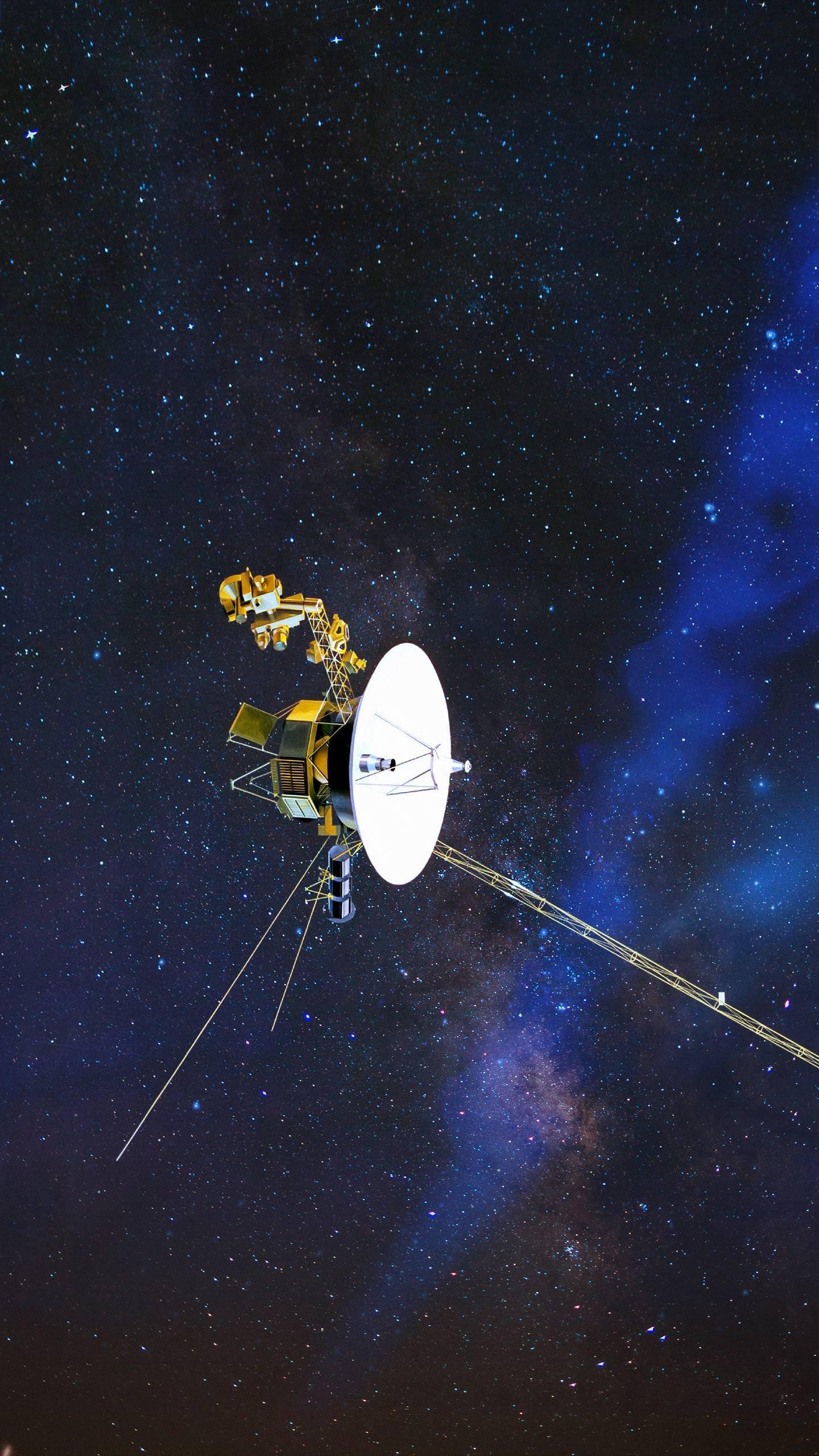
NASA's Voyager 1 spacecraft has successfully communicated with Earth from a distance of one light-day, marking a significant milestone in its nearly half-century-long mission. Flight controllers at California's
Jet Propulsion Laboratory received the signal exactly 24 hours after it was sent, confirming the spacecraft's position over 16 billion miles (26 billion kilometers) away. This achievement adds to Voyager 1's list of historic firsts, which include sweeping past Jupiter in 1979, Saturn in 1980, capturing the 'Pale Blue Dot' image in 1990, becoming the most distant human-made object in 1998, and entering interstellar space in 2012. Despite a recent halt in the flow of science and engineering data, the carrier signal remains strong, allowing the team to confirm this new distance record. Controllers are actively investigating the cause of the data interruption, similar to a problem encountered three years prior that was traced to an onboard computer.
Why It's Important?
This milestone underscores humanity's enduring capability for deep space exploration and scientific discovery. Voyager 1, along with its twin Voyager 2, represents NASA's longest-operating space missions, continuously providing invaluable data about the never-before-explored interstellar environment. The spacecraft's continued operation at such extreme distances pushes the boundaries of engineering and communication technology. The data collected by Voyager 1 offers unique insights into the heliosphere and the vast void between stars, contributing significantly to our understanding of the universe beyond our solar system. The mission also carries cultural significance, with each Voyager spacecraft carrying a 'Golden Record' containing sounds and images of Earth, intended as a time capsule for any potential extraterrestrial encounters, designed to last for over a billion years.
What's Next?
NASA controllers are focused on diagnosing and resolving the issue that has halted the flow of science and engineering data from Voyager 1. A similar problem in the past was traced to an onboard computer, suggesting a potential path for investigation. While picture-taking ceased long ago, the spacecraft typically sends back crucial data almost daily, and restoring this data stream is a priority for continued scientific output. Voyager 1 is expected to continue its journey into the unknown, with NASA's science mission chief Nicky Fox stating there is 'no end for the Voyager mission.' Its twin, Voyager 2, which launched earlier but took a longer route, is projected to reach the one-light-day mark by 2035, further extending humanity's reach into interstellar space.
Beyond the Headlines
The Voyager mission transcends mere scientific achievement, embodying humanity's innate drive for exploration and understanding our place in the cosmos. The 'Pale Blue Dot' image, captured by Voyager 1, profoundly shifted perspectives on Earth's fragility and isolation. The Golden Records serve as a testament to human creativity and a message to the universe, raising philosophical questions about contact with extraterrestrial life and our legacy. The longevity of these spacecraft, operating for nearly five decades on plutonium power, highlights the remarkable durability of human engineering and the foresight of the mission's original designers. As Voyager 1 continues its solitary journey, it symbolizes humanity's enduring quest to break boundaries and reach for the stars, inspiring future generations of scientists and explorers.