









Milk's Summer Challenge
For over a hundred years, before the advent of electric refrigeration, households in India faced a significant challenge in keeping milk fresh, especially
during the sweltering summer months. Ambient temperatures frequently soared above 35-40°C, a condition under which milk could turn sour within a mere few hours if left unattended. This meant that preserving this essential dairy product was a daily, critical task. Families developed and maintained a consistent routine, treating milk not just as a commodity but as a vital ingredient requiring active management to prevent spoilage. This traditional practice was passed down through generations, becoming an ingrained part of kitchen life and a testament to practical ingenuity in the face of environmental hurdles.
The Multi-Boil Preservation
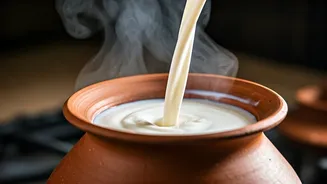
The cornerstone of this age-old milk preservation technique involved a deliberate, repeated boiling process. Upon acquiring fresh milk, the immediate step was to bring it to a rolling boil. This crucial initial step was designed to effectively neutralize a significant portion of the bacteria responsible for milk's rapid spoilage. Following this, the milk was allowed to cool naturally and then stored in appropriate vessels, typically made of steel or traditional earthen pots. These were then placed in the home's coolest available spot. However, the true efficacy of this method lay not in a single boiling, but in its repetition. During peak summer, many Indian homes would re-boil the stored milk every 8 to 10 hours. Each subsequent boiling further inhibited bacterial proliferation, thereby extending the milk's usable life significantly without any artificial cooling mechanisms.
Strategic Storage Solutions
Complementing the repeated boiling was a thoughtful approach to milk storage, leveraging the architectural and environmental characteristics of older homes. Traditional Indian homes were often designed with natural cooling in mind, featuring thick walls, strategically shaded kitchen areas, cool stone floors, and efficient cross-ventilation systems that helped maintain lower indoor temperatures. To further enhance this, milk containers were sometimes placed within shallow trays filled with water. The slow evaporation from the water created a subtle cooling effect around the vessels. Earthen pots, in particular, played a vital role due to their porous nature. The continuous, slow evaporation of moisture through the pot's surface helped to keep the milk inside cooler than the surrounding ambient air, offering an additional layer of natural temperature regulation.
Daily Habits Matter
Beyond the core boiling and storage, a set of simple yet impactful daily practices contributed significantly to milk preservation. Keeping milk vessels consistently covered was paramount, not just to prevent dust contamination but also to minimize direct exposure to warm air, which accelerates spoilage. Meticulous attention was paid to hygiene, ensuring all utensils used were impeccably clean. A strict rule was never to combine fresh milk with previously stored batches unless the older milk had also been reheated. These weren't necessarily documented rules but were deeply ingrained customs followed diligently by households, ensuring the integrity and freshness of the milk supply through consistent, mindful practices.
Beyond Preservation's Reach
This traditional method of preserving milk had a fascinating ripple effect on culinary habits. The consistent re-boiling process naturally led to the formation of thick cream layers on the milk's surface. These cream layers were diligently collected over several days and subsequently transformed into butter or ghee, staple ingredients in Indian cuisine. Thus, what began as a practical necessity for preserving milk eventually influenced the way dairy products were processed and consumed, shaping everyday food traditions. While modern refrigerators have largely supplanted this routine, the underlying principles of thermal processing and careful storage remain scientifically sound. Even today, during unexpected power outages or while traveling, people often unconsciously revert to similar methods without realizing the deep historical roots of their actions, underscoring the enduring relevance of this century-old wisdom.