





Preparation Essentials
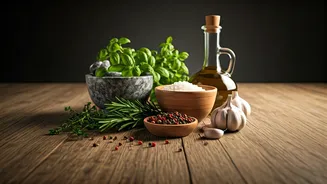
Before you begin creating the Kesari Halwa, it's essential to gather all the required ingredients. You'll need one cup of fine rava or semolina, also known
as suji. This forms the base of the halwa, giving it its granular texture. You'll also need one cup of sugar to provide the desired sweetness. For richness and flavor, include one-half cup of ghee, clarified butter. Ghee not only adds a lovely aroma but also ensures the halwa doesn't stick. The recipe requires three cups of water, which will be the liquid to cook the rava. A pinch of saffron strands will enhance the color and add a delicate flavor. Finally, a few chopped nuts, like cashews or almonds, offer a textural contrast and visual appeal. Ensuring you have all these ingredients ready saves time and provides a smooth cooking process. Remember to measure the ingredients accurately, as this significantly impacts the halwa's final consistency and taste. Precise measurements help to avoid any potential cooking mishaps.
Roasting the Semolina
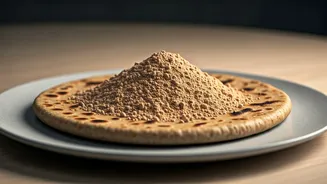
The first critical step involves roasting the semolina, or suji. This process is crucial because it unlocks the nutty flavor inherent in the grains and prevents the halwa from tasting raw. Start by heating the ghee in a heavy-bottomed pan over medium heat. Once the ghee melts and slightly shimmers, add the cup of semolina. Consistently stir the semolina, ensuring that each grain gets coated with ghee. Continue stirring the mixture continuously; this prevents the semolina from burning and promotes even roasting. The semolina should roast for about five to seven minutes, or until it turns a light golden brown and releases a fragrant aroma. The change in color and the aroma are the indicators that the semolina is perfectly roasted. Over-roasting can lead to a bitter taste, while under-roasting will result in a raw flavor. So, keep a close watch and stir constantly to achieve the ideal roast.
Preparing the Sugar Syrup
While the semolina is roasting, it's time to prepare the sugar syrup. In a separate pan, combine the three cups of water and the cup of sugar. Heat this mixture over medium heat, stirring occasionally to help the sugar dissolve completely. There's no need to boil the syrup to a specific consistency, unlike some other sweet preparations. The goal is to ensure the sugar is fully dissolved. Once the sugar dissolves and the mixture gently simmers, you can add the saffron strands. The saffron will infuse the water with color and a delicate fragrance, enhancing the halwa's overall appeal. Stir the mixture gently, allowing the saffron's color to spread. Keep the syrup warm as the semolina roasts. Once the semolina is roasted, the warm syrup will be quickly added, aiding in even cooking and proper absorption, leading to a perfectly cooked halwa.
Combining the Elements
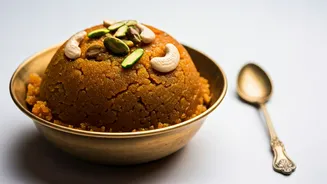
Once the semolina is roasted and the sugar syrup is ready, it's time to bring them together. Gradually pour the warm sugar syrup into the roasted semolina while continuously stirring. Pouring too quickly could cause lumps. Be careful; the mixture might splutter as the hot syrup hits the hot semolina. Keep stirring continuously to ensure the mixture combines smoothly. The semolina will absorb the syrup, gradually thickening and swelling as it cooks. As the halwa cooks, it will start to pull away from the sides of the pan. This indicates that the halwa is almost ready. At this stage, add the chopped nuts. Stir them in, ensuring they are evenly distributed. The nuts add texture and enhance the presentation. You can add more ghee at this stage if you desire a richer taste. Continue to stir until the halwa thickens and achieves a cohesive, slightly glossy appearance.
Finishing and Serving
Once the halwa has reached the desired consistency, remove it from the heat. Allow it to rest in the pan for a few minutes. This allows the flavors to meld, improving the overall taste. The resting period helps the halwa to firm up slightly. You can serve the Kesari Halwa warm or at room temperature, depending on your preference. Garnish it with additional chopped nuts or a sprinkle of saffron strands for an attractive finish. When serving for Saraswati Puja, place the halwa in a clean bowl or a platter as an offering. Offer it to the Goddess with devotion before consuming it. The Kesari Halwa, with its vibrant color and delightful taste, is a fitting tribute during this auspicious occasion. Its preparation reflects a reverence for tradition and a desire to create something special, making your Saraswati Puja even more memorable and spiritually rewarding.