





A Taste of New Beginnings
Ugadi, celebrated on March 19, 2026, marks the Telugu and Kannada New Year, a time of renewal rooted in ancient Hindu traditions. At the heart of these
festivities lies the Ugadi Pachadi, a culinary masterpiece designed to embody the full spectrum of human experience. This special dish isn't merely food; it's a philosophical statement, a ritualistic preparation that encourages reflection on life's inherent dualities. By harmoniously blending six distinct tastes, it sets a contemplative and optimistic tone for the Vishwavasu Samvatsara, the coming year. The preparation itself becomes a shared family activity, weaving stories and laughter into the intricate tapestry of flavors, making it a cornerstone of the New Year's traditions and a reminder to embrace all aspects of existence with gratitude and equanimity.
The Six Emotional Tastes
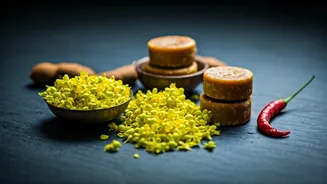
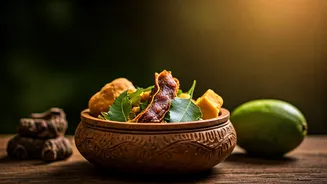
The true essence of Ugadi Pachadi lies in its masterful incorporation of six fundamental tastes, each representing a core human emotion or experience. Sweetness, derived from jaggery, signifies happiness and joy, the pleasant moments we cherish. Sourness, typically from tamarind, embodies life's unexpected turns and the resilience needed to navigate them. The subtle bitterness of neem flowers reflects moments of sadness or melancholy, reminding us that these too are part of the human condition. Spiciness, from black pepper, represents anger and passion, the fiery emotions that can drive us. Saltiness, lending a subtle hint of fear or uncertainty, acknowledges the unknowns that lie ahead. Finally, astringency, often from raw mango, symbolizes disgust or the challenges that test our fortitude. This intricate balance, aligned with Ayurvedic principles of 'Shadruchulu,' teaches us the profound lesson of accepting and integrating all facets of life, understanding that a truly fulfilling existence is found in the harmonious interplay of these diverse sensations.
Crafting the Traditional Pachadi
Preparing authentic Ugadi Pachadi is a ritual that honors tradition and flavor. Begin by soaking a small ball of tamarind in approximately 125 ml of warm water for about 15-20 minutes until it softens. Mash this well and strain to extract about ¼ cup of thick pulp, discarding any solids. In a separate vessel, dissolve 3 tablespoons of grated jaggery (preferably a dark, organic variety for authentic sweetness) in about 250 ml of warm water, stirring until completely melted. Filter this jaggery syrup to ensure a clear, impurity-free base. Combine the extracted tamarind pulp and the jaggery syrup in a large mixing bowl, whisking vigorously for approximately 2 minutes to achieve an even blend of sweetness and sourness. Next, incorporate ½ cup of finely chopped raw green mango (ensuring the skin is intact for maximum astringency), 1 tablespoon of rinsed neem flowers, ½ teaspoon of freshly ground black pepper for that sharp pungency, and ¼ teaspoon of rock salt to subtly represent fear or uncertainty. Gently mix these ingredients with a wooden spoon for 3-5 minutes, being careful not to crush the delicate neem flowers. Taste the mixture and adjust the balance as needed – a pinch more jaggery for sweetness or a touch more pepper for spice can be added. Cover the bowl and refrigerate for 30-60 minutes to allow the flavors to meld beautifully. This process yields about 2 cups of the symbolic pachadi, perfect for family rituals.
Serving and Symbolism
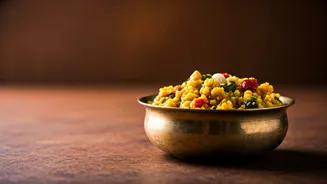
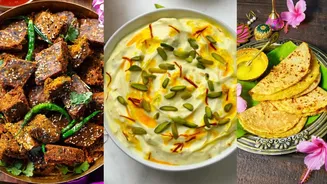
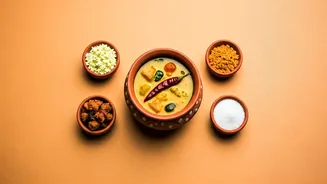
Once prepared, Ugadi Pachadi is traditionally served chilled in small bowls. It is often presented as the very first dish after the 'panchanga shravanam,' the recital of the almanac, setting a mindful tone for the New Year's feast. A garnish of extra neem flowers can be added for visual appeal, enhancing its traditional presentation. To further amplify its interactive and symbolic nature during the Ugadi celebrations, consider serving the pachadi alongside other festive staples like pulihora and mango rice. This presentation encourages guests to engage with the dish, perhaps by trying to identify the individual emotions each taste evokes. By mastering the Ugadi Pachadi recipe and partaking in its unique blend of flavors on March 19, 2026, individuals can embrace the wisdom of tradition and cultivate a year characterized by balance, resilience, and a deep appreciation for life's diverse experiences.