






Punjab's Sacred Offering
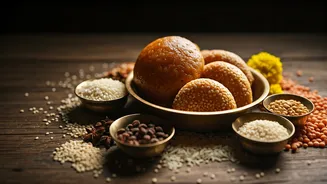
In Punjab, Baisakhi, a celebration of harvest and Sikh history, centers around Kada Prasad. This humble yet deeply meaningful dish, crafted from wheat
flour, ghee, and sugar, is prepared as a blessed offering and shared equally, symbolizing devotion and community. While Kada Prasad holds a special place, the Baisakhi feast expands to include a rich array of Punjabi delights such as kadhi, chhole, seasonal vegetable preparations, pulao, kheer, and various festive breads, all complementing the unifying spirit of the langar meal. However, Kada Prasad distinguishes itself by transcending dessert; it represents devotion served by hand, a testament to the sacredness of the occasion and the communal sharing it embodies.
Kerala's Sweet Beginnings
Vishu in Kerala marks a time of fresh starts, abundance, and beautiful rituals, with food playing a central role in the day's festivities. The celebratory meal, known as the Vishu sadya, is a grand vegetarian spread presented on a banana leaf. Integral to this feast are the traditional Kerala desserts called payasam. Whether it's the creamy palada payasam, the hearty parippu payasam, the delicate semiya payasam, or the rich ada pradhaman, payasam invariably adds sweetness to the end of the meal and signifies the sweet commencement of the new year. Complementing the payasam is a vibrant assortment of sadya dishes, including avial, thoran, olan, erissery, kalan, pachadi, pickles, crisp pappadam, and banana chips, all served alongside steamed rice. Payasam, though a single course, encapsulates the feeling of prosperity and abundance in every spoonful for Vishu celebrations.
Tamil Nadu's Flavorful Welcome
Puthandu, the Tamil New Year, is welcomed with vibrant kolams, temple visits, and auspicious first-sight rituals, culminating in a celebratory home-cooked meal. At the heart of this feast is the unique Mango Pachadi. This dish, a delightful concoction of raw mango, jaggery, and often fragrant neem flowers, is cherished for both its taste and its profound symbolism. The harmonious blend of sweet, sour, bitter, and spicy notes serves as a poignant reminder that the year ahead, much like life itself, will be a tapestry woven with diverse experiences and emotions. The broader Puthandu spread typically features a comprehensive vegetarian menu, encompassing rice, sambar, poriyal, kootu, appalam, vadai, payasam, and other seasonal specialties. Nevertheless, the Mango Pachadi remains the focal point of conversation, an appetizer that is simultaneously festive, deeply tied to the season's bounty, and philosophically rich, transforming a simple mango into a profound lesson for embracing the coming year.
Karnataka's Sweet Delight
In select regions of Karnataka, particularly among communities adhering to the solar calendar, the mid-April period ushers in the New Year as Sauramana Ugadi or Mesha Sankranti, signifying the Sun's movement into the Mesha zodiac. This occasion aligns with the broader spectrum of solar New Year celebrations observed across India during April. For the special festive menus, few dishes evoke as much beloved nostalgia as Obbattu, also widely recognized as Holige or Puran Poli. This delightful, soft flatbread, generously filled with a sweet mixture of lentils and jaggery, represents the epitome of celebratory comfort food. In Karnataka, Obbattu is intrinsically linked to festive culinary traditions, often gracing special occasions alongside accompaniments like kosambari, puliyogare, and mango pickle. Obbattu is the kind of dish that imbues celebrations with a heartwarming, homemade essence—rich with ghee, festive without being ostentatious, and best savored fresh from the griddle.
Assam's Springtime Treat
Bohag Bihu, also known as Rongali Bihu, marks the Assamese New Year and the vibrant arrival of spring in Assam, standing out as one of the state's most joyous festivals. This period is characterized by lively music, energetic dances, ancient rituals, and, of course, abundant feasting. Official Assamese sources highlight the special preparation of pithas and larus during Bihu, with Til Pitha emerging as one of the most recognizable and beloved sweets. Til Pitha is skillfully crafted from rice flour and traditionally filled with a sweet mixture of sesame seeds and jaggery, resulting in a delicate, earthy snack deeply ingrained in Assamese culinary heritage. Alongside Til Pitha, the Bihu table is adorned with other festive favorites such as ghila pitha, sunga pitha, narikol laru, tilor laru, alongside curd, jaggery, and various rice-based seasonal treats. However, Til Pitha uniquely embodies the spirit of Bohag Bihu, representing festivity without extravagance, a strong connection to the region's rice cultivation, and flavors derived directly from local ingredients.