






Fueling the Crisis
The geopolitical situation involving Iran has sent significant shockwaves through India's essential supply chains, particularly impacting the availability
and cost of cooking fuel. India's heavy reliance on imports of Liquefied Petroleum Gas (LPG) from the Middle East, a region critical for its supply, means any disruption, such as Iran restricting the Strait of Hormuz, directly translates to tangible problems for the nation's 1.4 billion people. This has already manifested in a 7% surge in household expenditure on cooking fuel and widespread scenes of long queues at LPG distribution centers. The demand for alternative cooking solutions, like induction burners, has skyrocketed, with sales on platforms like Amazon experiencing an over thirtyfold increase. The extended waiting period for LPG, reaching up to 25 days, has also severely hampered the operations of the food and beverage sector, underscoring the immediate and profound impact on daily life and commerce.
Beyond Gas: Deeper Price Pressures
The inflationary impact on Indian grocery bills extends far beyond cooking gas. The geopolitical tensions have a cascading effect through multiple layers of the food supply chain, including vital agricultural inputs like fertilisers and edible oils. The Strait of Hormuz, a crucial shipping lane, is not just a conduit for oil but also for approximately one-third of the world's traded fertilisers. Disruptions here mean that fertiliser prices escalate or availability plummets, prompting farmers to reduce planting or switch to less intensive crops. This eventually leads to higher prices for consumers at the vegetable counter months down the line. Furthermore, the crisis affects crop protection chemicals essential for agricultural yields. India's dependence on petrochemical supply chains originating from or passing through West Asia, which accounts for about 55% of global naphtha, exacerbates this issue. Even the cost of packaging has seen a substantial increase of 30–40%, contributing to the higher prices of processed and packaged food items.
Stocking Your Resilient Pantry
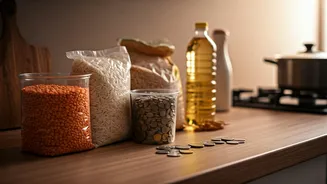
In light of potential price surges and supply uncertainties, it's prudent to strategically stock your kitchen with energy-efficient and long-lasting staples. Prioritize lentils and pulses like moong, masoor, and chana dal, as they cook faster than rice, consume less gas, and can be stored for over a year. While rice and atta (flour) are currently stable due to a strong domestic rabi harvest, acquiring an extra 10 kg bag offers a buffer against sudden retail price spikes. Edible oils require careful consideration; groundnut oil, being largely domestically produced, is a more secure choice compared to imported palm or sunflower oils, whose supply chains via the Gulf route are under pressure. Dry spices such as turmeric (haldi), cumin (jeera), mustard seeds (rai), and coriander are excellent, domestically grown options with long shelf lives. Keep a good stock of ginger-garlic paste in jars. For protein, lean towards eggs and locally sourced dairy products like paneer and curd, as they are domestically produced, nutritious, and independent of Middle Eastern shipping routes.
Cooking with Less Gas
With LPG supply becoming increasingly uncertain, mastering the pressure cooker is a game-changer for reducing cooking time and fuel consumption by 60–70%. Dishes that traditionally simmer for extended periods on an open flame, like rajma, can be prepared in a fraction of the time. Embrace the efficiency of one-pot meals such as khichdi, daliya, and sambar rice, which offer complete nutrition in a single cooking vessel. Soaking lentils and legumes overnight can also significantly halve their cooking time. For a healthier and more fuel-efficient approach, transition from deep-fried snacks to steamed preparations like idli, dhokla, and muthia, which are low in fuel but high in flavour. For those who have adopted induction stoves, consider them a permanent upgrade; while not always perfectly compatible with traditional Indian cooking techniques, they are highly effective for everyday preparations of dals, sabzis, and rice.