




Gathering Cream Wisely
Embarking on the journey to create your own pure desi ghee begins with the diligent collection of malai. This involves a daily ritual of boiling milk,
allowing it to cool, and carefully skimming off the rich cream that forms on the surface. This collected malai should be stored in a clean container, and this process should continue for approximately 30 to 35 days. The aim is to amass a substantial quantity, ideally around 1 kilogram of malai, which is crucial for yielding a satisfying amount of ghee. This patient accumulation is the bedrock of homemade ghee, ensuring you have a plentiful supply for your culinary adventures without relying on external sources.
The Churning Process
Once you've gathered sufficient malai, the next stage involves separating the butter from the buttermilk. This can be achieved through manual churning or by employing a kitchen blender. If churning manually, place the cream in a bowl and stir vigorously until the buttermilk begins to separate. For a quicker approach, transfer the cream into a blender jar, add a few ice cubes, and blend until the separation is complete. The addition of ice cubes, whether manual or in a blender, significantly aids in the easier and more efficient extraction of butter. This churned butter can then be formed into cubes or balls and chilled in the refrigerator for about 12 hours to firm up.
Simmering to Perfection
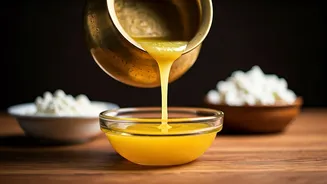
With the butter firmly set, the final transformation into desi ghee takes place on the stovetop. Transfer the chilled butter into a pan and place it over low heat. It's essential to maintain a gentle simmer, allowing the butter to slowly melt and clarify. You'll observe the liquid gradually separating and turning into a clear, golden hue. Once this distinct golden liquid is visible, signaling that the ghee has been successfully rendered, you can safely turn off the flame. This low and slow cooking process is key to extracting the pure essence of the butter, leaving behind impurities and developing that characteristic aroma and flavor of authentic desi ghee.
Cooling and Storing
After the golden liquid ghee has been achieved through simmering, the next crucial steps involve cooling and proper storage. Once the flame is turned off, carefully strain the ghee to remove any residual milk solids or impurities. Allow the strained ghee to cool down completely. As it cools, you'll notice its texture and color. Ghee made from cow's milk typically cools to a yellow shade, while ghee derived from buffalo milk solidifies into a white appearance. Once cooled, transfer the pure desi ghee into an airtight container. Storing it in an airtight vessel helps preserve its freshness, aroma, and quality for extended periods, ready to be used in your cooking.