







Practical Beginnings
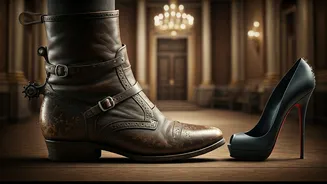
Contrary to their modern image, high heels didn't start as decorative items but served crucial functional purposes. In 15th-century Persia, cavalry riders
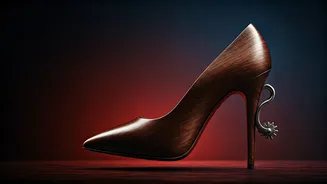
utilized heels integrated into their boots to better secure their feet within stirrups. This design provided enhanced stability during horseback maneuvers and combat, becoming the precursor to what we now recognize as cowboy boots. Fashion became a secondary consideration much later. Centuries after their initial utilitarian adoption, the concept of elevated footwear began its migration to Europe. In Spain, women wore elevated wooden or cork shoes called 'chopines' as a practical solution to navigate the muddy streets of the time. As this trend reached Venice, influenced by Persian visitors, the platforms of these shoes grew significantly taller. Adorned with luxurious materials like velvet, they not only offered protection from the mire but also dictated a slower, more deliberate gait, turning walking into a deliberate display. This practical elevation soon caught the eye of European aristocracy, where men, in particular, began adopting heels as a clear indicator of their elevated social standing and wealth. These early forms of elevation, whether for equestrian advantage or street protection, underscored the initial pragmatic drivers behind the design.
Status and Luxury
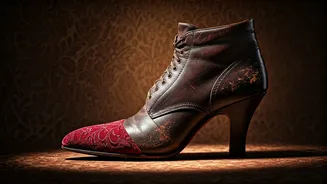
The concept of elevated footwear quickly evolved beyond mere practicality, becoming deeply intertwined with notions of wealth and social privilege. In medieval Europe, shoes known as 'pattens' served to lift wearers above the unsanitary ground, acting as a visible marker of their ability to avoid manual labor and the associated dirt. The higher the platform or heel, the greater the implied distance from arduous tasks and the more pronounced the signal of a life supported by others, whether through servants or regular use of carriages. This elevation transitioned into a tangible symbol of status. Later, across the globe, similar ideas of elevation manifested in distinct cultural forms. Japan’s wooden 'geta' sandals and intricately lacquered 'okobo' transformed walking into a rhythmic sound and a ceremonial act, emphasizing a connection between footwear and cultural expression. Similarly, the Ottoman Empire's 'kabkabs' combined the functional aspects of bathhouse footwear with decorative embellishments, showcasing how elevation could blend utility with aesthetic appeal. These diverse examples highlight a universal trend: elevating the foot became a potent way to signify a life of leisure, prestige, and cultural identity, independent of any practical necessity.
Power and Engineering
By the 17th century, high heels had firmly cemented their association with dominance and authority, moving beyond mere status symbols to become instruments of visual hierarchy. King Louis XIV of France, a fervent proponent of opulent court life, famously sported heels, reportedly up to four inches high. He further reinforced their exclusivity by decreeing that only members of the royal court could wear red-soled shoes, transforming footwear into a direct and unmistakable sign of allegiance and elevated rank. This era of regal endorsement dramatically amplified the heel's symbolic power. A pivotal shift in the design and feasibility of high heels occurred in the mid-19th century with the industrial revolution. The introduction of the steel shank revolutionized shoe construction, providing unprecedented support and enabling the creation of much higher, more stable heels. This innovation was fundamental, paving the way for the slender, gravity-defying heels and the iconic stiletto that would emerge later. The 20th century saw continued innovation, with designers like Salvatore Ferragamo experimenting in the 1940s with lighter materials such as cork and transparent elements, exploring new possibilities for balance and comfort. The modern stiletto truly took shape in 1954 when Roger Vivier masterfully merged sophisticated engineering with elegant design, creating a heel that was both daringly high and structurally sound, forever altering the silhouette of footwear.
Modern Expressions
The late 20th and early 21st centuries witnessed a resurgence and diversification of high heels, transforming them into canvases for bold self-expression and potent cultural statements. The 1970s, in particular, saw a vibrant revival of platform heels, fueled by the energetic scenes of glam rock, disco, and underground queer nightlife. In these contexts, height became an essential component of theatrical performance, a tool for amplifying identity, and a means of challenging conventional norms. Moving into the 2000s, Christian Louboutin's iconic red sole redefined luxury. The signature flash of crimson became instantly recognizable, a coded signal of exclusivity and high fashion that transcended the need for visible logos, demonstrating the power of color alone to denote status. More recently, the Margiela Tabi heel, originally inspired by traditional Japanese workwear and introduced in 1989, experienced a significant cult revival in the 2010s. Its distinctive split-toe design became an emblem of fashion-forward thinking and an indicator of insider knowledge within the style community. Alexander McQueen's dramatic Armadillo boots, first presented in 2010, pushed the boundaries of heel design even further, moving them into the realm of avant-garde art and transformative fashion. Adopted by influential figures like Lady Gaga, these designs signaled fashion's embrace of spectacle and the exploration of posthuman aesthetics. Meanwhile, brands like Prada and Miu Miu have consistently reframed femininity through their footwear, utilizing industrial geometry or playful proportions to create heels that are perceived as intelligent, ironic, and self-aware, demonstrating the enduring and evolving narrative power of the high heel.