








The Brain's Fuel Needs
The common evolutionary diet narrative often pushes a meat-and-fat-heavy 'Paleo' approach, dismissing carbohydrates as a modern ill. However, this overlooks
a critical aspect of human evolution: the brain's immense energy requirements. Our brains, accounting for a mere 2% of body weight, consume about 20% of our daily calories, with glucose—a sugar derived from carbs—being their preferred fuel. While fat can power muscles, the brain functions optimally on glucose. The significant expansion of the human brain over millions of years necessitated a consistent and abundant energy source. While hunting provided protein and fat, it was risky and inconsistent. Naturally growing tubers, roots, and wild grains offered a more reliable and less dangerous alternative, driving our biological inclination towards starchy foods.
The Amylase Advantage
The scientific evidence for our starch-loving nature is literally in our saliva. Humans possess a gene named AMY1, responsible for producing salivary amylase, an enzyme crucial for initiating starch digestion by breaking it down into sugars right in the mouth. Our closest primate relatives, chimpanzees, typically have only two copies of this gene, reflecting their diet of fruits and leaves. In stark contrast, humans generally have between six and twenty copies. This genetic difference suggests that throughout our evolutionary journey, individuals with a greater capacity to extract energy from starchy foods had a survival advantage, leading to more successful reproduction and the propagation of these starch-processing genes. Therefore, that satisfying feeling when you eat rice is not a deviation from our evolutionary path, but rather a confirmation of it—your body is celebrating its highly adapted ability to thrive on carbohydrates.
The Biryani Jackpot
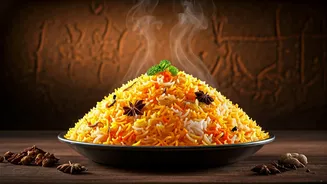
The allure of dishes like Biryani, which ingeniously combine carbohydrates with fats, can be understood through an evolutionary lens. In natural environments, such a perfect fusion of quick energy (carbs) and long-term energy storage (fats) is exceedingly rare. Fruits offer sugars but lack fat, while nuts and meats provide fat but not readily available sugars. Modern culinary creations, however, often masterfully unite these two nutrient sources. From a Darwinian perspective, this combination represents a 'jackpot' for survival. The hypothalamus, often referred to as the 'lizard brain,' recognizes this pairing as a signal of assured sustenance. The overwhelming urge to consume such rich, calorie-dense foods is not a failure of willpower but rather a deeply ingrained survival mechanism. This ancient program, designed to ensure survival in times of scarcity, is now triggered effortlessly in an environment of abundant food, making our cravings for foods like Biryani a powerful indicator of our evolutionary history.