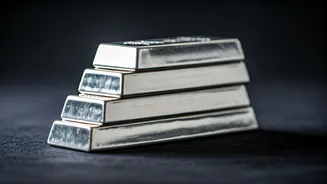

Silver's Recent Rise
Silver, often overshadowed by its more glamorous cousin, gold, has recently shown remarkable strength. For years, it was seen as a less expensive alternative,
but its performance in 2024 has challenged that notion. The metal’s value has increased significantly, capturing the attention of investors and analysts. This shift indicates a change in market dynamics, with silver potentially poised to become a significant player in the investment landscape. It is currently being viewed as a potential hedge against economic uncertainty, similar to how gold is traditionally used. Several factors contribute to this upward trajectory, including industrial demand and evolving investor sentiment. Understanding these influences is crucial to assess silver's future potential.
Factors Driving Demand
Several key factors are fueling silver's demand. Firstly, the industrial sector plays a significant role, as silver is an essential component in various technological applications, from electronics to solar panels. The increasing adoption of renewable energy sources has directly boosted silver consumption. Additionally, investor interest is growing due to its perceived value and potential as an inflation hedge. This dual demand – industrial and investment – creates a robust foundation for silver's price. Compared to gold, silver is often seen as being more affordable, which makes it accessible to a wider range of investors. As the economy undergoes constant changes, investors are increasingly looking at diverse investment options, silver becoming a popular choice. The supply and demand dynamics of silver are also a key point, especially how they affect price fluctuations.
Comparing Investment Choices
When considering precious metal investments, it is crucial to compare silver with other options, primarily gold. Gold is often viewed as a safe haven asset and a reliable store of value, which is very liquid. Silver, on the other hand, exhibits greater volatility, meaning its price can fluctuate more dramatically. This higher volatility can provide both greater returns and greater risks. Unlike gold, silver's price can also be greatly influenced by industrial demand. Other investment options include stocks, bonds, and real estate, but these assets often have a different risk profile and can be less stable than precious metals in times of economic uncertainty. Silver’s performance should be carefully evaluated in comparison to these other instruments. Considering factors like market trends, economic indicators, and personal investment goals will help investors make more informed decisions about including silver in their portfolios.
Silver's Future Outlook
Looking ahead, the outlook for silver appears promising, yet it is not without complexities. Experts predict ongoing industrial demand, driven by technological advancement. The metal's use in electric vehicles and renewable energy further supports a favorable long-term trend. However, factors like fluctuations in interest rates, economic growth rates, and shifts in investor sentiment could all influence its price. Investors should closely follow these and other global events that may impact silver's value. Considering these varying elements, investors must conduct thorough research, assess risk tolerance, and diversify their portfolios. The future performance of silver will depend on many factors. Therefore, being well-informed is essential for effectively navigating the investment landscape. Despite the challenges, silver's unique position in both industry and investments gives it a promising trajectory.