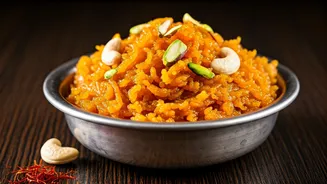

Halwa: A Sacred Offering
Kesari Halwa holds a special place in Indian cuisine, especially during religious festivals such as Saraswati Puja. The vibrant color and the rich taste
make it an appealing offering. It's often prepared with semolina (suji/rava), sugar, ghee, and flavored with saffron (kesar) and cardamom. The preparation is considered an act of devotion, and the offering is meant to please the goddess Saraswati. Families prepare it with love and care, often following specific family recipes that are passed down through generations. This halwa embodies the essence of the festival, connecting food, faith, and community in a deeply meaningful way. The aroma of ghee and cardamom fills homes and temples, creating an atmosphere of festive joy.
Gather Your Ingredients
To create the perfect Kesari Halwa for the 2026 Saraswati Puja, you'll need to gather the right ingredients. Start with 1 cup of semolina (suji/rava), which is the base of this dessert. Then, you'll need 1 cup of sugar, to provide the sweetness. For richness and flavor, you'll require ½ cup of ghee. The key flavoring comes from saffron strands (kesar), about a pinch, and a few cardamom pods, crushed to a powder. Water is also essential, about 3 cups. Also, you can add nuts, such as cashews and almonds, for garnishing, roughly ¼ cup. These ingredients, when combined with care, will result in a delicious, and visually appealing prasadam. Make sure you have all the ingredients ready before you start cooking to ensure a smooth and enjoyable process.
Prepare the Saffron Infusion
The preparation of saffron infusion is a critical step in making flavorful Kesari Halwa. Take a small bowl and soak the saffron strands in a small quantity of warm milk or water, approximately 2-3 tablespoons. Allow this mixture to steep for at least 30 minutes. This will allow the saffron to release its color and flavor, infusing the liquid with its essence. The soaking process softens the saffron and enables the color to disperse effectively in the halwa. By the time you start cooking, this saffron-infused liquid will have a rich, golden hue, ready to impart its beautiful color and the distinct flavor to the halwa. Ensure the saffron is fully submerged for optimal extraction.
Roast the Semolina
Roasting the semolina is an essential part of the halwa-making process. Start by heating the ghee in a heavy-bottomed pan or kadai. Once the ghee is hot, add the semolina (suji/rava) to the pan. Over medium heat, stir continuously. This step is important to prevent burning and to ensure that the semolina roasts evenly. Continue stirring for about 5-7 minutes, or until the semolina turns golden brown and releases a nutty aroma. This roasting process is crucial for developing the flavor of the halwa. The change in color indicates that the semolina is toasted properly, which will significantly affect the overall taste of the finished dish. Be careful not to over-roast, as this can make the halwa bitter.
Adding Water and Sugar
Once the semolina is roasted, it's time to add water and sugar. Carefully pour the 3 cups of water into the pan with the roasted semolina, and stir immediately to avoid any lumps. The water should be added gradually while stirring continuously. Then, add the sugar to the pan. Stir well to dissolve the sugar completely. At this point, reduce the heat to low and let the mixture simmer gently. The semolina will absorb the water and the mixture will start thickening. The key here is to keep stirring, to ensure that the halwa doesn't stick to the bottom of the pan. This process will continue for about 8-10 minutes, or until the water is mostly absorbed and the halwa starts to leave the sides of the pan.
Infuse with Flavor
Now it's time to add the saffron infusion and cardamom powder to the halwa. Pour the saffron-infused liquid into the halwa, stirring gently to distribute the color and flavor evenly. Next, add the crushed cardamom powder, which will enhance the aroma. Stir the halwa continuously for another 2-3 minutes, allowing the flavors to meld together. The saffron gives a gorgeous color and delicate flavor, while the cardamom adds an aromatic spice that perfectly complements the sweetness. Continue stirring until the halwa thickens further, and the ghee starts to separate from the sides of the pan. This is an indicator that the halwa is almost ready and the flavors have blended well.
Garnish and Serve
As the halwa nears completion, add the chopped nuts. If using cashews and almonds, lightly toast them in ghee. Gently fold the nuts into the halwa. The addition of nuts not only enhances the texture but also provides a delightful crunch. Stir the halwa one last time. Take the pan off the heat and allow the halwa to rest for a few minutes. Serve the Kesari Halwa hot or warm, preferably in small portions as an offering. Garnish with additional nuts. The vibrant color, enticing aroma, and rich taste make it a perfect offering for Saraswati Puja. The preparation of this dish is a symbol of devotion, and the offering is meant to please the goddess Saraswati.