
Ancient Roots
The story of dal, a cornerstone of Indian cuisine, begins an astonishing 4,500 years ago, around 2500 BCE, within the sophisticated civilization of the Indus
Valley. Archaeological evidence unearthed from this period clearly indicates that various types of lentils and pulses were not merely a food source but a fundamental dietary staple for the early inhabitants of the subcontinent. These nutrient-rich legumes provided essential sustenance, forming the bedrock upon which India's enduring love affair with dal was built. This ancient reliance on pulses laid the crucial groundwork for dal's subsequent integration into virtually every Indian household and its eventual recognition as the ultimate comfort food, a culinary legacy that has withstood the test of time and continues to nourish generations.
Historical Mentions
Beyond its archaeological origins, dal's presence is woven into the fabric of India's historical narrative through ancient texts. These early writings offer glimpses into how lentils were prepared and enjoyed, hinting at their significance beyond everyday sustenance. Specifically, historical accounts suggest that lentil-based preparations were integral to celebratory occasions and important gatherings. One notable reference connects an early iteration of 'ghugni,' a popular street food in Eastern India today, to the wedding feast of the formidable Mauryan emperor Chandragupta Maurya in 303 BCE. This connection highlights how dal, even in its nascent forms, was associated with significant cultural events and social milestones, underscoring its evolving role from a basic necessity to a dish of festivity.
Royal Culinary Ascendance
During the medieval period, dal underwent a significant elevation in status, transitioning from simple hearths to the grand dining halls of royal courts. A key factor in this transformation was the refined cooking technique known as 'dum pukht,' or slow steam-cooking. This method allowed for the development of complex flavors and luxurious textures, making dal a dish worthy of imperial palates. Chana dal, in particular, rose to prominence, with court chefs dedicating considerable skill and attention to its preparation. The meticulous cooking process and the use of rich ingredients transformed humble lentils into sophisticated culinary creations, showcasing the adaptability of dal and its capacity to be refined for the most discerning tastes, thus cementing its place in royal gastronomy.
The Art of Panchmel
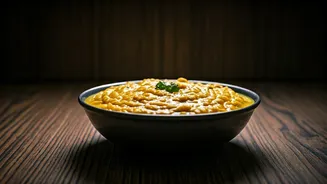
A testament to the ingenuity of Indian culinary evolution is the creation of 'Panchmel dal,' also known as 'Panchratna dal.' This exquisite dish ingeniously combines five distinct types of lentils into a single, harmonious preparation. Legend suggests that Panchmel dal first flourished within the royal kitchens of Mewar, a historical region known for its rich cultural heritage. Its popularity subsequently extended to the esteemed Mughal courts, gracing the tables of emperors like Shah Jahan and Aurangzeb. Some intriguing folklore even traces the origin of this multi-lentil blend back to Bhim, one of the Pandava brothers from the epic Mahabharata, who is said to have slow-cooked a mixture of dals in an earthenware pot. This rich tapestry of origin stories highlights the dish's deep cultural roots and its appeal across different eras and regions.
Moradabadi Dal Innovation
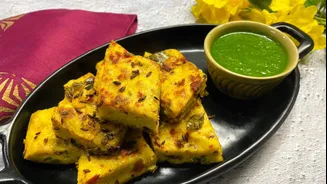
The culinary landscape was further enriched by the emergence of 'Moradabadi dal,' a lighter and zesty preparation of moong dal. This dish is widely believed to have originated as an experimental creation within a royal kitchen, purportedly named in honor of Prince Murad. Characterized by its refreshing garnish of finely chopped onions, vibrant green chilies, and a sprinkle of 'amchur' (dried mango powder) for a tangy kick, Moradabadi dal carved a unique niche for itself. Unlike heavier lentil preparations served as main courses, it gained popularity primarily as a flavorful and invigorating snack, demonstrating another facet of dal's versatility and its ability to adapt to different dining contexts and preferences.
The Birth of Dal Makhni
In the more recent history of Indian cuisine, the 20th century saw the creation of one of its most globally recognized lentil dishes: Dal Makhni. This iconic preparation was masterminded by restaurateur Kundan Lal Gujral, who, in a stroke of culinary genius, combined hearty urad dal and chana dal with tender rajma (kidney beans). The medley of legumes was then simmered in a rich, velvety gravy infused with tomatoes, cream, and a blend of aromatic spices. Developed as a complementary dish to the equally famous butter chicken, Dal Makhni's decadent flavor profile and comforting texture propelled it to international fame, solidifying its status as a beloved dish enjoyed far beyond the borders of India.