





Prep Like a Pro
Before you even touch the kathal, gather your tools and set up your workspace for success. Select a long, exceptionally sharp knife that will allow for precise
cuts. Prepare a generous basin, approximately 2 to 3 liters, filled with ice-cold water. To this, add a teaspoon each of salt and turmeric; this not only helps preserve the vibrant color of the jackfruit but also acts as a soothing bath for the cut pieces. Crucially, lightly coat both sides of your knife blade with a neutral oil. This oily barrier is the key to preventing the notoriously sticky sap from adhering to the metal. Be mindful, however, to keep the knife handle completely free of oil to ensure a firm, non-slipping grip. For your hands, apply oil only to your non-dominant hand. This protects your skin from the sap without creating an overly slippery surface, which could lead to the knife sliding unexpectedly. Remember, oiling both hands significantly increases the risk of accidents, so stick to oiling just one hand.
Cutting the Kathal
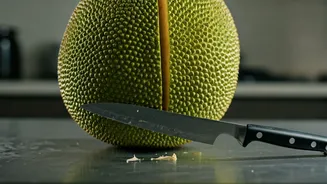
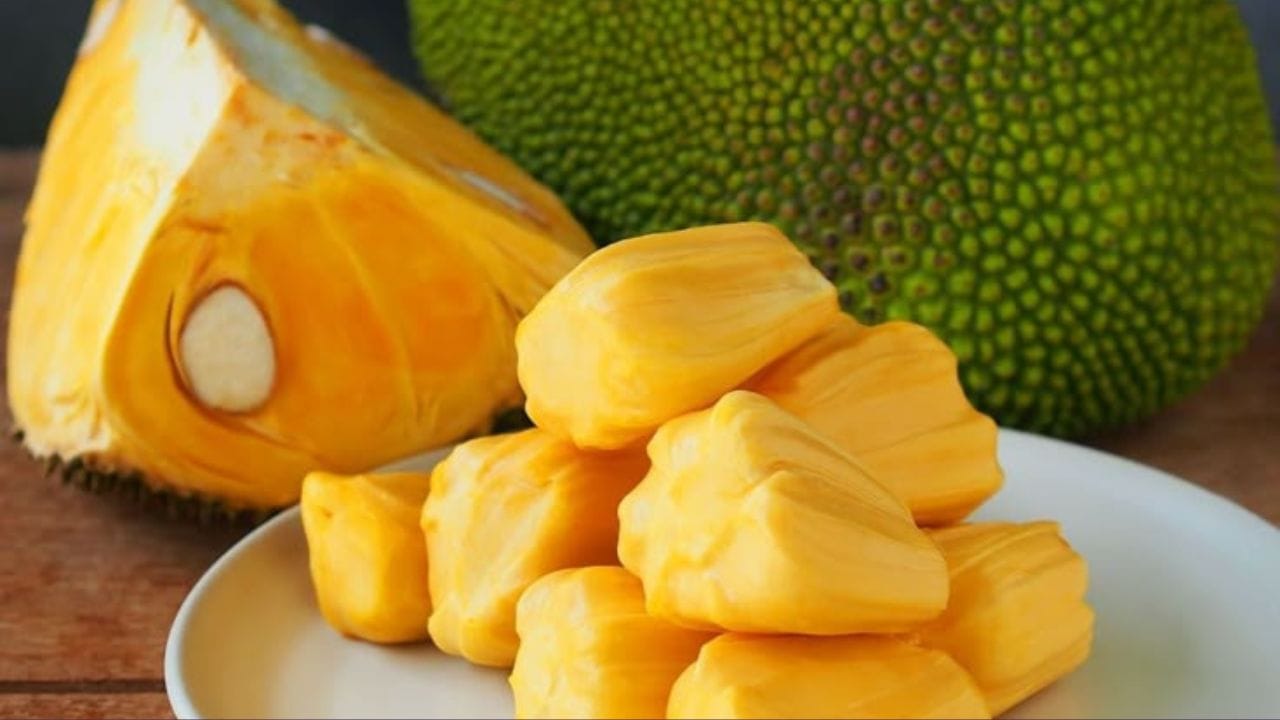
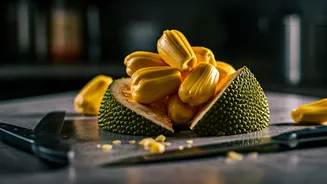
Begin by placing the raw kathal on a stable cutting board. With your sharp, oiled knife, slice off the top portion, approximately 1.5 inches from the stem. As soon as you make this initial cut, you'll notice the sticky sap beginning to ooze. Immediately place the cut kathal onto an old newspaper or a disposable plate to effectively catch this sap. Allow it to rest for about a minute. Then, use the freshly cut surface of the jackfruit itself to gently scrape away the accumulated sap. Avoid using your hands or the knife for this step, as it can become quite messy. Next, carefully flip the jackfruit over. Repeat the process by slicing off the bottom end and again, collect the sap on your newspaper or plate. After another minute of resting, use a piece of previously cut jackfruit to remove any residual stickiness. Now, reapply oil to both sides of your knife blade. Stand the jackfruit upright and carefully slice it directly down the center, vertically. The majority of the sap will typically emerge from the central core at this stage. Let it sit for another 30 seconds, then use a piece of previously cut jackfruit to once more remove the sap. Following this, slice each of the halves lengthwise to create long wedges. Stand these wedges upright and meticulously peel off the tough outer skin, ensuring you don't remove an excessive amount of the edible flesh. Cut the peeled sections into half-inch thick slices, and then chop these slices into approximately one-inch chunks. Immediately transfer these prepared pieces into the ice-cold turmeric-salt water bath you prepared earlier.
Final Steps & Storage
Continue this process systematically for all remaining sections of the kathal. It's important to note that you should not remove the central stem; this part plays a crucial role in keeping the fibrous chunks intact and together during the cooking process. Once all the pieces are submerged in the cold water, allow them to soak for a duration of 15 to 20 minutes. This cooling and cleansing bath helps to neutralize any lingering sap and prepares the jackfruit for cooking. After soaking, carefully drain the pieces and spread them out on a clean kitchen towel. Gently pat them dry to remove excess moisture. This careful preparation ensures that your kathal is ready to be used in a variety of delicious dishes, from rich curries and flavorful stir-fries to serving as an excellent plant-based alternative in vegan and vegetarian recipes. If you wish to prepare kathal at a later time, these prepped pieces can be safely stored in the freezer. This allows you to enjoy delightful kathal sabzi or biryani whenever the craving strikes, making this versatile fruit a regular addition to your culinary repertoire.