





Initial Prep & Sorting
Before diving into washing, start by assessing your strawberries. Spread them out on a plate or tray to get a clear view of each berry. This is the ideal
moment to identify and discard any that appear mushy, bruised, or show signs of mold. Removing these damaged fruits early prevents them from potentially contaminating the good ones and ensures you're working with the freshest produce. This initial sorting step is crucial for maintaining the overall quality of your batch and setting the stage for a thorough cleaning process.
Gentle Rinsing Technique
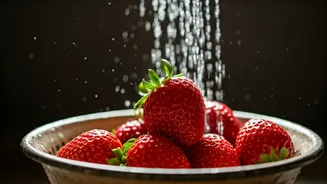
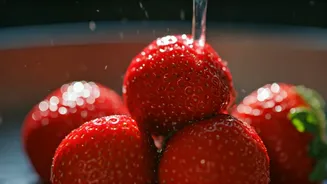
Once sorted, place your strawberries into a colander. The next step involves a gentle rinse under cool running water. As the water flows, lightly agitate the berries with your hands. This movement helps to dislodge any loose dirt, dust, or other surface debris that might be clinging to the fruit. It's important to be delicate during this stage to avoid bruising the fragile berries. Crucially, resist the urge to remove the green leafy tops at this point; keeping them attached helps prevent the flesh of the strawberry from absorbing too much water, which can lead to sogginess and affect their texture.
Vinegar Soak for Purity
For a deeper clean and to tackle any unseen contaminants like bacteria or microscopic organisms, a vinegar solution is highly effective. Prepare this by mixing 1 cup of white vinegar with 3 cups of cold water. Submerge the strawberries in this mixture for approximately 5 to 7 minutes. This duration is sufficient to kill germs and loosen any clinging insects without allowing the berries to become waterlogged, as strawberries are quite absorbent. After the soak, you'll notice a significant improvement in their cleanliness, preparing them for the final rinse.
Saltwater for Pests
If you have concerns about tiny pests or fruit larvae hiding within the crevices of your strawberries, a saltwater solution offers a natural and effective remedy. To create this, combine 1 teaspoon of salt with 2 cups of water. Carefully place the strawberries in this saline bath. The salt helps to coax out any hidden insects. Similar to the vinegar soak, it's important not to leave them in the saltwater for too long to maintain their texture. This method is particularly useful for ensuring no unwelcome tiny guests make their way into your fruit.
Final Rinse and Drying
After employing either the vinegar or saltwater solution, a final, thorough rinse under fresh, cold water is essential. This step ensures that any residual taste or smell from the cleaning agents is completely removed, leaving the strawberries with their natural flavor. Once rinsed, carefully transfer the berries to a clean kitchen towel or paper towels. Gently pat them dry, ensuring all excess moisture is removed. Proper drying is key to preventing mold growth and maintaining their freshness for consumption and use in recipes.
Finishing Touches
With your strawberries now immaculately clean and thoroughly dried, the final preparation can commence. It is at this stage, after all washing and drying processes are complete, that you should remove the green leafy tops. If your recipe or preference calls for it, you can now slice them as needed. This meticulous cleaning and drying process ensures that your strawberries are not only visually appealing but also safe to eat, allowing you to fully savor their sweet, juicy flavor in all your culinary creations.