

The Threshold: When Is a Recount Possible?
First, there are no automatic recounts in Virginia. A recount can only happen if a losing candidate formally requests one after the election results have been certified by the state or local board of elections. The key factor is the margin of victory. A candidate can petition for a recount if the difference between them and the winning candidate is 1% or less of the total votes cast for those two candidates. For example, if the winner received 50,500 votes and the loser received 50,000 votes, the 500-vote margin would likely be less than 1% of the total 100,500 votes, making a recount possible. The threshold is wider for write-in candidates, who can request a recount if the margin is 5% or less. A similar process exists for ballot referendums
if the margin is 50 votes or 1%, whichever is greater, and at least 50 voters petition for it.
The Petition: Making It Official
Once the election is certified, a clock starts. The losing candidate has ten calendar days to file a formal petition for a recount with the appropriate circuit court. For statewide offices, like governor or U.S. Senator, the petition is filed in the Circuit Court for the City of Richmond. For local or district races, it's filed in the circuit court of the county or city where the challenged candidate resides. This petition outlines the certified results and formally asks the court to order a recount of the ballots. For presidential elections, the timeline is much tighter; a recount must be requested within two days of certification to ensure the process is completed before the Electoral College meets.
The Recount Court: Who's in Charge?
A recount isn't just an administrative do-over; it’s a formal legal proceeding overseen by a 'recount court'. Once a petition is filed, the chief judge of that circuit court notifies the Chief Justice of the Supreme Court of Virginia. The Chief Justice then appoints two other judges to join the chief judge, forming a three-judge panel that presides over the entire recount. This court holds a preliminary hearing within seven days to establish the rules and procedures for how the count will be conducted, ensuring uniformity and fairness. This panel has the final say on all matters, including ruling on the validity of disputed ballots. Its decision is final and cannot be appealed.
The Count: How Votes Are Re-examined
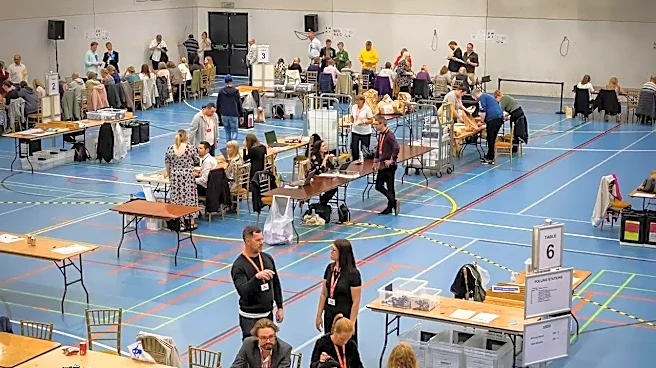
The actual recount is a mix of machine and manual counting. First, paper ballots that were originally read by optical scanners are typically fed through the machines again. However, the scanners are programmed to sort out certain ballots for human review. These include ballots with write-in votes, 'undervotes' (where a voter chose fewer candidates than allowed), and 'overvotes' (where a voter chose too many). Any ballots the machine can't read are also set aside. These separated ballots, along with any that were originally hand-counted, are then examined by teams of recount officials appointed by the parties involved. These officials determine voter intent, and any ballots they can't agree on are submitted to the three-judge court for a final ruling.
The Cost: Who Pays for the Recount?
The cost of a recount depends on the margin and the outcome. The state and local governments will cover the costs if the requesting candidate ultimately wins the recount. The costs are also covered by the public if the initial margin was exceptionally close—specifically, 0.5% or less of the total vote between the two candidates. However, if a candidate requests a recount with a margin between 0.5% and 1.0% and still loses, that candidate is responsible for the costs. The petitioning candidate must post a bond of $10 per precinct, which is forfeited to cover expenses if they lose and are responsible for payment. If the costs exceed the bond amount, the petitioner is liable for the remainder.