


The Short Answer: Yes, Under Clear Rules
Hawaii law explicitly permits the observation of its election processes to ensure transparency. The state's Chief Election Officer, Scott Nago, has emphasized that counting is not done in a 'closed or back room'. By law, the entire tabulation process happens in front of 'Official Observers' who serve as the eyes and ears of the public. This isn't a free-for-all, however. The system is highly structured, with specific rules dictating who can be an observer, where they can be, and what they are allowed to do. The goal is to balance public transparency with the security and efficiency needed to conduct a modern election, which in Hawaii is conducted primarily by mail.
Who Gets to Be an 'Official Observer'?
Not just anyone can walk into a counting center and demand a seat. Hawaii law
defines a few specific categories of 'Official Observers'. First and foremost are representatives from qualified political parties; each party is entitled to designate at least one observer. The media also gets a designated spot, with at least one observer from the news media permitted. Beyond that, the Chief Election Officer or county clerk can authorize additional observers from non-partisan community groups or other organizations if space and facilities allow. Separately, political parties can also appoint 'watchers' to be present at voter service centers, which are locations for in-person voting and registration. All observers and watchers must be registered voters in Hawaii and cannot be candidates themselves.
What Observers Can (and Cannot) Do
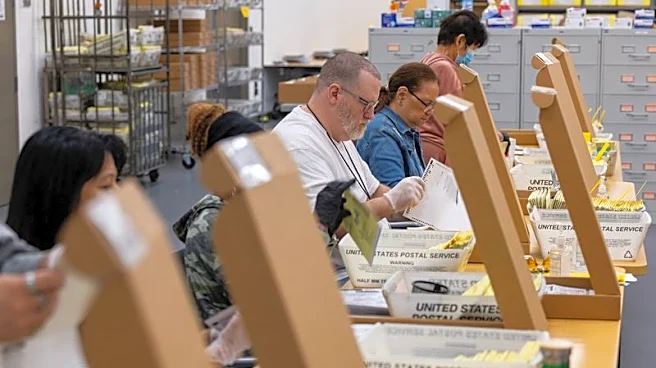
The role of an observer is to witness the process, not interfere with it. They are present for key procedures, including pre-election logic and accuracy testing of voting machines, the transfer and handling of ballots, and the final count at one of the state's four county-based counting centers. Official Observers are expected to monitor operations and report any violations to election officials. However, their powers are limited. They cannot handle ballots, speak to election workers performing their duties, or disrupt the process in any way. Use of personal electronic devices is also prohibited within the counting centers. The rules are strict to maintain a secure and orderly environment, ensuring that the observation process itself doesn't compromise the integrity of the count.
Transparency Beyond the Ballot Count
Hawaii’s commitment to transparency extends beyond just having observers in the room. Several other key election processes are open to public view. Logic and accuracy testing of voting equipment before an election is open, allowing observers to verify the machines are working correctly before a single vote is counted. While post-election audits are not automatically open to the public, observers can request to conduct a manual audit to verify results. Recounts, which are automatically triggered in very close races, are also open to candidates and their representatives. This multi-layered approach, from pre-election tests to post-election verification, is designed to build public confidence at every stage. It shows a system where transparency is a feature, not an afterthought, baked directly into state law and administrative rules.