
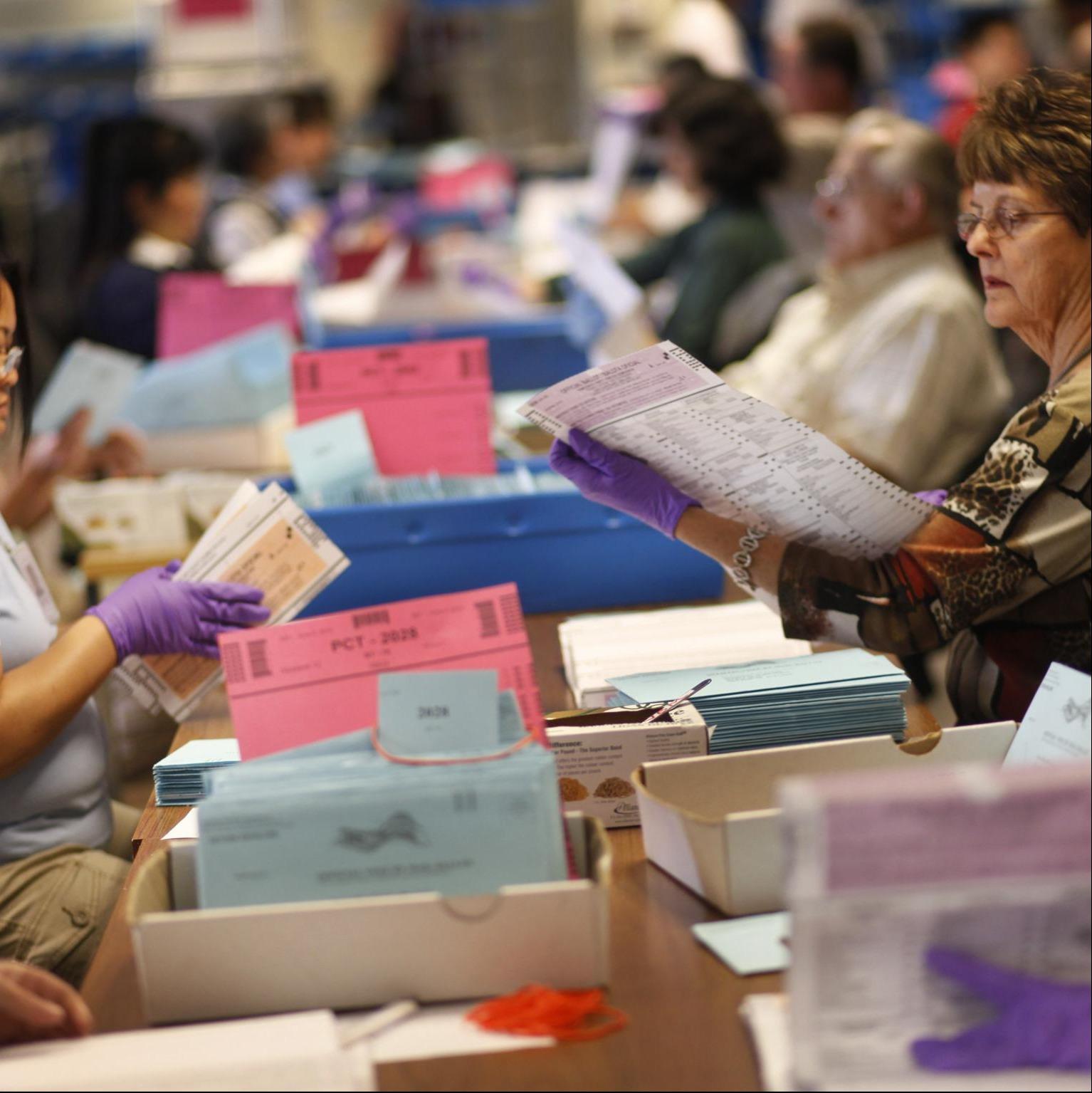


In any election, transparency is crucial for public trust. This often raises a key question: who gets to watch the votes being counted? In Georgia, the answer is yes, observation is permitted, but it’s a highly regulated process.
Who Qualifies as an Observer?
Not just anyone can walk into a tabulation center and start watching. Georgia law defines specific categories of observers, primarily known as 'poll watchers'. These individuals must be officially designated in advance by a political party, a nonpartisan candidate in a statewide election, or an independent candidate. Each political party can appoint up to two poll watchers per location (precinct, advance voting site, or tabulation center), while independent and nonpartisan candidates can designate one. There's also a category
of 'statewide' poll watchers, with parties and candidates allowed to name up to 25 individuals who can move between locations, though no more than two from the same entity can be at the same site simultaneously. Crucially, candidates themselves are not allowed to serve as poll watchers in any election in which their name is on the ballot.
What Observers Are Allowed to Do
The primary role of a poll watcher is to observe the process to ensure fairness and legality. Georgia law explicitly grants them access to observe all stages, including at polling places, advance voting sites, and central tabulation centers where ballots are counted. They are permitted to be 'behind the enclosed area' to watch the conduct of the election and the counting of votes. The law states they are entitled to sit or stand as close as is practical to the activity to see and hear, as long as they don't impede the process or view confidential voter information. If a poll watcher believes they've seen an irregularity, their official recourse is to report it to the county election superintendent, not to confront the individual poll workers directly.
The 'Do Not Cross' Line: What Observers Cannot Do
The rules for what observers cannot do are just as important as what they can. The overarching rule is that a poll watcher must not interfere with the conduct of an election in any way. This includes a number of specific prohibitions. Observers are forbidden from speaking to voters within the polling place or within 150 feet of the entrance. They cannot use cellular phones, or any photographic or electronic recording devices inside the polling place. They are not permitted to touch any voting equipment, supplies, or lists of electors. Campaigning of any kind is strictly forbidden. If a poll watcher violates these rules, election officials have the authority to remove them. Interference with an election official's duties can even escalate to a felony charge.
The Role of the General Public
While designated poll watchers have specific rights to be in close proximity to the counting, Georgia law also acknowledges the public's right to transparency. Proceedings at tabulation centers are generally open to public view. However, members of the public, sometimes called 'poll monitors', do not have the same level of access as official watchers. They are not allowed inside the 'enclosed space' where voting and tabulation occur and must observe from a designated public area. This tiered system is designed to balance broad public transparency with the specific, regulated access granted to official representatives of parties and candidates.
Why These Rules Are a Balancing Act
Georgia's detailed framework for observers highlights a fundamental tension in election administration: the need for transparency versus the need for security and efficiency. Allowing designated watchers is intended to give campaigns and parties confidence that the rules are being followed. The strict prohibitions on interference, communication, and recording are meant to protect the secrecy of the ballot, prevent voter intimidation, and ensure that election workers can do their jobs without disruption. The entire system is a legal structure designed to build trust by allowing observation, while preventing that observation from becoming a source of chaos or intimidation itself.