
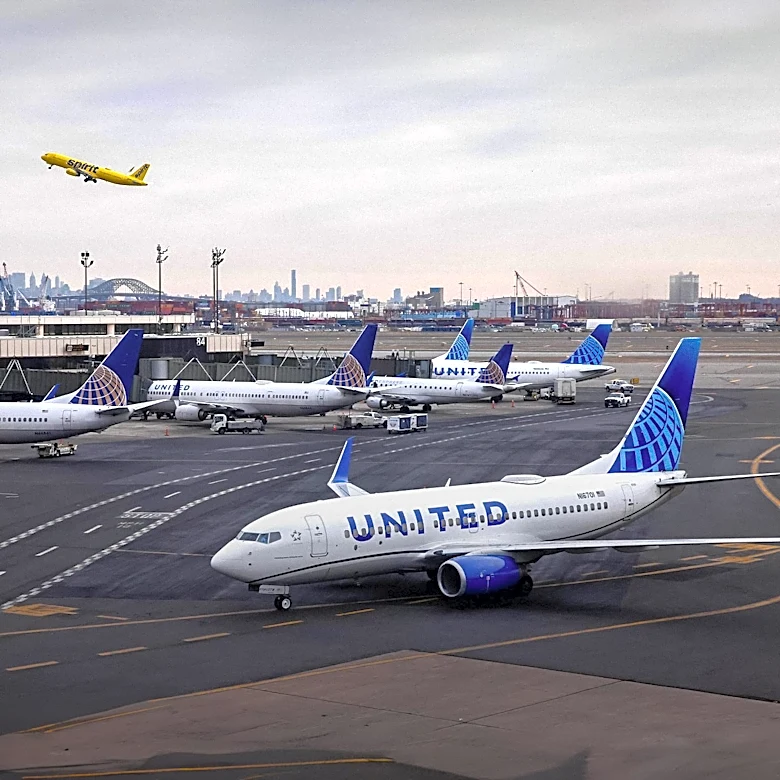


Modern air travel comes with a well-established pre-flight routine.
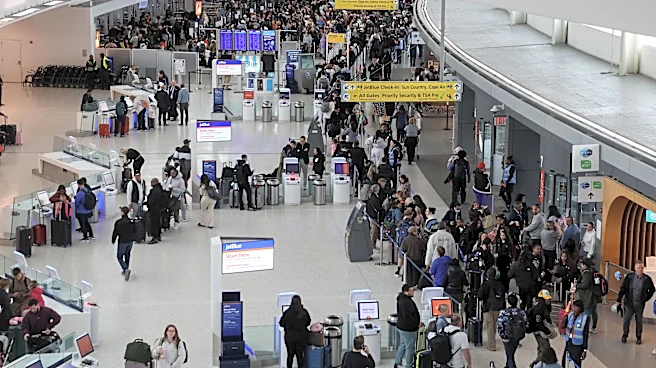
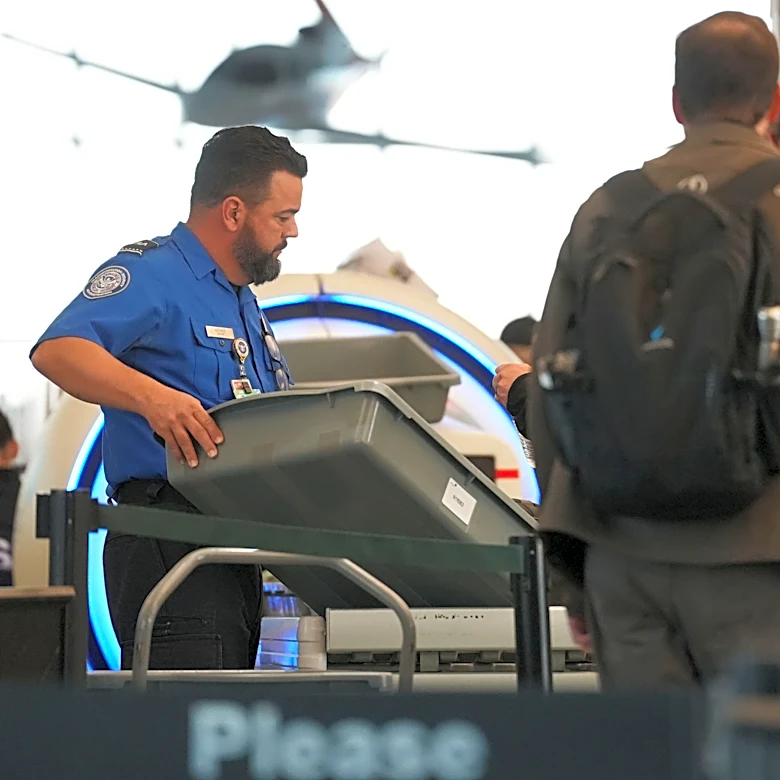
A traveler typically checks in via the airline's app or at a station near the airport entrance, walks to security to present their ID, and drops their bag on the conveyor belt – removing certain items like laptops depending on the lane. Transportation Security Administration officers screen those while the flyer spreads their arms out mannequin-style inside a body scanner.
Once they’re allowed past security, they can browse shops, grab a bite to eat or head straight to their gate, where they eventually scan their boarding pass to get on their flight – typically passing a reinforced cockpit door on their way in.
Many of those steps flyers consider commonplace now weren't part of the
travel experience 25 years ago. The terrorist attacks on Sept. 11, 2001, reshaped modern aviation's security infrastructure.
As the 25th anniversary approaches, here’s how much of the way Americans fly today can be traced back to that morning.

What flying looked like on Sept. 10, 2001
Flying before 9/11 "looked far different than it does today," according to Scott Keyes, founder of Going.
"Security was much more lax than it would soon become, with travelers able to breeze through and even non-passengers permitted to greet travelers at the gate when they deboarded," he told USA TODAY in an email.
Chelsea Delman began flying alone from Rhode Island to Texas to visit her dad at 10 years old after her parents split up, roughly three years before 9/11.
"I flew down, and the security was very light," the now 38-year-old recalled. "You know, I think that they put your bag through an X-ray, and you didn't have to do liquids or anything like that."
Cell phones and portable laptop computers weren’t so widespread, and "you didn't have to take anything out of your bag, pretty much." Shoes stayed on, too, and Delman remembered simply walking through a metal detector.
"Unless you had anything that flagged, you pretty much just walked through security," said Delman, who works in real estate. "It was very easy."
An airline employee escorted her through the checkpoint and to the gate as part of the airline's unaccompanied minor program. Her father was able to meet her at the gate upon arrival.

Safety protocols weren’t the only things that changed. Those who worked in aviation before 9/11 also recall how different the atmosphere was on flights.
Sara Nelson was five years into her career as a flight attendant when 9/11 happened. "We used to play games on the flight, we’d do trivia and give away a bottle of champagne, we used to cut roast in the aisle in first class,” said Nelson, who is president of the Association of Flight Attendants–CWA.
After the attacks, the industry faced a downturn and focused on revenue.
"We work longer days, we have fewer tools to take care of people. We’re deescalating conflict more than ever before," she said, adding that flight crews are also now the "last line of defense in aviation safety."
Flight availability is also now "much more robust," according to Keyes, with larger planes on the majority of routes and a significantly higher number of international departures. Prices have changed, too.
"Cost-wise, flights were nominally 23% cheaper than today, but when you adjust for overall inflation, flights in September 2001 were actually 43% pricier," Keyes said. Airfares have generally become much more affordable, in what he described as "a veritable golden age of cheap flights."
The immediate transformation after 9/11
The attacks quickly prompted major changes to aviation security, the biggest of which were the creation of the Transportation Security Administration later in 2001, which Keyes said "centralized nationwide airport security," and the Department of Homeland Security the following year.
Delman flew to Texas in December of 2001, encountering a much longer line than usual and the National Guard stationed at the airport. She found their presence "intimidating" since she’d never seen anything like it.
"So I knew it was serious, but I felt safe because there were so many people guarding the airport," she said.
Delman’s stepfather appealed to one of the troops, and they rushed her through security so she could make her flight on time. Her father was no longer permitted to meet her at the gate when she landed, however, and an airline representative walked her to baggage claim instead.
Most airlines now require unaccompanied minors to be escorted to their departure gates and met at the arrival gates by an adult guardian.
Delman had just entered eighth grade when the attacks occurred, but they didn’t deter her from flying. "I remember I really wanted to see my dad still, and kind of, like, nothing was going to stop me," she said.
Here were some other developments:
- November 2001: President George W. Bush signed the Aviation and Transportation Security Act. The law required passengers to be screened by federal officials, screening of all checked bags, the expansion of the Federal Air Marshal Service, and more, according to the TSA's website. Airlines also "became much stricter about names on your ticket exactly matching one's ID, something that used to be given wiggle room in the past," Keyes said.
- December 2002: The TSA deployed explosive detection systems across the country for screening luggage.
- April 2003: All carriers met requirements "to reinforce (cockpit) doors on commercial aircraft in order to protect from intrusion, small-arms fire and fragmentation devices such as grenades," the TSA's website said. Keyes said those changes were aimed at making "it substantially more difficult for anyone to barge in."
- July 2017: New rules were implemented requiring flyers in standard lanes to place electronics larger than a cell phone in bins at security checkpoints.
- January 2021: Los Angeles International Airport became the first in the United States to be fully outfitted with Credential Authentication Technology, which ensures that "ID authentication, reservation verification and Secure Flight pre-screening status are known in 'near' real-time at the airport security checkpoint," per the TSA.
- May 2025: The agency began enforcing REAL ID requirements after multiple delays, aimed at making state-issued driver’s licenses and ID cards more standardized and secure.

The shoe rule didn't come from 9/11
Other threats and technology innovations also affected security procedures.
Richard Reid attempted to ignite explosives in his shoes on a flight from Paris to Miami in December 2001, and the TSA began requiring passengers to remove their shoes at security checkpoints in 2006 because of "intelligence pointing to a continuing threat," according to its website. The agency later lifted that rule in 2025.

The agency also enacted its 3-1-1 liquids policy – limiting liquids, gels and aerosols to 3.4 ounces and under per item – in 2006. The agency previously banned all liquids from carry-ons following a thwarted terrorist plot to detonate liquid explosives on flights from the U.K. to the United States and Canada earlier that year.
Later, full-body scanners – officially called advanced imaging technology units – were formally installed at U.S. airports beginning in early 2010, shortly after a man tried to detonate an explosive device hidden in his underwear while flying from Amsterdam to Detroit in December 2009. By the end of 2010, the TSA had deployed around 500 machines designed to detect non-metallic weapons and explosives, the TSA's website said.
How security has evolved for the current traveler
In a 2025 report, the 9/11 Commission said the TSA continues to face several challenges, including developing risk-based methods for passenger and identity verification. Advancements in technology and government programs like TSA PreCheck have shaped the airport experience today, with the current process a "layered approach to security," according to the TSA website.
Security starts when you book your flight before you’re even at the airport. TSA’s Secure Flight program pre-screens someone's security-threat risk by vetting their names against the No-Fly List or trusted traveler lists.
At the airport, passengers must first have their identity verified with a REAL ID, often using facial recognition technology. Congress passed the REAL ID Act in 2005 after the 9/11 Commission recommended establishing standards for identification documents.
Then they go through advanced imaging technology, or a metal detector if they're TSA PreCheck. Some travelers, such as those with disabilities, can undergo a physical pat-down at request. Every bag is also scanned through a CT-based system and chemical trace detection technology for potential threats, including checked baggage – that just happens behind the scenes.
Travelers who want to streamline the screening process can enroll in the U.S. Customs and Border Protection’s Trusted Traveler Program (TTP), which includes Global Entry and TSA PreCheck. There’s also CLEAR+, a private identity verification service.

What has worked, and what remains controversial
It’s difficult to measure how effective TSA truly is. Hundreds of millions of passengers pass through airport security checkpoints each year.
In 2024, TSA screened over 904 million passengers, with over 6,600 firearms intercepted. Over the last decade, covert tests have revealed vulnerabilities at security checkpoints, with one in 2015 showing a nearly 96% failure rate at screening fake explosives. Years later, the Government Accountability Office (GAO) recommended that TSA collect more data and create baseline goals to track its performance.
Advancements in security screenings have also brought challenges, including potential discrimination against certain passengers. In 2022, GAO released a report that advanced imaging technology could result in some being flagged for additional screenings, like those who are transgender or wear religious headwear.
Facial recognition technology was first piloted in 2018 and meant to streamline screening and increase security, which is now found at airports across the nation. According to the American Civil Liberties Union in 2020, this technology can result in bias and inaccuracies.
There’s also controversy over the recent push to expand privatized airport security screenings. Under the new program announced earlier this year, called TSA Gold+, airports can partner with third-party contractors for security screening services. Opponents such as The American Federation of Government Employees – which represents TSA officers at over 400 U.S. airports – cite potential impacts to public safety and the job security of TSA officers.
9/11 changed how Americans think about flying
Safety became top of mind after the attacks on 9/11.
Captain Jason Ambrosi, a Delta Air Lines pilot with over 20 years of experience and president of Air Line Pilots Association, International (ALPA), flew the first day the U.S. airspace reopened on Sept. 14, 2001, and remembers how empty his planes were.
"That's when it really started to sink in that people were scared," he said.
A year after 9/11, the Pew Research Center found that 55% of Americans who traveled less as a result of the attacks did so because of safety concerns, while just 16% was due to the increased security measures. Pilots, flight attendants and other aviation workers faced pay cuts and furloughs from the decrease in flyers.
Ambrosi was furloughed in 2003 when the war in Iraq exacerbated the industry’s struggles, and returned to flying for Delta a few years later.
"Everything was looking great before 9/11, and I was a young guy working at Delta. It was spectacular, right?" said Ambrosi. "Then all of a sudden that happened and now we've got all the security associated with it. You know, obviously the game has changed."
Today, safety remains the priority of air travel, but today’s screening process is normalized among travelers who expect to arrive early, anticipate queues, and know what’s not allowed in their carry-ons.
Delman noted she now has the "Holy Trinity" of CLEAR, TSA PreCheck and Global Entry. "I try to make it as pre-9/11 travel as I can," she said.
While the security screening process has become "second nature" to her, it’s still not the same as it used to be.
"It was definitely easier back in the day," she added.
What does the next 25 years look like?
Ambrosi doesn’t think the airline industry will ever slow down, with the world more connected now than ever before.
For his part, Keyes said he anticipates major improvements in scanner technology that may let travelers once again bring larger liquids in their carry-ons, as well as the "universal proliferation of facial scanning and other biometric security measures that will make lines at security and immigration zoom by."
At the same time, to keep the skies safe, those in the aviation industry are pushing for more investment in staffing, especially to address the shortage of air traffic controllers.
"There is so much human handling that goes on in security that it's so necessary," said Nelson. "A lot of things are up in the air for the future of air travel."
This article originally appeared on USA TODAY: If you flew before 9/11, you probably still can't believe this