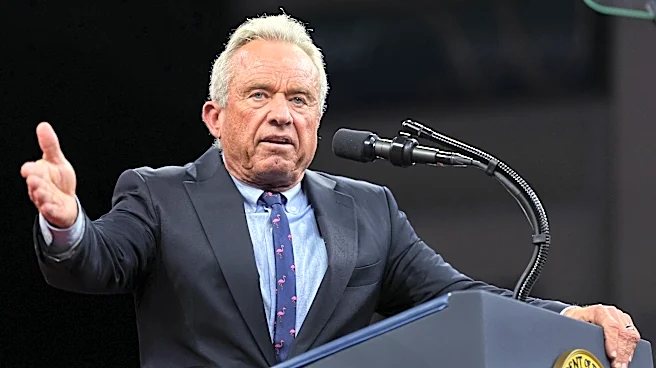

Health and Human Services Secretary Robert F. Kennedy Jr. issued arguably the strongest pro-vaccine statements of his HHS career on Nov. 17 after the United States was officially declared no longer measles-free.
The statement came hours after the World Health Organization (WHO) announced that the United States had lost its measles elimination designation after 26 years.
"We will stop measles outbreaks, protect American families, and work to regain U.S. measles elimination status. I continue to recommend MMR vaccination as the most effective way to prevent measles," Kennedy said in a Nov. 17 social media post.
Kennedy, who led several changes to U.S. vaccine schedules, which included splitting the MMR (measles, mumps, rubella) vaccine into two separate shots despite no FDA-approved avenue to do so, blamed the resurgence on "Worldwide COVID-era disruptions" to routine childhood vaccination, thus "leaving gaps in protection here and abroad."

In a statement shared with USA TODAY on Nov. 17, CDC Director Dr. Erica Schwartz said that the agency had already invested $100 million in state and local health departments to reach under-vaccinated and outbreak communities. Kennedy touted this in Tuesday's remarks, saying HHS had provided the funding since August to "strengthen prevention and response to measles and other vaccine-preventable diseases" in states including Texas, South Carolina, Virginia, Kansas, New Mexico, Wisconsin, Pennsylvania and New York.
Kennedy said the agency is working with healthcare providers and community leaders to close vaccination gaps, rebuild public trust and answer families' questions honestly about "vaccine benefits and risks."
"We will support Americans who become ill, regardless of vaccination status, and for the first time equip health care providers with guidance to diagnose and treat measles and its complications," he concluded.
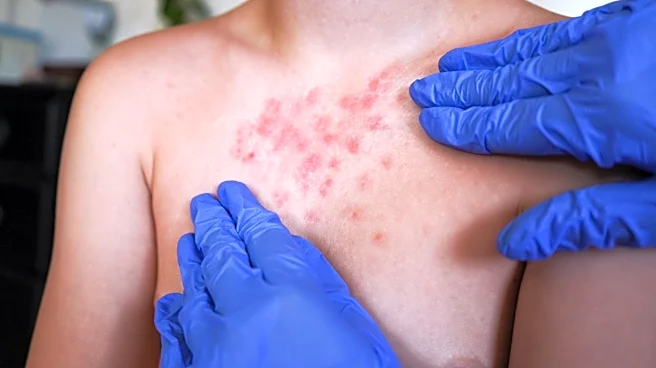
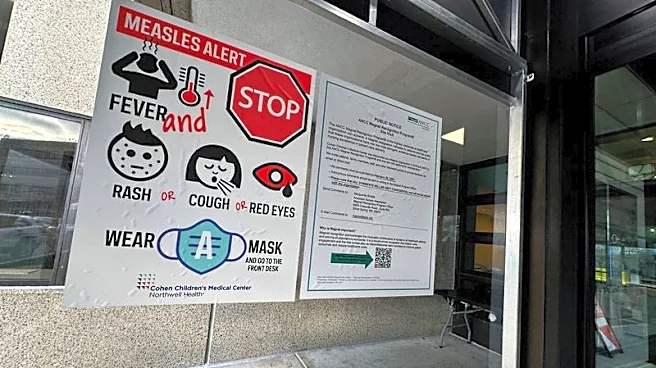
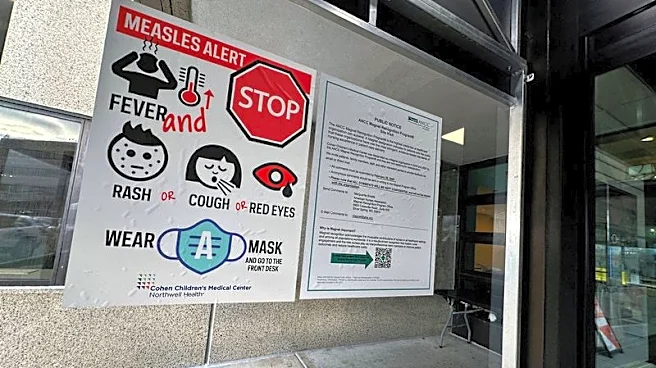
As of Nov. 12, the United States had 5,412 CDC-confirmed measles cases in 45 states in 2026. The actual number is likely much higher because of tracking and reporting limitations. Almost all of those cases, 96%, were in people who were unvaccinated or had unknown vaccination status. States have reported 10 deaths so far.
During a press conference Tuesday, WHO representatives pointed to vaccination gaps as a major factor behind the highly contagious disease once again becoming endemic to the United States. In a statement, the organization commended "significant efforts" in America to manage the measles outbreak.
RFK Jr.'s mixed messages on measles vaccination
Kennedy, a known vaccine skeptic who once founded an anti-vaccine group called the Children's Health Defense, has offered mixed messaging about the health intervention throughout his career as health secretary. Before his appointment in 2025, Kennedy falsely linked vaccines to autism, said "no" vaccines were safe and effective, urged parents not to vaccinate their children and blamed a 2019 measles outbreak in Samoa on the measles vaccine.
In a February 2025 press briefing following the first measles-related pediatric death in the country in decades,Kennedy said the outbreaks were "not unusual."
"We have measles outbreaks every year," he said.
Kennedy has placed a heavy focus on freedom of medical choice, calling the decision to vaccinate a "personal one" in an op-ed published on Fox News Digital in March 2025. He also wrote, however, that "Vaccines not only protect individual children from measles, but also contribute to community immunity, protecting those who are unable to be vaccinated due to medical reasons."
In May of that year, he urged parents to vaccinate their children against measles, though he also pushed false cures and preventives like vitamin A and cod liver oil. Trump, likewise, said he "recommends" the vaccine in an April 2025 ABC interview. Kennedy has since encouraged vaccination in other interviews, including one with CNN in August in which he said, "The measles vaccine is effective. It stops measles in about 97% of the cases. People should get vaccinated.”
Recently, Kennedy raised eyebrows in September when he told the same anti-vaccination group he once chaired that they had a "strong and steadfast friend in the White House."
HHS changes to measles, other vaccines
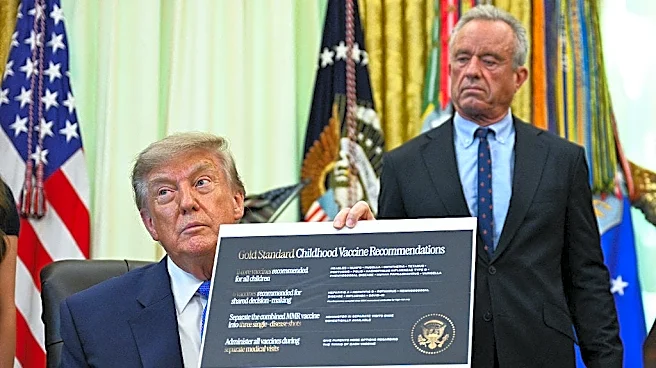
The Kennedy-led HHS adjusted the U.S. childhood vaccine schedule in January. Several routine vaccinations were removed from the lists and the administration sought to separate the combined MMR vaccine. However, such separated doses are not available in the United States, and experts say there is no scientific basis to do so.
After a federal judge struck down some of the HHS's changes in March, Trump issued an executive order to the same effect in August. During the signing, he falsely stated that combined MMR vaccine can be "quite lethal."
The MMR vaccine protects against measles with 97% efficacy and is typically given to children as part of the regular vaccine course between ages 12-15 months for the first dose and ages 4-6 for the second. Vaccination coverage among U.S. kindergartners declined from 95.2% in the 2019-2020 school year to 92.5% in the 2024-2025 school year, under the threshold necessary for effective herd immunity, according to the CDC.
The administration also announced in 2026 plans to create a research center for vaccine injuries, overhaul the federal vaccine-injury compensation system to make it easier for people who claim vaccine-related injuries to get money, and create a rule that would reimburse physicians for diagnosing, treating, and counseling patients reporting vaccine-related adverse events.
Kennedy has repeatedly mentioned vaccine injury. However, the CDC and Health Resources and Services Administration still saymost vaccine side effects are mild and go away on their own, and that data show serious reactions as "very rare."
Regarding measles specifically, the CDC has also recently changed how it categorizes and reports measles deaths in a decision experts called "puzzling."
Major medical institutions and public health experts criticized these moves, warning that more Americans, including children, may die from preventable diseases as a result. Kennedy said the vaccines will remain available to anyone who wants them, and supporters have praised what they say is a move toward a more individual rights-based approach to public health.
"President Trump and Secretary Kennedy have both stated that vaccination is the best way to prevent measles infections," White House spokeswoman Allison Schuster said in a statement to USA TODAY on Nov. 15. "In response to outbreaks, the President and Secretary have repeatedly encouraged measles vaccination, coordinated with states, and facilitated the deployment of vaccine doses across the country.”
This article originally appeared on USA TODAY: How RFK Jr. responded to this devastating US health setback