








More than an hour after receiving what were meant to be lethal doses of pentobarbital, Christa Pike was still alive. Witnesses could hear her struggling to breathe, even after prison officials closed the curtains on the execution chamber.
It was far from the only time that Tennessee drew a veil of secrecy around its lethal injection procedure.
The procedure has been plagued with problems since the state adopted it in 2000. The Drug Enforcement Administration once seized the state's lethal injection drugs. The Tennessee Department of Correction has likely executed two people using expired, compromised or untested drugs. State officials have incorrectly testified in court that untested drugs had been tested for contamination.
Even as these problems
came to light, Tennessee made the process more secretive.
The lack of information around lethal injection leaves murder victims' families and the public with little way to determine who is responsible when executions go wrong.
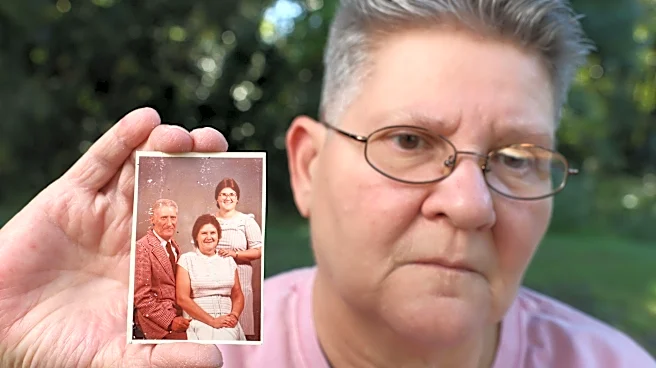
Melissa Jenkins, whose mother, Catherine Jenkins, was murdered by Anthony Darrell Hines in 1985, said Tennessee owes it to victims' families to carry out executions properly. Hines' execution in August was the only successful one of three attempts this year in Tennessee.
Jenkins said the family of Pike's victim, Colleen Slemmer, deserves no less.
"At this point, I don't know who else to blame," she said. "Somewhere along the line, somebody dropped the ball big time."
Now, calls to abandon lethal injection are growing louder, with some state leaders calling for a return to the electric chair.
"I honestly think at this point, lethal injection needs to be taken off the table, and they need to come up with something that's going to work,” Jenkins said. "There's got to be a better way."

'I declare the inmate dead, and I go home'
Among the details shielded from public scrutiny under state law are the identities of execution team members. That means the public has no way of knowing whether the people carrying out executions have the training or experience to do the job.
Finding physicians willing to participate in executions can be especially tough because of medical ethics that discourage doctors from taking part in capital punishment, so state officials say keeping their identities secret is critical.
But prison officials identified Dr. Mark Fowler anyway.
Fowler, who is paid to assist in Tennessee's execution process, was inadvertently named by a warden during Byron Black's August 2025 execution.
Fowler is a board-certified family medicine physician who previously worked in emergency medicine and served as medical director at several health care facilities, including at a state prison.
In October 2025, Fowler in court described his role in Tennessee's executions: "They contact me when they have an execution scheduled. I meet with the appropriate TDOC administrators. I declare the inmate dead, and I go home."
But Fowler's duties went further during inmate Tony Carruthers' failed execution in May.
According to a sworn statement from attorney Maria DeLiberato, who witnessed the procedure, the IV team attempted with multiple needles to establish an IV catheter in Carruthers' left arm. After almost 20 minutes, Fowler entered the room and began giving instructions.
When the team couldn't set up an IV catheter, Fowler began setting up a central line, which is a long, flexible plastic tube inserted through the chest to reach a vein near the heart.
Months earlier, Fowler said in court he had not placed a central line since 2013, when he last worked in an emergency room. He also said during that deposition that he was not authorized to perform medical procedures at a hospital.
While hospital privileges are not required to participate in executions, their absence raised questions about his recent experience performing invasive procedures, including the placement of central IV lines.
Tennessee pays him $3,000 per execution, an amount he initially resisted disclosing, according to court transcripts.
"And frankly, I don't wish to read about myself in the newspaper saying this bloodthirsty coward doctor gets money for doing this," Fowler testified. "I get paid for the time and effort of going."
In the execution chamber, Fowler tried working the central line into Carruthers' chest. Then he announced he was not able to do it.
Fowler has declined to answer questions from The Tennessean.
Despite his name being revealed, Fowler continued participating in executions. He told media outlets before Pike's execution attempt that he would be in the death chamber.

'What we saw wasn't good': Other peeks behind curtain expose risky practices
Concerns about the qualifications of Tennessee's execution team extend beyond the physician.
In 2006, a team member responsible for inserting IV lines testified about missing an execution that year while spending three months in an alcohol treatment facility, a federal court opinion from the time stated. The opinion also stated that the person had a prior conviction for possession of a controlled substance and that TDOC had never screened the IV team or executioners for drug problems or psychological disorders.
A TDOC spokesperson declined to say whether that person still participates in executions. The department declined an interview for this story and to answer questions about the execution process.
The state over the years has had trouble following its own protocol and securing execution drugs.
In 2007, then-Gov. Phil Bredesen issued a 90-day pause after it was discovered the state’s written protocols on lethal injection were full of contradictions and unclear directions.
In 2011, the Drug Enforcement Administration confiscated Tennessee’s lethal injection drugs due to concerns they were improperly imported.
From 2013-2017, the state was unable to carry out executions because it could not get its hands on pentobarbital, according to reporting from the time.
A 2022 review of Tennessee's execution procedures by former U.S. Attorney Ed Stanton revealed just how difficult obtaining lethal injection drugs had become. At one point, the state “considered the possibility of obtaining [execution drugs] from a veterinarian.” The idea went nowhere.
Tennessee obtained the drugs, instead, from SureCare Specialty Compounding Pharmacy in El Paso, Texas, The Tennessean reported in 2022.
In 2018, the pharmacist shipped lethal injection drugs to Tennessee before testing was done, the pharmacist testified. The pharmacy never received a copy of the protocol, which included testing requirements for the drugs. Once the drugs arrived, the state was initially neither aware of the temperatures required to properly store the drugs nor had the proper tools to monitor the temperature, The Tennessean reported.
Ultimately, Stanton's December 2022 report found Tennessee had not followed its own lethal injection protocol since it was developed in 2018. Under that protocol, more inmates chose to die by the electric chair than lethal injection, which attorneys for those on death row said reflected a "well-founded mistrust that had grown to surround the State's lethal injection process."
Stanton's report largely mirroed a review in May 2022 by The Tennessean, part of the USA TODAY Network, that found the state did not adhere to its own protocols since reinstutting the death penalty in 2018. Stanton will oversee another review of the death penalty in Tennessee following Pike's botched execution.
Even when the state offers evidence of its execution team's qualifications, defense attorneys said it raises more questions than it answers.
A recent court filing included redacted, nondescript certificates that showed execution team members attended a four-hour "Vascular Access & IV Therapy" workshop. The redacted certificate did not name a medical organization.
Death row inmates' attorneys wrote that the filing was "particularly troubling."
Kit Thomas, deputy chief of the capital habeas unit in the Federal Defender’s Office, does not think there is reason to believe what’s behind the curtain is better than what has been revealed.
“What we saw wasn't good,” Thomas said, specifically referring to Fowler's inability to set a central line. “And I don't think Tennesseans should trust that the other things behind that veil of secrecy are any better."
How lethal injection became so secretive
In 1977, Oklahoma was the first state to introduce lethal injection as a method for executing prisoners. It was intended to be more humane, a less grisly and barbaric method than electrocution.
Tennessee made lethal injection its primary method of execution in 2000.
A 2008 U.S. Supreme Court decision cleared any legal obstacles to carrying out most lethal injections.
“But a practical obstacle soon emerged,” the Supreme Court wrote in 2015, “as anti-death-penalty advocates pressured pharmaceutical companies to refuse to supply the drugs used to carry out death sentences.”
Death penalty opponents and inmates’ attorneys dispute that characterization. "Abolitionists are peaceful people," former federal public defender Kelley Henry said.
But potential drug suppliers' fear of being publicly identified is real: The TDOC employee who purchased the department's drugs wrote in an anonymous court declaration in 2025 that his deal with Tennessee’s pentobarbital source is “contingent on keeping the supplier’s identity secret.”
“I am aware through my conversations with various suppliers that they fear threats, harassment, and boycotts as a result of their lawful decision to supply state correctional departments with drugs used to carry out lawful executions,” Tennessee’s drug purchaser wrote.
Tennessee law did not always shield drug suppliers. In 2011, the Tennessee Court of Appeals ruled that the identities of lethal injection drug purchasers and suppliers were not exempt from public records law.
But lawmakers closed that gap in 2013 by passing a law concealing the identities of anyone involved in obtaining or supplying execution drugs and equipment.
The Tennessee attorney general’s office has hidden swaths of records with the law. For example, the office has been locked in a yearlong court battle with a federal public defender's investigator, refusing to disclose drugs' expiration dates.
The attorney general's office wrote that "bits and pieces of information ... together with internet research could lead to the discovery of the supplier.”
Twenty-four states now have laws blocking the identification of people involved in the execution process, the state wrote in a May court filling.
Level of secrecy unique to lethal injection
Lethal injection involves far more steps than other execution methods, such as electrocution, hanging or firing squad.
The state must obtain the drugs, test their potency and select qualified people to administer them. Execution team members must find suitable veins, insert IV lines and make sure they remain in place as the drugs flow into the prisoner's bloodstream.
"There are so many things that can go wrong, and so many actors who are involved that can then themselves be incompetent," said Henry, the former federal public defender.
Mistakes in obtaining, handling or testing execution drugs can leave the state using expired or compromised chemicals. Donnie Johnson and Billy Ray Irick, executed in 2018 and 2019 in Tennessee, were likely killed with expired, compromised or untested drugs, according to a Tennessean investigation and the 2022 Stanton report.
Other execution methods involve fewer concerns about the materials.
“With electrocution, nobody cares about who makes the sponge,” Henry said, referring to the sponge placed atop an inmate's head to help conduct the electric current into their body.
This is not to say that other methods of execution are without their faults, advocates say. But the concerns are different.
“There's a lot to be said about how horrific an electrocution is and what happens,” Henry said. “But … they don't impose the same amount of secrecy in the electrocution executions that they do in lethal injection executions.”
Over the years, the lethal injection process has become more opaque.
In late 2024, TDOC replaced its previous 99-page execution protocol with one that was 44 pages, putting "general language and grants of authority" in the place of comprehensive instructions, as attorneys for a group of death row inmates put it in court documents.
Media witnesses are not permitted to watch as execution staff try to set IV lines in the condemned. The blinds are closed five minutes after the last drugs are injected so the physician can declare time of death. In Pike's case, this aspect of the protocol blocked her from view when she was still alive.
The Tennessean and other media outlets are involved in a lawsuit pushing for increased transparency during executions.
Attorneys said that under the new protocol, they don't get information they used to receive regularly.
Henry wrote after the 2025 execution of Byron Black, "We used to get text messages, emails, blacked-out invoices" from TDOC. "We've received absolutely nothing."
Why state officials say secrecy is needed
The attorney general's office and TDOC argue that even small disclosures could expose execution drug suppliers, warning that “each additional datum revealed helps to paint an increasingly clear picture of the supplier.”
“Even the size of vials can suggest who made a chemical,” the office wrote.
The office paints a picture of those seeking information about lethal injection drugs as acting in bad faith in an effort to end the death penalty.
“Pentobarbital is hailed by inmates and experts in states that do not have it as the most humane way to carry out an execution,” the office wrote in March 2025 in a federal court case. “But once a state does finally acquire it, the hunt is on to extinguish the source.”
That gamble can be self-defeating, according to the attorney general's office.
The office wrote that once the source of pentobarbital is gone, a state might return to using chemicals thought of as less humane.
The state also argues that the professionals qualified to set IVs or central lines will be dissuaded from doing so if their names are publicized.
Attorney General Jonathan Skrmetti declined to give an on-the-record interview for this story.
Why critics say more transparency is needed

Many death penalty opponents and attorneys are willing to concede not being entitled to the identities of those involved in executions. But they say that the state is using the execution secrecy law to prevent the disclosure of other information.
“Still operating within the confines of the law, the state could be disclosing a whole lot more information about their protocol and about the people who are participating in these executions,” said Thomas, the federal public defender.
Attorneys have accused the state of of violating the law by withholding information. Henry wrote that blaming abolitionists or inmates’ attorneys, which she once called the "you made us do it" defense in a court filing, is not justification.
Thomas and Henry argue that greater transparency is needed to hold the state accountable and uncover mistakes that might otherwise remain hidden from public view.
To Stacey Rector, of Tennesseans for Alternatives to the Death Penalty, the state's response to its failures has only deepened the problem.
“So, rather than saying, if we can't do this in a way that's fully aboveboard, we shouldn't be doing it at all, they double down on secrecy,” Rector said.
David Duncan, a retired judge who reviewed Arizona's executions, said the "siloed environment" of lethal injection "breeds the errors and flawed practices that hobble" it.
Past misrepresentations in court also give some lawyers less reason to take state officials at their word when it comes to lethal injection.
The Tennessee attorney general's office has conceded that TDOC officials incorrectly testified under oath that they were testing the chemicals for bacterial contamination prior to the 2022 report. TDOC general counsel Debbie Inglis was fired in early 2023, and while the state never gave a reason, inmates' attorneys believe it was partly for misrepresentations they say Inglis made in court.
“It’s just mind-boggling to me that basically what they tell us is 'trust us’,” Rector said. “I don't believe the people of this state can do that.”
Molly Davis contributed.
Have questions about the justice system? Evan Mealins is the justice reporter for The Tennessean. Contact him with questions, tips or story ideas at emealins@tennessean.com.
This article originally appeared on Nashville Tennessean: As execution issues grew, Tennessee made the process more secretive