




Now that Callaway and Good Good Golf have realized domestic violence is bad, here are a few other things they probably should know, too:
Don’t take a home run ball from a kid.
Wash your hands after you go to the bathroom.
Brush your teeth twice a day.
Don’t mistreat animals, puppies especially.
Say please and thank you.
If all these sound glaringly obvious, well, yeah. That’s the point. Callaway and Good Good’s reputations are in the toilet because they greenlit an ad that made light of violence against women, something anyone with half a brain cell should have recognized the second it was suggested.
“Unequivocally, violence against women is unacceptable and should never be trivialized, normalized, or used as entertainment,” Callaway said in an Aug.
27 statement announcing it was cutting ties with Good Good, an equipment and apparel manufacturer.
— Callaway Golf (@CallawayGolf) August 27, 2026
In short order, Good Good announced it would no longer be the title sponsor of a PGA Tour event in Austin, Texas, in November, and Golf Channel canceled the Big Break reboot it had partnered on with Good Good.
Good Good, Callaway ad drew immediate criticism
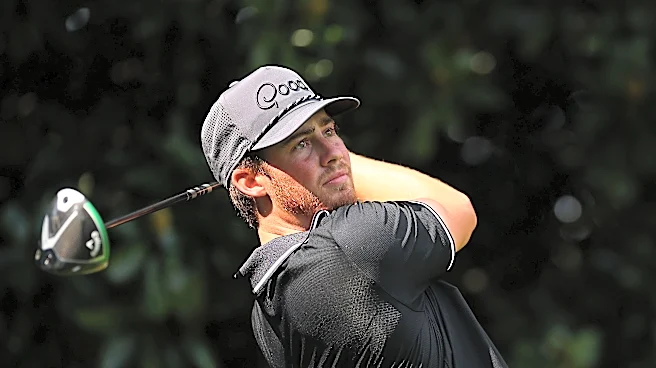
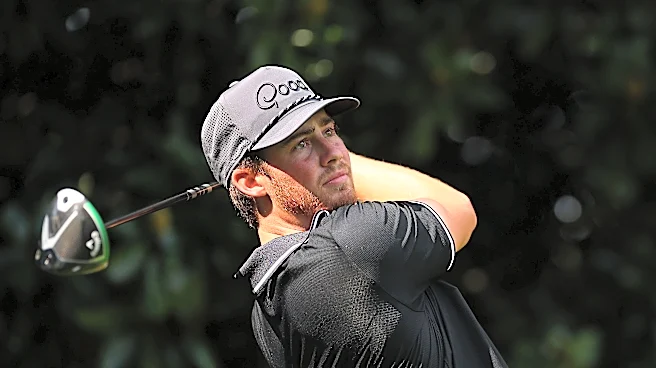
Callaway and Good Good have been at the center of this firestorm of their own making since the Aug. 21 debut of an ad that depicted Good Good co-founder Garrett Clark shoving a woman to the ground and then standing over her, saying “Do not touch my new driver” in a menacing tone.
Both companies apologized (sort of) and tried to explain (sort of). Callaway also said it would donate $1 million to organizations that work to end domestic violence and provide resources for survivors, which Good Good co-founder Matt Kendrick slammed as insincere.
"Interesting that @CallawayGolf asks us to make an ad then approves it then asks us to take the fall then drops us in a coordinated media blitz and covers it up by giving a million dollars away thinking everyone will be ok with it," Kendrick said in an early-morning post on X.
The fact remains both Good Good and Callaway were active participants in allowing an ad portraying women as not worthy of respect or care to see the light of day, and there’s no mea culpa big enough to make that OK.
Clark, who is also one of Good Good’s content creators, was the central character in the ad. Presumably he saw the finished cut and thought, “Yeah, that works.” Callaway gave its final approval, too. Which means people, possibly many people, from both companies saw an ad that, at best disrespected women and, at worst, mirrors the very real horrors experienced by far too many women every day, and were totally fine with it.
“Looking back at it, terrible concept. Terrible ad. Once I watched it back and it got posted, my skin was crawling, I was cringing,” Clark said in a nearly 9-minute video he posted Aug. 26.
“Even minutes after I saw it get posted, before this surfaced everywhere online, I thought it was the worst ad known to man,” he added. “The beginning of the ad was very intense with the way that that was pushed out there. Just, not good. All around, not good.”
If only Clark had had this reaction when the idea was presented. Or when they were filming. Or when it was being edited. At any point, really, before the tsunami of criticism that will forever make Good Good a cautionary tale in advertising and business classes.
1 in 4 women experience domestic violence
It is one thing to try and be edgy and hip, as is Good Good’s “brand.” But there is — and again, this should be obvious — nothing funny or clever about violence against women.
According to the National Domestic Violence Hotline, 1 in 4 women aged 18 and older have experienced physical violence at the hands of an intimate partner. An average of 24 people a minute — yes, a minute — are victims of rape, physical abuse or stalking.
It’s not just those left with bruises and broken bones who are scarred, either. Children were witnesses in 22% of domestic violence cases filed in state court, according to the Hotline.
To make an ad that made light of that, even if it was not intentional, is mindbogglingly tone deaf. It also was stunningly bad business. Which ought to be the last reason not to do something this dumb, but we all know the bottom line is sometimes the only way to get people in power to consider women.
So consider this: The number of on-course, women golfers rose 45% from 2020 to 2025, compared with a 12% increase in male golfers, according to the National Golf Foundation. Women and girls now account for 28% of the traditional golfing population, the highest percentage ever.
This ad told women just how little Callaway and Good Good think of them. How little respect they have for them and their purchasing power.
“One of Callaway Golf’s core values is to be a positive influence, both in the game of golf and in our communities,” Callaway said in its statement. “… We are committed to learning from this incident and helping ensure that golf is a place where everyone feels respected, valued and welcome.”
It would be nice if Callaway and Good Good had recognized on their own that violence against women is not a joke, rather than having to be shamed into it.
Follow USA TODAY Sports columnist Nancy Armour on social media @nrarmour.
This article originally appeared on USA TODAY: Callaway, Good Good greenlit 'worst ad known to man,' failed from the start | Opinion