




It's a familiar tale on the American political campaign trail: The candidate gets a foreign policy question from a reporter. Then the candidate, unfamiliar with some far-away region of the world, botches it.
The internet goes crazy. Bad headlines proliferate. Campaign staffers scramble.
Sen. Darline Graham arguably just became the new poster child for that motif. But she joins a long line of politicians stumped by pressing issues on the world stage.
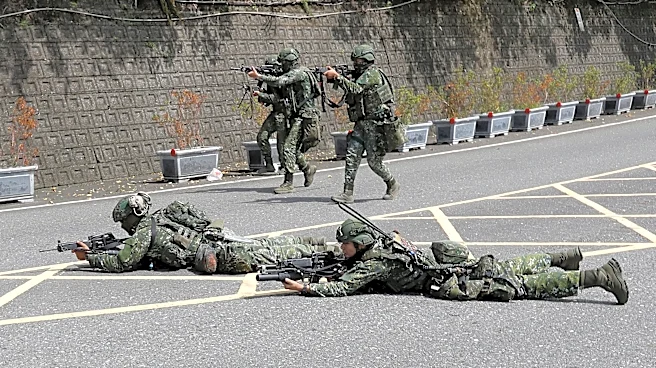
Graham's blunder came during an Aug. 18 Republican primary debate in South Carolina, when Newsmax anchor Greta Van Susteren asked her a question that, by most political observers' standards, would be considered fairly simple: "Are Taiwan and the South China Sea national security issues for the United
States?"
Graham asked Van Susteren to repeat the question. Then the senator – whose late brother Lindsey Graham was well known for his global policy acumen and world travels, including several trips to Taiwan – admitted she was "not that informed on national security."
"I'm not a polished politician up here," said Graham, who worked for decades in state government to help blind people and others with disabilities overcome employment barriers. "National security is not my thing, not my area of expertise. But I do support the military."
Graham's opponent, Rep. Ralph Norman, didn't wait long to swoop in with a much more informed answer. The decade-long South Carolina Republican congressman, who'll face off against Graham next week, called Taiwan a "definite ally" and highlighted the need for the self-governing island, a liberal democracy, to defend itself against China, which has long challenged the country's independence. Norman advanced to the Aug. 25 runoff with about 25% of the GOP vote, while Graham moved forward with about 33%, bolstered by an endorsement from President Trump.
It's unclear what repercussions the debate-stage flub might portend for Graham. Gibbs Knotts, a political science professor and provost at Coastal Carolina University, acknowledged there were other moments in which she was "pretty effective" in the debate and said the Graham name "remains very popular" in the Palmetto State. Graham later downplayed the significance of the moment on Fox News, saying that "people in South Carolina are more worried about making ends meet" and "boys in girls' sports" than Taiwan.
Still, it was a "self-inflicted gaffe that could prove significant to the primary runoff next week," according to Kirk Randazzo, a political science professor at the University of South Carolina.
"This is especially true given that her brother, Lindsey Graham, was an expert on foreign affairs and national security," Randazzo said. "It gave the Norman campaign a much-needed point of leverage."
Palin's infamous flub

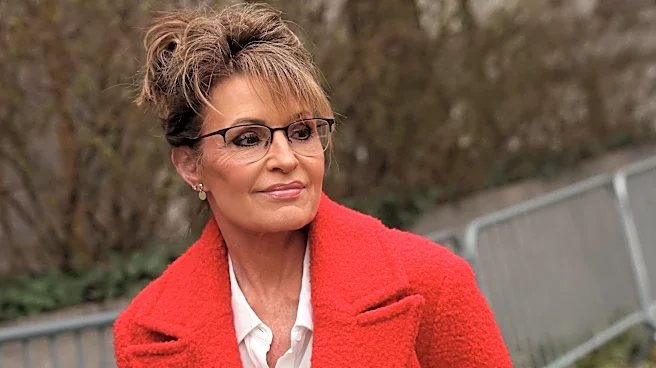
One of the highest-profile foreign policy flubs by a candidate came from Sarah Palin, whom the late Sen. John McCain picked for his vice president on the Republican ticket in the 2008 presidential election. During an interview that September with Katie Couric, then the anchor of the "CBS Evening News," Palin, who'd been the largely unknown governor of Alaska, struggled to defend prior statements she'd made about how running her home state, which is near Russia, enhanced her geopolitical credentials.
"You've cited Alaska's proximity to Russia as part of your foreign policy experience," Couric asked. "What did you mean by that?"
"That Alaska has a very narrow maritime border between a foreign country, Russia, and, on our other side, the land boundary that we have with Canada," Palin responded, before insinuating reporters had "mocked" her over those past comments.
Top McCain-Palin aides later acknowledged that backlash to the Couric interview, as well as Palin's flailing performance in other sit-downs, influenced the campaign's trajectory. Talking to radio host Howard Stern years later, Couric said she simply asked questions that "required accumulated knowledge and an ability to be a critical thinker."
Palin's responses "really gave people pause," Couric said.
'What is Aleppo?'

One egregious instance of unfamiliarity with foreign policy came in 2016, when libertarian presidential candidate Gary Johnson was asked on Sept. 8 by a panelist on MSNBC's "Morning Joe" what he would do about the situation in Aleppo, Syria. At the time, the city was besieged by a violent civil war and, as commentator Mike Barnicle put it, the "epicenter of the refugee crisis."
"And what is Aleppo?” Johnson asked, to which Barnicle, one of the hosts of the show, responded: “You’re kidding."
Though Johnson's long-shot White House gambit never had a real chance at gaining serious momentum, critics still viewed that interaction as a damning moment.
Democrats have also had their share of foot-in-the-mouth moments when probed about their takes on geopolitics. At the Munich Security Conference earlier this year, Rep. Alexandria Ocasio-Cortez, D-New York, a potential 2028 presidential contender, mistakenly said Venezuela was below the equator. She also stumbled over a question about whether the United States should help Taiwan if China were to invade the island.
Zachary Schermele is the congressional correspondent for USA TODAY. You can reach him by email at zschermele@usatoday.com. Follow him on X at @ZachSchermele and Bluesky at @zachschermele.bsky.social.
This article originally appeared on USA TODAY: Darline Graham blew a basic foreign policy question. Sound familiar?