



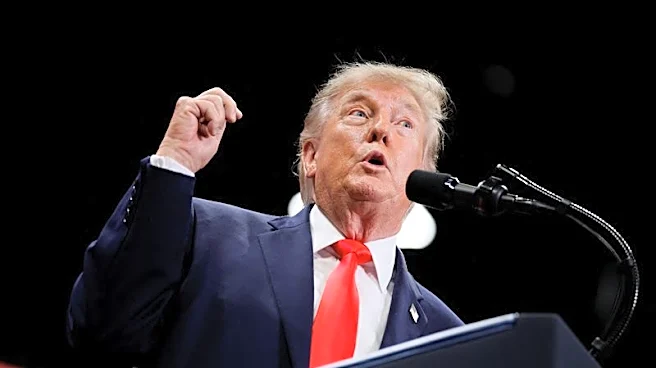

WASHINGTON — In a bitterly fought midterm election, President Donald Trump and his detractors have found at least one piece of common ground – it's all about Trump.
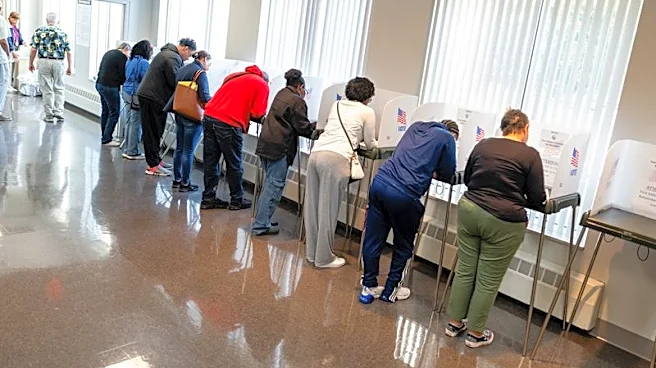
And as voters head to the polls on Nov. 3, the president faces a reckoning.
After dominating American politics for the last decade, Trump is the animating force in an election that will decide control of Congress and whether his presidency is hemmed in or given more running room. Polling showsmost voters view their congressional ballot as primarily a vote for or against the president.
"He’s casting a long shadow over the midterm elections," said Lee Miringoff, director of the Marist Institute for Public Opinion.
Democrats are eager to win majorities in the House and Senate and deliver
Trump the type of lasting repudiation they hoped for in 2020, when he lost his reelection bid before staging a comeback. They have an opportunity to significantly weaken his grip on power over his final two years in office. Democrats also hope that possible wins in states and congressional districts that haven't voted blue in decades can help end the Trump era.
On the Republican side, Trump aims to prove his doubters wrong once again with an unexpected triumph despite his low approval ratings, show one more time that polling is a fool's errand, and end his second term with a flourish, while maintaining his iron grip over the GOP.
Recent rallies spotlight both efforts.
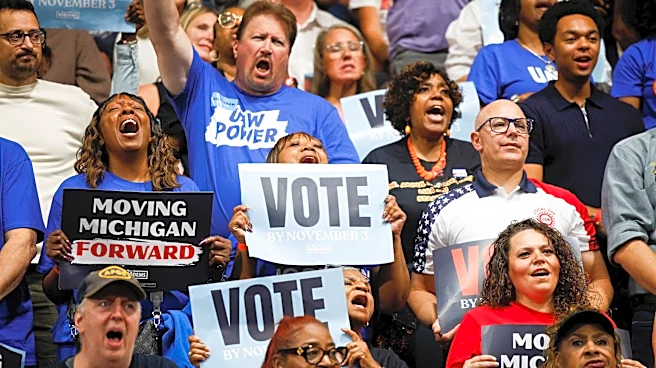
Criticizing Trump during an Oct. 28 event in Atlanta, former President Barack Obama told a crowd that the midterms are "our last, best chance of at least reining him in, reining in some of the foolishness of this administration."
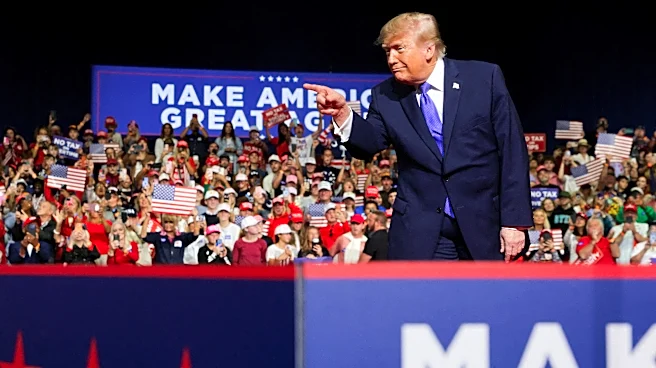
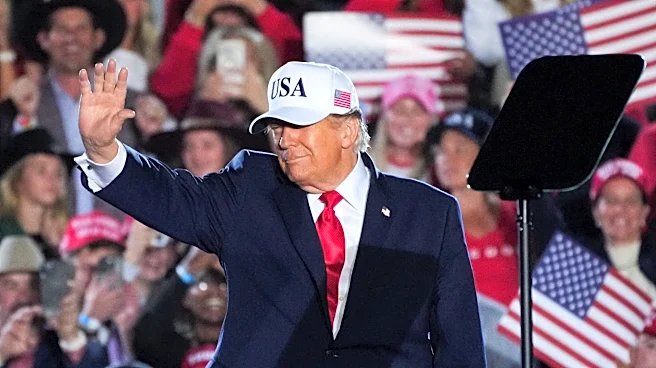
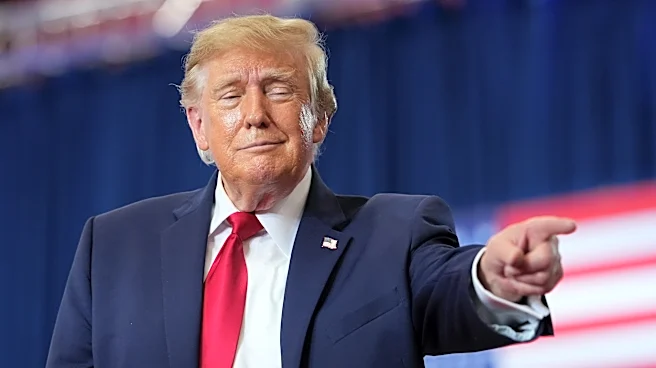
In Chillicothe, Ohio, on the same night, Trump again appealed to his base to "pretend" he’s on the ballot.
"I really am on the ballot, if you think, because all of those tax cuts, all of the things that we’ve gotten, all of the victories that we’ve had," he added.
Democrats are widely favored to win control of the House, and polling indicates they also have a strong chance of flipping the Senate. States that haven't elected a Democrat to the Senate in decades and went for Trump by double digits are now highly competitive, offering Democrats a historic opportunity to make inroads in traditionally Republican areas.
For the past three weeks, Trump has barnstormed the country to try and hold back a blue wave as Republicans leverage a massive financial advantage in the final stretch. Despite shifting the electoral map to historically red states such as Kansas, Nebraska, Alaska, and South Carolina, most Senate races are close, polling suggests.
"I think you're going to be pleasantly surprised on Tuesday," Trump told a crowd in Lubbock, Texas, on Oct. 27. "People are coming home. They're coming home. They're not going to let our country be destroyed."

Red state woes
Despite his public optimism, Trump has also openly acknowledged that a Democratic sweep is possible, telling reporters he would use his veto pen often under such a scenario and find a way to work out deals with the opposing party.
"I hope that won't be the case, but if it is, that's happened before with many presidents," Trump said last week.
Trump's Oct. 27 trip was his third visit to Texas in October. The state's emergence as a key battleground shows the depths of the president's midterm woes.
Texas last elected a Democratic senator in 1988, and Trump carried the state by 14 percentage points, but the Real Clear Politics average of recent polls shows Democrat James Talarico leading GOP candidate Ken Paxton in the final days of the race. Trump’s endorsement helped Paxton defeat four-term Republican Sen. John Cornyn in the primary, but the scandal-plagued GOP nominee has struggled to gain traction.
Trump allies in deep red states such as Kansas, Ohio, Iowa, and Alaska also are trailing or tied in the average of recent polls. Kansas hasn’t elected a Democrat to the Senate since 1932.
"The fact that Republicans are having to spend time and money in some of these ruby red states shows how bad the political environment is for them, and there’s really no one to blame other than Donald Trump," said Sarah Matthews, who served as a deputy press secretary during Trump’s first administration.
Trump rallied in South Carolina Oct. 29 for the second time in a month, stumping for GOP Senate candidate Darline Graham, sister of the late Sen. Lindsey Graham. The president endorsed Graham to succeed her brother, helping her win a hotly contested primary.
A recent New York Times/Siena survey showed her tied in the general contest against Democrat Annie Andrews, despite Trump carrying the state by 18 percentage points in 2024.
"These are Trump's handpicked candidates - Ken Paxton, Darline Graham - and I don't think they would be having to play in those states if there were any other Republican on the ballot," Matthews said.
Losing in states that previously have been strong Trump territory would be a massive blow for the president and his party. But Trump has faced big setbacks in the past.
During his first term in 2018, Democrats won control of the House and went on to impeach him over allegations he abused his power in an attempt to have a foreign government investigate a political rival. He was acquitted by the Senate, which remained in Republican control.
The president went on to lose his reelection bid in 2020 and challenged the results, culminating in a mob of his supporters storming the U.S. Capitol on Jan. 6, 2021. He was again impeached and acquitted. Trump later was indicted over his role in Jan. 6, and in another case involving hush money payment to an adult film actress.
Trump wasconvicted on 34 counts in the hush money case, but won reelection anyway.
Now he faces another test. And it comes as Republicans already are starting to position themselves for the 2028 presidential race and what comes after the lame duck president.
Trump could benefit from the low midterm expectations for the GOP.
With many forecasts now predicting a Democratic takeover of both chambers of Congress, Trump and the White House are positioned to claim victory if Republicans lose the House yet hold on to the Senate — even though a Democratic majority in the Senate, which Republicans control 53-47, seemed like a long shot a year ago.
"If Republicans hold on to the Senate and they win a bunch of races where Trump campaigned, he can say, 'I'm still the most important, popular person in the Republican Party,'" said Anthony Fowler, a political scientist at the University of Chicago. "And you won't see a lot of people trying to buck him within the party."
Conversely, losing both chambers would be a bitter pill for Republicans, especially if Democrats flip states where they haven't won a Senate seat in decades, and would prompt questions about the viability of a Trump-centric party going forward.
"It’s going to be a battle for the soul of the Republican Party in many respects," said John Bolton, who served as national security adviser in Trump’s first administration and has become a vocal critic of the president.
A barnstorm to the finish after rallies briefly canceled
With Democrats needing to flip four seats to win control of the Senate, Trump has traveled the country to try to bolster Republican candidates in tight races.
"I think we have a shot at doing well, maybe very well, but you know, pretty well," Trump told reporters Oct. 30.
While polling indicates his party is facing strong headwinds, Republicans are fighting on favorable ground in many states and most of the key Senate races are tight. Democrats are leading by 3 percentage points or less in the Real Clear Politics average of recent polls in Alaska, Texas, Michigan, and Ohio. Kansas and Iowa are tied. Graham is up by 3 points in the average of South Carolina polls.
"Statistically, I see a lot of margin-of-error states," Miringoff said.
Drilling down into the data shows signs of a potential blue wave, though. Miringoff pointed to polling indicating independents are breaking strongly toward Democratic candidates in red states and districts.

Trump's approval rating has sunk to record lows in recent surveys amid concerns about his handling of the economy, the Iran war and other issues. That has raised questions about his decision to play such a central role the midterms, with rallies across the country in the closing stretch.
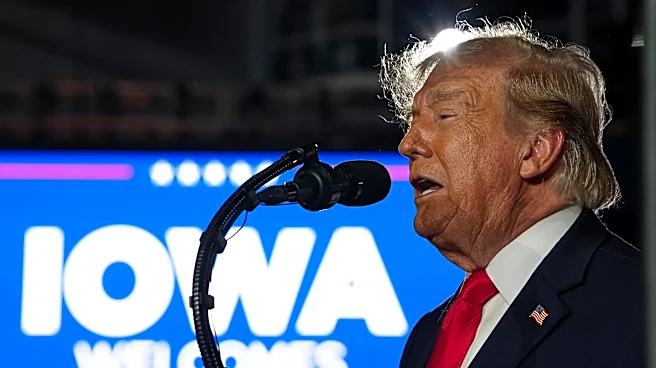
Trump last week abruptly halted plans to close his midterm blitz with weekend rallies in Kansas and Iowa, two Senate battlegrounds, only to reschedule the events amid speculation that he was giving up in the traditionally Republican states.
Bolton, who served in Republican administrations going back to President Ronald Reagan, said presidents usually keep a lower profile during the midterms, helping with fundraising and sticking to public events in states "where the president's standing is still high."
Trump, meanwhile, has visited nearly every battleground state despite his approval rating being underwater in all of them.
"You don’t go into states where you’re poking the hornet’s nest," Bolton said.
In defying conventional wisdom and campaigning aggressively, Trump is hoping to boost GOP turnout.
"President Trump is the greatest force for turnout in American politics, and that's why he is barnstorming the country and driving voters to the polls in the final stretch," Republican National Committee spokesperson Natalie Baldassarre said. "The momentum is on our side, and Republicans are ready to fight, defy history, and protect our majorities."

Ralph Reed, founder and chairman of the Faith & Freedom Coalition and a close Trump ally, said his group urged the White House to put the president on the campaign trail to help "juice" GOP turnout.
"If we’re able to do better than people expect Tuesday, Trump will deserve a lot of credit," Reed said.
But after thrusting himself into the center of the midterm elections, Trump could be an easy target if Republicans have a bad election night.
"This is, when it comes down to it, undoubtedly a referendum on Trump, and he asked for it. He's the one who said: 'pretend my name is on the ballot'... he played right into it," Bolton said.
Reed said Trump has worked to put the focus on Democrats "by making it clear that many, if not all, of the Democratic candidates hold positions that are out of the mainstream."
"I think the president and his political team have done a very good job of reframing the narrative of this campaign from a referendum on Trump's job performance into a contrast election and a choice," Reed said.
The stakes are high not just for the president, but for his party going forward. Democratic victories in red states would give the party a toehold that could help in future elections, boosting fundraising and grassroots organizing.
"It makes a real difference when you have a statewide officeholder for that respective political party," said former Michigan GOP Rep. Fred Upton, who voted to impeach Trump and later endorsed Democratic presidential candidate Kamala Harris. "All of a sudden they’re a real leader. They’ve got a network. They’ve got relationships in every one of the counties. There’s a voice that gets equal time.”
Trump says he will accept results if they're 'honest elections'
After Trump worked unsuccessfully to overturn his 2020 election loss, many Democrats and Trump critics fear how he might react to a sweeping midterm loss.
Trump has said he would only accept the midterm results "if they're honest elections."
The president has also continued to raise unfounded concerns about widespread voter fraud, and the Department of Justice has taken aggressive steps in the final weeks of the election, suing California over allegations of noncitizens on the voter rolls and seeking to preemptively block certification of Alaska's Senate results.
Trumplast week called for the criminal prosecution of Mary Peltola, the Democratic nominee for Senate in Alaska, after a report from the New York Times detailed how aides from her campaign recruited a candidate with the same name as her Republican opponent, Sen. Dan Sullivan, to enter the race as a spoiler.

Matthews, who was in the White House on Jan. 6, 2021 and has since spoken out against the president, said she worries Trump is "cooking up some scheme to cast out the results of these midterm elections as well." Democrats and election advocates have been gearing up for a potential showdown with the Trump administration over certifying the results if they go against Republicans.
Whatever happens, Trump could continue to wield considerable power.
Even with a hostile Congress, Trump's critics note he still has immense authority and say the final two years of his administration could see plenty of aggressive moves.
Where his party goes next if it goes down in defeat is an open question. Matthews predicts Trump would still be influential, if less so, as Republicans look to the party's future and the president increasingly becomes part of its past.
"It doesn't mean that Trump is going to become obsolete within the party, he's just not going to have the same power that he wants to," she said.
This article originally appeared on USA TODAY: Trump's midterm reckoning: A repudiation or triumph awaits