





The German shorthaired pointer is one of those dogs that looks ready to leave the house at all times.
With a sleek coat, long legs and the kind of athletic build that makes a regular walk look more like a warm-up, the GSP has long been a favorite among hunters and active dog owners. But this is not a breed that gets its energy out with one lap around the block before settling in for the day.
German shorthaired pointers were developed in Germany in the late 1800s as multipurpose hunting dogs. The aim was to produce a dog that could spot birds, retrieve game, follow wounded animals and work across land and water, according to the German Shorthaired Pointer Club of America.
This do-it-all background is still pretty apparent in the modern GSP. They
are smart, fast and eager to work, which can make them a blast for the right person — and a lot of dog for someone who was mainly drawn in by their good looks.
They were made to hunt more than birds
Despite the “pointer” moniker, German shorthaired pointers were not developed to do just one job.
GSPs were used on both furred and feathered game and were meant to handle a range of terrain, from fields to thick cover to water, the parent club said.
That broad skill set is why the GSP is regularly described as a “versatile” hunting dog. It also helps explain the breed’s modern-day reputation for having a lot going on upstairs. A GSP may enjoy a hike or a run, but it will likely also appreciate a job: retrieving, scent work, obedience training, field work or another activity that lets it think while it moves.
High energy is not a throwaway label
Plenty of dog breeds are described as energetic. With a German shorthaired pointer, that warning deserves to be taken seriously.
The GSPCA says the breed needs daily exercise and recommends activity in the morning and evening, ideally with time to run or play in a secure space. If a GSP is not a hunter or in training work, the club says regular runs, brisk walks, jogging or swimming can help it burn off steam.
A bored GSP can find its own entertainment, which could result in some headaches for owners.
The club notes that insufficient exercise can lead to barking, digging, chewing and destructive behavior. In other words, this is probably not the dog to bring home because you liked one you saw calmly posing while doomscrolling on Instagram.
The good news is that people who want an athletic dog to join them on hikes, runs, outdoor trips and training sessions may find a genuinely enthusiastic sidekick in the GSP.
They can learn fast — and get into things fast
German shorthaired pointers are generally friendly, intelligent and willing to please, according to the American Kennel Club's breed standard. The standard also describes the breed as showing “keen enthusiasm for work,” which tracks with what many GSP owners already know.
They are quick learners, but that intelligence has a flip side. An AKC report on pointing breeds quoted longtime GSP breeder Katrin Tazza, who said these dogs can figure out where something they want is kept, like a treat, and open it.
That makes early, consistent training especially important. The AKC recommended positive training and socialization for GSP puppies, and its guidance flags adolescence as a period that can test an owner’s patience. A dog that is nearing adult size can still be impulsive, excitable and figuring out how to use all that energy.

Their coats are easy, but the hairs still show up
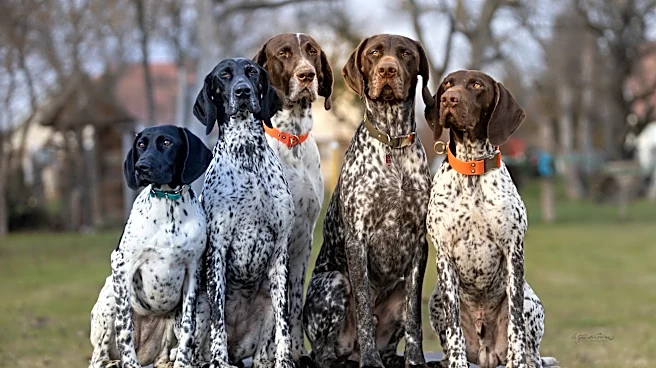
GSPs have short, thick coats, most often in liver or liver-and-white combinations. Some dogs have ticked coats, while others have patched or roan markings.
The coat is relatively simple to maintain, but “short-haired” should not be confused with “doesn’t shed.” A quick brush every few days can help keep loose hair under control, according to the AKC. Owners should also keep up with nail trims and ear care, particularly because the breed’s floppy ears can trap moisture after swimming or outdoor adventures.
They are medium-sized, but not small
German shorthaired pointers are medium-sized dogs, but they are sturdy and strong for their frame.
Male GSPs generally stand 23 to 25 inches at the shoulder and weigh 55 to 70 pounds, per the AKC. Meanwhile, females typically stand 21 to 23 inches and weigh 45 to 60 pounds.
Prospective owners should be cognizant about space, training and leash manners. An enthusiastic 60-pound sporting dog can be difficult to manage if it has not learned how to walk politely, greet visitors calmly or settle indoors.
The GSPCA puts the breed’s average lifespan at 10 to 12 years, though some can live longer.
A good breeder should welcome health questions
Anyone considering a German shorthaired pointer puppy should ask breeders directly about health testing, not just whether the parents have been seen by a veterinarian.
The GSPCA’s CHIC testing recommendations include screening for hip and elbow dysplasia, a cardiac evaluation, eye exams and DNA testing for cone degeneration, an inherited condition also known as day blindness.
The breed is built for motion, and the right home needs to be prepared to move with it. A German shorthaired pointer can be a fun, loyal and deeply engaged companion for an owner who wants a dog involved in daily life.
For someone looking for an easygoing pet that is satisfied with minimal activity, though, the GSP’s strongest traits may quickly become its toughest ones.
This article originally appeared on USA TODAY: German shorthaired pointer: Facts to know about this athletic, versatile breed