






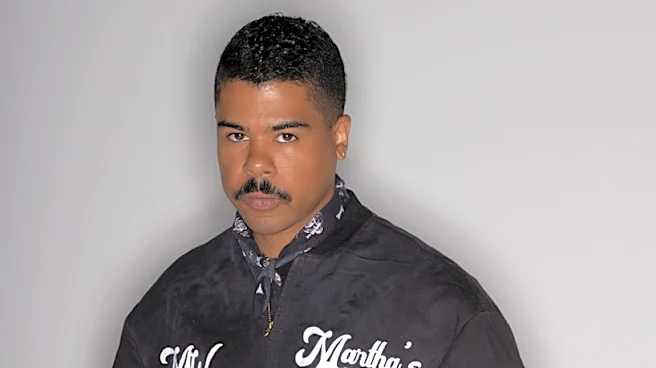
In the days leading up to Jackson Strike's Friendsgiving dinner, the guest list continued to shrink.
One friend injured her foot. A couple got sick. The day of, another friend canceled due to a "rough day at work."
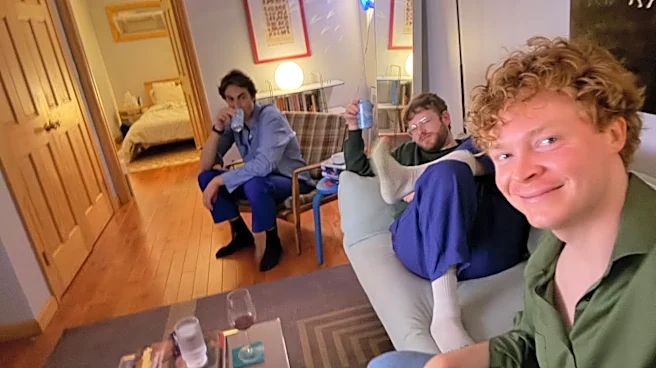
The RVSPs dwindled until it was just a group of three − Strike, the co-host and one remaining friend.
Strike, 32, posted a now-viral TikTok of their small Friendsgiving, jokingly telling their sole friend upon arrival that he was the only one coming. He was worried that if the friend knew ahead of time, he'd bail too.
"We're going to have an amazing time," he reassured the friend, who smiled nervously in response. "We have a 6-pound ham."
Comments and reaction videos flooded TikTok, calling out Gen Z and Millennials "bailing culture" at
a time where young people report feeling lonelier than ever.
"Everyone wants a village until they have to be a villager," one person wrote." "What happened to the price of community is inconvenience," replied another. "Can we normalize showing up again?" another commenter begged.
"I fear that we need to have a serious conversation... boomers would never do this," Chelsea Fagan, author of "Having People Over: A Modern Guide to Planning, Throwing and Attending Every Type of Party," said in a reaction video. "It is crazy that we have gotten to this place as a society."
She called out "just how broken the social contract has gotten among young people specifically." "It quite clearly demonstrates anti-social behavior," she added.
Strike was surprised by the strong reactions − he wasn't upset with any of his friends for their lack of attendance − but in the comments, he was struck by the number of stories about friends bailing on plans at the last minute. One user commented that "modern day bailing culture has gotten so out of hand."
Is it 'protecting your peace,' or being a bad friend?
Conversations about men’s mental health have moved to the forefront as experts sound the alarms on the “manosphere” and “male loneliness epidemic.” According to a 2025 report from Pew Research Center, self-reported rates of loneliness are roughly equal for women and men, but men are less likely to reach out to their social networks for support and communicate with their close friends more often than women.
These concerning rates of loneliness come at the same time as popular Gen Z speak includes advice like "you don't owe anyone anything" and "protect your peace."
However, "protecting your peace" by bailing on plans and social commitments can quickly turn into simply being a bad friend.
“The use of therapy speak to justify, in essence, being non-committal socially, sort of withdrawing socially or having the right to withdraw socially, I think, is really hurtful,” Jamil Zaki, a professor of psychology at Stanford University and director of the Stanford Social Neuroscience Lab, previously told USA Today.

Strike moved to New York City half a decade ago, and as he gets older, he says it's been increasingly difficult to get people together. Friends get into relationships and start to move further out of the city, and group hangs become few and far between. For that reason, he's happy he didn't tell the one friend that everyone else bailed.
"We had an amazing night regardless, and there was the perfect amount of wine for three people," Strike says. "That was a silver lining, and I had leftover ham all week. And, I will absolutely take a three-person Friendsgiving over a one-person Friendsgiving."
He's hoping that the conversations his video sparked indicate a positive shift in bailing culture.
"The early 2020s were the era of 'you don't owe anyone anything' culture, and now maybe the late 2020s will be an era of 'actually you do owe people things culture,'" he says.
Showing up isn't just good for the friendship. Nurturing those connections can have tangible benefits on your physical and mental health. Studies have shown connections and friendships are good for our health and longevity.
"If we focus on keeping ourselves comfortable … we're missing out on a critical opportunity," Zaki said. "When we show up for others, our stress decreases, our sense of agency and autonomy increases, our happiness increases, and so when we focus on a hyper individualistic almost single serving version of wellbeing … we actually are depriving ourselves of one of the great sources of wellbeing."
Next year, Strike says his Friendsgiving is going to be "huge."
"Everyone who commented has an open invite," he says.
Contributing: Rachel Hale
This article originally appeared on USA TODAY: Almost no one showed up to his Friendsgiving. What it says about 'bailing culture'