


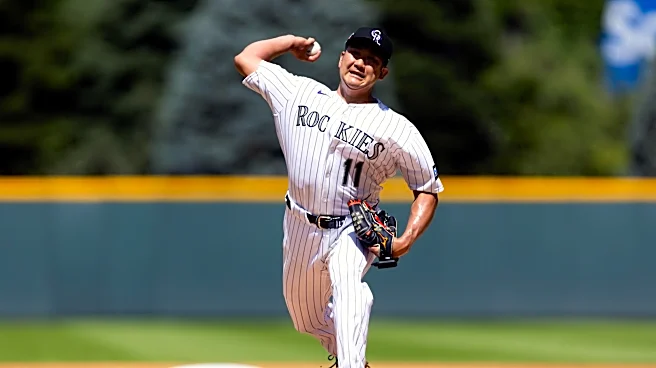
They were expansion partners in 1993 and have achieved some remarkable things in Major League Baseball: Two World Series titles, an out-of-nowhere run to a National League pennant and cultivating one loyal fan base that turns out even in the grimmest of times.
Yet as they complete their 34th seasons as major league franchises, the Colorado Rockies and Miami Marlins will once again take an embarrassing deficiency into the winter:
They’ve never won a division title.
That might sound a little pedantic, given that the Marlins won World Series championships in 1997 and 2003, both coming as a wild card and the latter a truly out-of-nowhere accomplishment. And the Rockies made the playoffs in their first season at Coors Field in 1995 and in 2007 staged
a wild run to the World Series, winning 21 of 22 games to sneak in the playoffs and sweep the NL field.
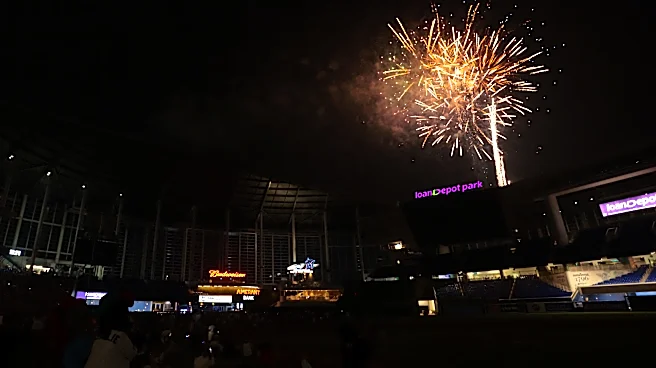
So what’s the big deal if an NL East or West flag doesn’t droop amid the climate-controlled environs of loanDepot Park, or flap in the breeze a mile high in Denver?
Well, this particular dry spell of divisional futility is unprecedented in MLB’s expansion era.

You need only look at the two clubs that came to life five years after the Marlins (occupying the Miami Dolphins’ Joe Robbie Stadium) and Rockies (watching the ball carry in cavernous Mile High Stadium) played their first games.
The Arizona Diamondbacks, defying the slow build ethos expected of expansion teams, won the NL West in 1999, just their second season. They won a World Series championship two years later.
And the Tampa Bay Rays, woefully mismanaged in the years after their 1998 debut, were, thanks to future Hall of Fame GM Andrew Friedman, champions of the vaunted AL East by 2008, appearing in their first World Series that fall.
Every other major league franchise? They’ve all won championships since divisional play began in 1969 and all – with a couple caveats – in far less time than the Marlins and Rockies have failed to do so.
Sure, the former Washington Senators/Texas Rangers franchise needed 36 years to win a division, but they played eight seasons after their 1961 founding before the AL and NL cleaved into divisions. And the former Montreal Expos/Washington Nationals franchise didn’t win a division until 2012, when the Nationals broke in the franchise’s 44th season.
Yet the Expos had the most overall wins among NL East teams in the strike-interrupted 1981 split season and famously held the best record in the majors – 74-40 – and a six-game lead in the East when the 1994 strike shut down the season in August.
No, it is just the Rockies and Marlins who have eternally defied Ricky Bobby’s first commandment. And while there are many factors working against them – the NL’s West and East each have traditional powers and well-funded franchises in their ranks – this franchise defect has endured, even as the Marlins have turned wild cards into rings.
“Before (2020), it had been two trips to the playoffs – and both were World Series wins. I don’t think any team can say that,” Marlins slugger Griffin Conine, whose father Jeff was both an original Marlin and 1997 World Series champion, tells USA TODAY Sports.
“Those two trips, we really made them count. But we want to be a team that’s recurring in the playoff hunt. Every year, in the race. We’re getting there. We were there last year, right into the last week.
“I anticipate us being in that same boat this year.”
Indeed, the Marlins (69-68) have clawed back above .500 and are within four games of a still-unlikely wild-card berth. Yet they’re 12 ½ games behind Atlanta in the East, while the 52-85 Rockies are 29 games behind the behemoth Dodgers and last in the West.
As the 2026 season winds down, has either club taken baby steps in closing the gap with their divisional foes?
At altitude, knowledge becomes power
If you Frankensteined a team out of Rockies and Marlins parts, it would be difficult to beat.
“We feel we have a ton of arm talent,” says Marlins manager Clayton McCullough, “and can go out and pitch against anyone and that gives yourself a chance to win most every day.”
And then there are the Rockies, undergoing a long-overdue top-down rebuild led by new club president Paul DePodesta and GM Josh Byrnes.
“Our offense is top 10, top five in a lot of categories,” says Rockies manager Warren Schaeffer. “That’s a huge initial (improvement). The new product on the field is better. You can see it immediately.”
Those themes have largely defined each franchise since their inception, though the Rockies somehow bottomed out offensively in 2025, when they lost a franchise-record 119 games, one shy of the 1962 Mets’ NL record.
There was no need to park-adjust these numbers for Coors Field: The Rockies ranked last in the majors in on-base percentage (.279), 29th in runs, 27th in OPS (.679) and struck out 1,531 times, more than any team except the Angels.
The longtime image of the Rockies is a band of power-hitting, wail-and-bail galoots. But the “Blake Street Bombers” moniker aside, the Rockies are at their best utilizing Coors Field’s vast expanses and collecting hitters with adjustable swings that have a better chance to play on the road, too.
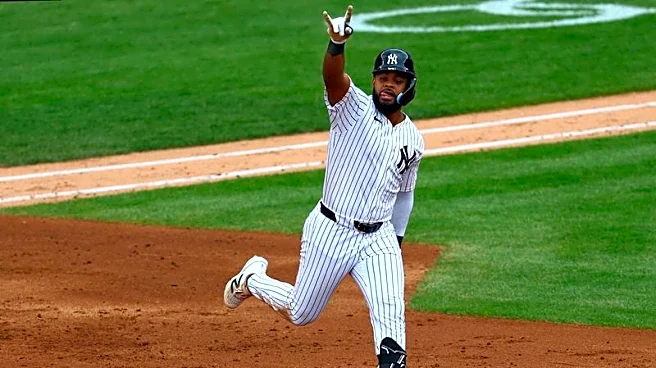
And so a pair of trades that went virtually unnoticed – first baseman TJ Rumfield arriving from the Yankees in exchange for pitcher Angel Chivilli, and outfielder Jake McCarthy acquired for pitcher Josh Grosz – paid significant dividends.
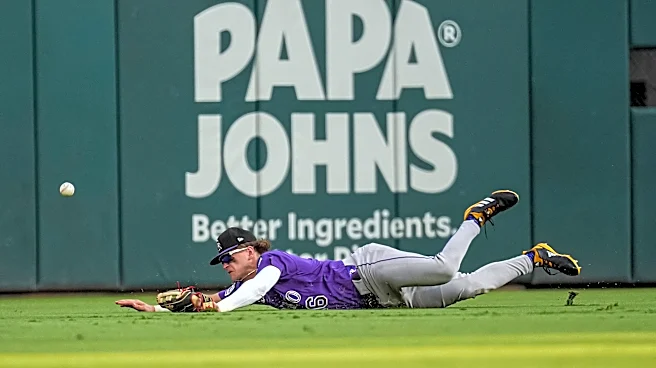
McCarthy’s game – good speed, gap power – is well-suited to Coors Field. He has an .804 OPS, 47 extra-base hits – 27 of them doubles – and 25 steals. Rumfield, who debuted on Opening Day, has just 13 homers yet an .820 OPS. Like McCarthy, he makes frequent contact, with a 13.2% strikeout rate and his 3.2 WAR leads the club.
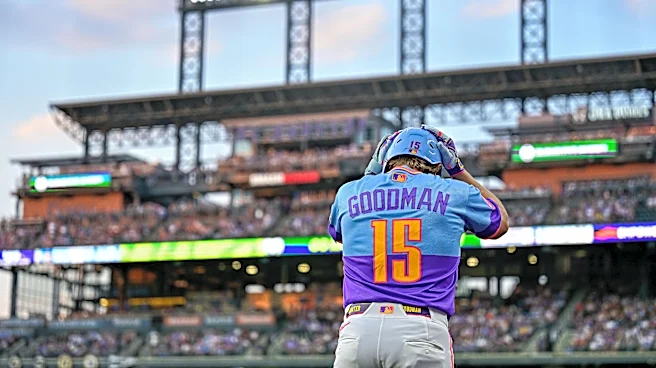
Clustered around All-Star catcher Hunter Goodman – on track for a 40-homer season – the new-look offense is cooking.
“As far as position players go, I think we have a good young core of guys,” says center fielder Cole Carrigg, who debuted in June and has a .782 OPS in 68 games. “Other than Goodie, who’s got 30-odd homers, nobody’s got unbelievable stats. But everybody’s right there and could play on any given team on any given night.”
Cool, cool. As for the pitching?
It’s a saga going on three decades, from the first pitch Bryn Smith threw at Mile High Stadium in 1993, to the failed $121 million investment in Mike Hampton to the Coors Field humidor that can cool the home run balls but can’t help a pitch move the way a hurler expects.
Yet as time goes on, knowledge becomes power. And at least the Rockies know what they're up against, other than simply, “Pitching at altitude sucks.”
“The factors everybody talks about are definitely real. You lose 25% of your spin-induced movement,” says Nationals reliever Jake Bird, who pitched in Colorado from 2022 to 2025 before a trade to the New York Yankees. “So, if you’re a spin, four-seam guy throwing it with 20 inches of ride at sea level, you go to Colorado it’s going to be 15.
“So, you take an elite fastball and make it an average one. That’s a factor. The big outfield there. The elevation. There’s definitely ways to work with those and use them.”
Yet a problem hitters and pitchers alike face is the constant adjustments from home to road back to home, repeated dozens of times throughout a 162-game schedule.
“That’s probably the most difficult part of being a pitcher for them,” says Bird. “You’re home for seven days, you’re getting used to the way your stuff moves. And then you go on the road and your stuff is moving more. There’s never a time where everything’s the same.
“It’s the most difficult part, but kind of a fun challenge, too.”
One the Rockies have not yet overcome, though it can take a few decades to turn around a tugboat. This group ranks 30th in the majors in ERA, their 5.49 mark light years away from the No. 1 Yankees’ 3.21.
Every starter has an ERA north of 5, and potential ace Chase Dollander – who had a 3.89 ERA in 10 outings – underwent internal brace surgery on his right elbow in June.
Yet identifying one or three or five keepers right now isn’t as important as finding a process that works, as tired as that concept may be in this analytics era.
Still, for a Rockies franchise that famously promotes from within, often to its detriment – prior GM Bill Schmidt was hired as the club’s scouting director in 1999 – any reboot is significant.
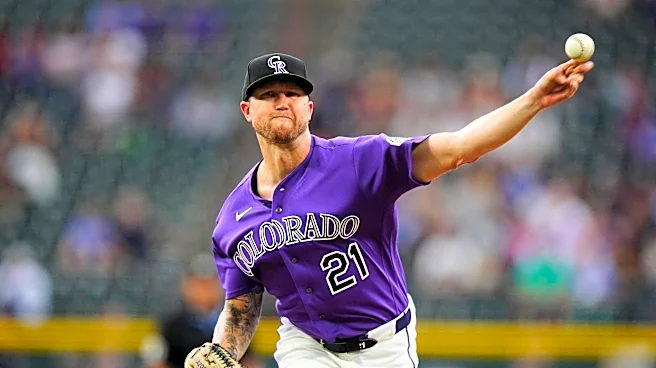
“Our new regime is very smart,” says starter Ryan Feltner, who has a 5.21 ERA in 21 outings this season. “They’re analytically driven, which is super important given our environment. I think our environment can be an advantage to us, and I think we’re starting to make some moves that push it in that direction.
“I think they’re very aware of the environment and how to optimize it. I think there’s certain types of players that work at elevation and maybe others that don’t. I think they’re very aware of those things.”
Says Schaeffer: “Josh Byrnes is fantastic to work for. Paul DePodesta’s fantastic to work for. They have a clear plan. They’ve already made strides in the offseason.”
Cash calls
Yet the hills both clubs must climb in their divisions are so significant.
Since original Marlins owner Wayne Huizenga went on a spending spree that resulted in that 1997 wild card and startling World Series title, the franchise has run a largely skinflint operation. There was a brief investment in free agents Jose Reyes and Mark Buehrle as the club opened its heavily taxpayer-financed ballpark, but they were soon shipped to Toronto.
The club locked up franchise player Giancarlo Stanton on a $325 million deal – then traded him after he’d been paid just $30 million of that deal. The Marlins are located in the 18th-largest market in the USA yet their $82 million payroll ranks second-to-last in the majors.
Fourth-year GM Peter Bendix is a skilled dealer and learned the fine art of arbitrage in Tampa Bay, and there’s little sign the club will come anywhere close to investing at a level that they can compete with the Atlantas and Philadelphias, to say nothing of the stupendously paid Mets, who for all their outlay have a fifth-place team this season.
Still, the Marlins will try, even if a likelier outcome is a win total in the mid-80s and a wild card berth – like their surprise 2023 playoff appearance - rather than besting all the East beasts.
“I love the division we’re in. I think nothing prepares you better,” says McCullough, who was on Dave Roberts’ Dodgers staff from 2021-2024. “We do talk about the postseason here and we don’t shy away from it. Because all of our expectations are building something here that will put us in a position, year after year, to be competing for postseason appearances and ultimately finding our way in.
“Playing against high-quality people, as many times as we do, in this division, sets us up really well. There are no easy matchups when you get beyond the regular season.”
It’s no different for the Rockies, who are chasing a club with, until further notice, a lease on first place. Beyond the Dodgers, the Giants and Padres are also big spenders and Arizona is just three years removed from a World Series appearance.
“It’s an unbelievable division,” says Schaeffer. “The two-time World Series champions. The style of play the Diamondbacks play, the Padres’ lineup.
“We gotta beat those teams to get where we want to go. We gotta do it different. Everybody knows it. We are making strides to get there. We need to beat our division rivals for sure. We need to make strides on that.”
Winning one more game off the Dodgers and losing six more by three runs or less may not look like progress, but the Rockies will take it. And unlike the Marlins, there is at least the hope of roster investment should the window of contention demand it.
The club signed Kris Bryant to a $182 million contract through 2028, but a back injury has likely ended his career. Yet they’ve made past nine-figure commitments to the likes of Troy Tulowitzki ($134 million), Nolan Arenado ($260 million) and, of course, Hampton way back in the day.
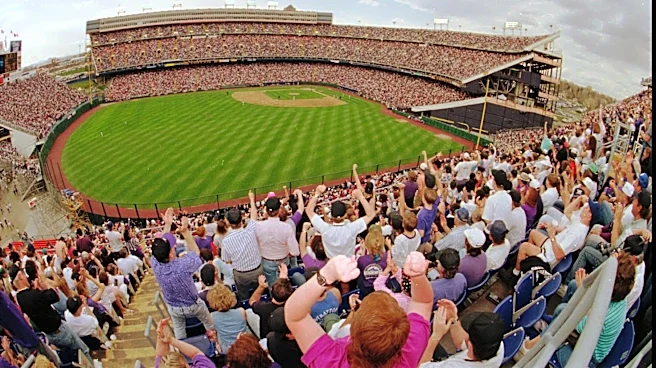
On their way to a fifth straight last-place finish, the Rockies nonetheless have never drawn fewer than 2.4 million fans in non-pandemic years since 2007. The potential is there.
And change is afoot. Even if it might take a good while longer to end a divisional drought going on four decades.
“Everybody needs to make adjustments going forward,” says Schaeffer, a member of the Rockies organization as a player, coach or manager since 2007, “because what we were doing in the past wasn’t working.
“The goal is to win. I think that everybody’s done that really well this year.”
This article originally appeared on USA TODAY: Born in 1993, the Marlins and Rockies continue unreal division droughts