





Is William Reaves Jr. a cold-blooded killer who should be executed for shooting a young cop in Florida in 1986? Or is he a PTSD-stricken Vietnam veteran who deserves mercy because he thought he was back on a battlefield when the officer was slain?
He's the latter, argue his attorneys, a group of military veterans and death penalty opponents. But the state and the officer's loved ones believe justice is long overdue.
Florida is set to execute Reaves by lethal injection on Tuesday, Oct. 20, about three weeks after the state of Tennessee botched Christa Pike's execution. Reaves, 77, is being put to death for the 1986 murder of 29-year-old Cpl. Richard Raczkowski, known affectionally as "Raz."
While Tennessee's botch involved the popular execution
drug pentobarbital, Florida uses three different drugs.
More than 100 military veterans urged Florida Gov. Ron DeSantis to stop Reaves' execution in a letter on Oct. 19, saying that in return for risking their lives for the United States, the country "assumes a solemn duty not to abandon (service members) when they come home carrying wounds we cannot see."
During Reaves' service in the Vietnam War, he was an infantry machine gunner for the Army and lived through ambushes and sniper fire. A friend died in his arms the first week he arrived in country, according to Floridians for Alternatives to the Death Penalty.
"Although his body returned home intact, part of him remained at war," the military members wrote in their letter to DeSantis. "Mr. Reaves could never fully shake the feeling that he was under attack, still fighting for his life half a world away."
The state of Florida argued in court this month that Reaves' execution is long overdue, as is the justice his victim's family has sought for decades. It would be "a perverse view of justice and fairness to allow Reaves a stay of his 34-year-old sentence," they said.
Here's what you need to know about Reaves, his war service and his crime.
When will Florida execute William Reaves?
Reaves is set to die by lethal injection on Tuesday, Oct. 20, starting at 6 p.m. at the Florida State Prison in Raiford, about 45 miles southwest of Jacksonville.
Who did William Reaves kill? How did Cpl. Richard Raczkoski die?
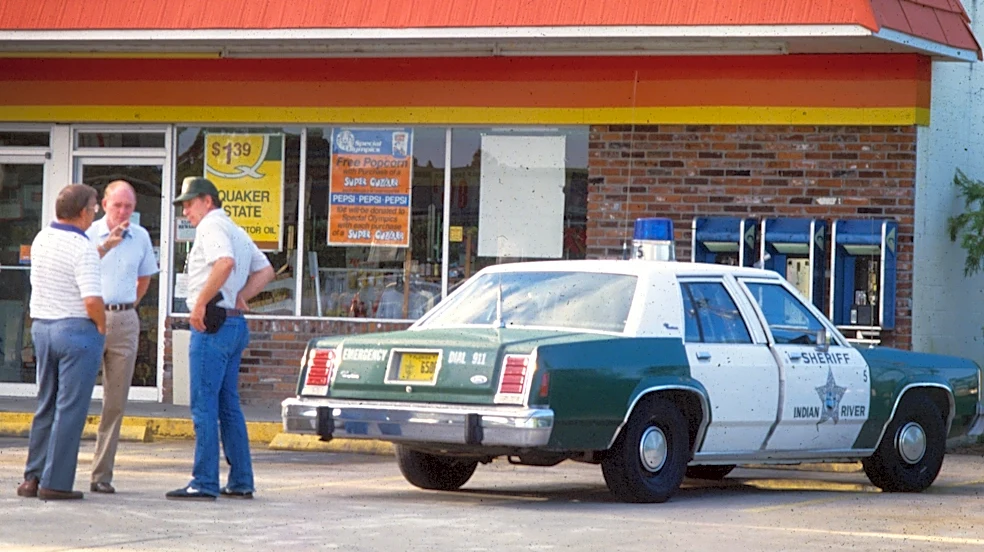
Indian River Sheriff's Deputy Richard Raczkoski, 29, was responding to a mystery 911 call from a phone booth at a Zippy Mart convenience store in Vero Beach around 3 a.m. on Sept. 23, 1986. No one spoke during the call. When Raczkowski arrived to investigate, Reaves was by the phone booth, according to archived news reports.
The officer called in a warrant check on Reeves, according to court documents. After being informed by a dispatcher that there were no warrants pending, Raczkowski tried to arrange for a cab to come pick Reaves up, archives show.
That's when a gun tumbled out of Reaves' waistband.
Raczkoski quickly put his knee on the gun, prosecutors said. But Reaves was able to grab the gun and pointed it at the deputy, who started to draw his own weapon before backing up and starting to run away. Reaves then shot seven times, hitting Raczkoski four times.
Reaves fled and told a friend: “I done [redacted] up. I just shot a cop, I just shot a police.” The friend testified that Reaves quoted the deputy as saying, “Don’t shoot me. Don’t shoot me. Don’t kill me,” before Reaves opened fire.
“One of us got to go," Reaves told Raczkoski, the friend testified. "One of us got to go, me or you.”
Reaves was arrested in Georgia two days later. During initial interviews with sheriff's deputies, Reaves admitted to emptying the clip of his .38 pistol at the deputy and said he was "wired on cocaine" at the time, court records show. Reaves, who had been in and out of prison since the early 1970s, also said he didn't want to go behind bars again.

Prosecutors pointed out that the .38 was not automatic and Reaves had to pull the trigger each time.
The jury convicted Reaves of premeditated first-degree murder and recommended death.
Raczkoski, known by his friends and family as "Raz," was posthumously awarded the Medal of Valor by the International Police Association. A section of State Road 60 in Vero Beach is named the Richard Raczkoski Memorial Highway in his honor.

More about Williams Reaves and service during Vietnam
There are two stories when it comes to Reaves' life, wrote his former attorney, Chance Meyer, in an op-ed for Slate this month.
"In the prevailing narrative, he’s a monster who shot a good cop as the man begged for his life. In the untold story, he’s a victim of circumstance − a sweet kid from a small town who was sent to war, trained to kill in the service of his country, and returned home a psychological ruin," Meyer wrote. "Both stories are true. Only the first has been given moral weight in popular memory."
Meyer said the world needed to hear more about "the war hero" and how his service explained his crime.
"While still a teenager, William was taken from his community and sent to Vietnam," Meyer wrote. "He went on search-and-destroy missions, spending day after day under the ever-present threat of stumbling into a firefight. ... William’s body learned to stay locked in a state of hypervigilance that eventually would not switch off. Older soldiers in Charlie Platoon − men William looked up to − trained him to use heroin and opium-laced marijuana to numb the unrelenting terror."
Meyer wrote that Reaves "killed to survive as friends died around him" and though he made it back home, "the constant panic and the conditioning to use drugs against it came with him."

A Veterans Affairs hospital denied Reaves help, Meyer wrote. Reaves used drugs to self-medicate and began carrying a gun for protection, according to Meyer.
The night of the murder, Meyer wrote that Reaves "thought he was fighting for his life." And, he said, jurors deciding Reaves' fate never heard about his PTSD or the contention that he was reliving Vietnam when he committed the murder.
The military veterans who wrote to DeSantis appealed to the governor's own service in the U.S. Navy.
"Honor the full measure of William Reaves’s service, recognize the wounds he carried home, and grant him the mercy his jury was never equipped to consider," they wrote.
DeSantis' office did not immediately respond to a request for comment from USA TODAY on Monday night.
Richard Raczkowski's loved ones see execution as justice
Raczkowski's friends and family have told reporters over the years that Reaves should be executed for what he did, though it's unclear whether anyone asked them about his experience in Vietnam.
At the time Raczkowski was murdered, he was planning to marry his longtime girlfriend and the two were going to celebrate her birthday the day he was killed, according to an archived story in Florida Today, part of the USA TODAY Network. Raczkowski's only son, Matthew, was born after his death.
Raczkowski's dad, Rudolph Raczkowski, told the Palm Beach Post that he always told his son to be careful while out on the job. He had already lost one son in a deer-hunting accident years earlier and he worried about Richard.
"He said, 'I am careful), Dad. I watch myself wherever I go," Rudolph Raczkowski told the Post, part of the USA TODAY Network.
He expressed frustration in 1991, when the Florida Supreme Court tossed out Reaves' 1987 murder conviction because the prosecuting attorney at trial had previously worked as a public defender and had represented Reaves in 1973. (Reaves was convicted and sentenced to die a second time in 1992.)
"It's cut and dried," Raczkowski told the Indian River Press Journal at the time. "He admitted it. ... Why do these people at the top say he didn't receive a fair trial?"
Richard Raczkowski's brother, Marc Raczkowski, told WPTV last month that his parents were so distraught after the death of a second son that nothing was ever the same again.
"No more Christmas trees in the house," he said. "Mom didn't decorate."

He said that over the past 40 years, he's often felt like everyone forgot about his brother and that he's looking at the execution for closure.
"It's finally over," he told the station.
Some of Richard Raczkowski's colleagues told Treasure Coast Newspapers − part of the USA TODAY Network − that they plan to attend the execution.
Indian River County Sheriff Eric Flowers said he wanted to make sure the last thing Reaves sees before he dies is an Indian River County sheriff's uniform: "I want to make sure he knows we never forget."
Florida on pace to break 2025 record of executions
DeSantis has dramatically ramped up death warrants, issuing a record 19 in 2025, nearly 2½ times as many as the former record of eight and comprising nearly half of all executions in the U.S. that year. Amnesty International singled out Florida and DeSantis in its annual report on the surge in executions around the world.
In the years before 2025, DeSantis had issued only six death warrants.
"If you think about it, some of these crimes were committed in the '80s, and they wait, and there's appeal, and this and that, and it's like, you know, there's a saying, 'Justice delayed is justice denied'," he said at a November news conference. "I felt that I owed it to [victims' families] to make sure that this ran very smoothly and promptly."
Amanda Lee Myers is a senior crime and courts reporter who covers the death penalty, cold cases and breaking news for USA TODAY. Follow her on X at @amandaleeusat
C. A. Bridges is a journalist for the USA TODAY Network-Florida's service journalism Connect team. You can get all of Florida’s best content directly in your inbox each weekday by signing up for the free newsletter, Florida TODAY.
This article originally appeared on USA TODAY: Vietnam vet faces execution for cop killing. Was it PTSD or murder?