



Dating can be hard on the heart. It also can be hard on the wallet.
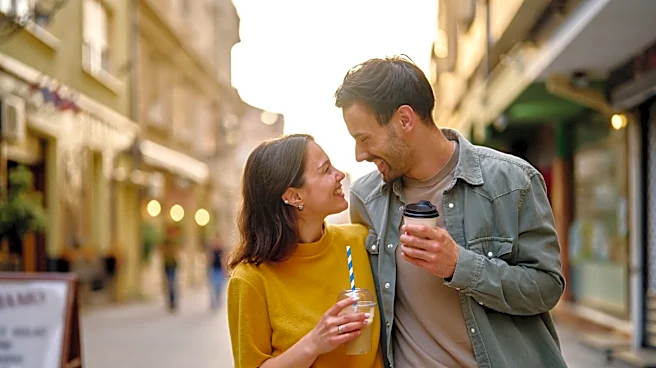
Faced with inflation and other economic pressure, some singles are opting either not to date right now, or to scale back dates to affordable activities. Instead of going to a fancy restaurant or bar, they're grabbing coffee and going on a walk. Or sitting in the park.
And, like everything in modern dating, this phenomenon, of going on budget-friendly dates, has spawned a new term. Actually, two: "infladating" and "dateflation."
Though some might be disappointed to hear that singles are sidelining pricey dates, dating and relationship experts say the "infladating" or "dateflation" mentality can actually present a positive shift for people's love lives by pushing them to get creative
and prioritize connection over financial flexing.
"The reality is, a lot of people are struggling in today’s economy and they’re opting out of dating completely because it’s too expensive," says Amy Chan, a dating coach and the author of "Unsingle: How to Date Smarter and Create Love that Lasts." "I see this more in my male clients who feel embarrassed that they cannot take a date out to a nice restaurant. If the antidote for that is infladating then I’m all for it!"

'Dateflation' is out of control. So people are 'infladating'
Finances touch nearly every aspect of life, to varying degrees. Your dating life is no exception.
Not only does the state of the economy impact the kinds of dates people go on, it may also influence who people decide to go out with. As dating becomes more expensive, people become more selective about who they choose to take out.
"People have a different calculation of which dates to go on and not just what they're doing on the date, but who is worthy of that date," says Damona Hoffman, a dating coach and the author of "F the Fairy Tale: Rewrite the Dating Myths and Live Your Own Love Story." "So if you are going to go on a more expensive date, you're not going to do that on a first or second date. You're going to wait to see that there's some possibility of this relationship going somewhere, before you're willing to make a monetary investment in someone."
The reality, Chan says, is many daters actually prefer cheap dates anyway, especially in the beginning of a relationship. After all, do you really want to be locked into a five-course meal with someone you don't even know yet?
Keeping dates low cost and low stakes, she says, can help put yourself and your date at ease, while setting the stage for what a first date ought to be: a vibe check.
"It should be short and sweet," Chan says of a first date. "That way, if you don’t have any connection, you can leave after an hour. Or if there is a connection, you can go to a second place or activity to keep momentum going. Either way, if it goes well, then you create anticipation for the next date, which can be something like a dinner."
Simple, cheap outings also allow you to get to know your date with less distractions. Without the pomp and circumstance of a pricey evening, you can look for what really matters: Is this person thoughtful? Do you like being around them?
And if someone is overinvesting in an early date − buying fancy meals or taking you on a luxurious excursion before really knowing you − it could be love bombing.
"Be wary of the person who pulls out all the stops on a first date," Chan says. "You might be impressed when someone takes you to an extravagant dinner, showers you with grand gestures and brings over-the-top romance to a first meeting. We're taught to read that as romantic, but think about it. They don't even know you yet. That level of intensity hasn't been earned by anything real between you. It's a performance, and often it says more about how they want to be perceived than how they feel about you."
This article originally appeared on USA TODAY: People are going on cheap dates and calling it ‘infladating.’ How did we get here?