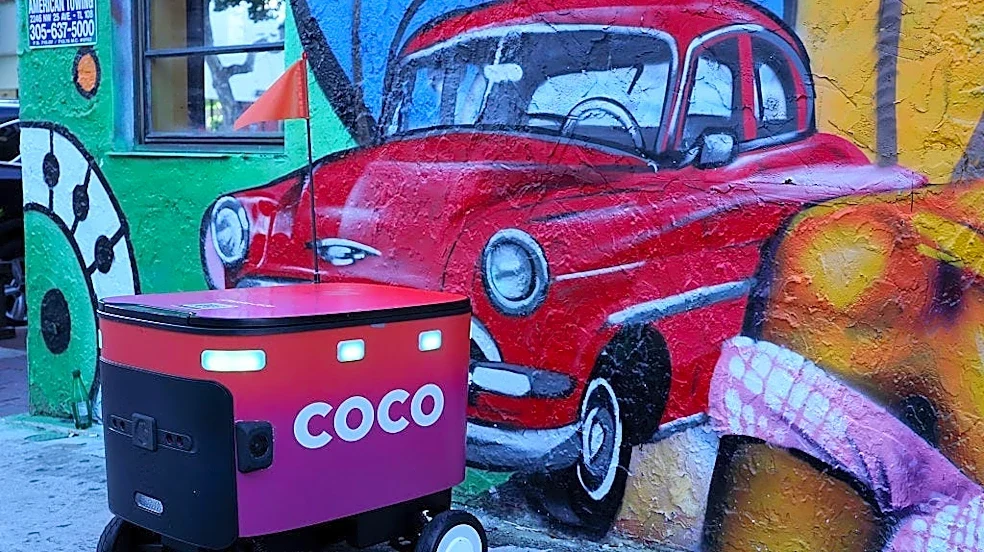




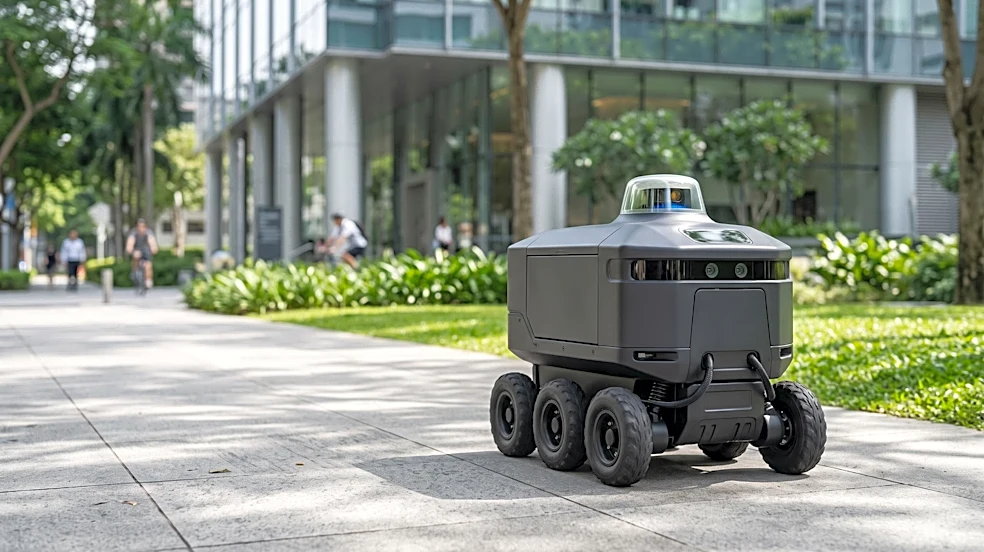

Two food delivery robot companies are facing proposed class-action lawsuits alleging their machines collected customers' facial and hand measurements without consent, potentially violating Illinois' biometric privacy law.
The lawsuits were filed Oct. 9 in Cook County, Illinois, against Coco Robotics and Serve Robotics, according to online court records USA TODAY reviewed. The complaints allege the companies' robots collected biometric information from customers retrieving orders and other people encountered on Chicago sidewalks, the Chicago Sun-Times and ABC7 Chicago reported.
Both companies deny the allegations. Serve Robotics told USA TODAY that it would defend itself against the lawsuit.
"Our robots use cameras and sensors to navigate the sidewalks
of Chicago safely. Serve does not use that data to identify individuals and our systems are not designed to identify individuals or create biometric profiles," the company said in a statement.
Meanwhile, Coco Robotics says it has not collected biometric data in Chicago. Carl Hansen, the company's head of government relations, told the Chicago Sun-Times that Coco Robotics has not collected biometric data in Chicago and called the lawsuit meritless.
Hansen added that the company shares navigational data to help make sidewalks safer, including real-time sidewalk hazard information provided to BlindSquare, a navigation app for people who are blind or have low vision.
Here is more on the lawsuits against Coco Robotics and Serve Robotics.

What do the lawsuits allege?
The lawsuits involve two Chicago residents who say they received robot deliveries without choosing that delivery method, according to the civil complaints obtained by the Chicago Sun-Times and ABC7 Chicago.
Mitchell Breidinger alleges a Coco robot delivered his DoorDash grocery order on Sept. 29, 2025. Per the complaint, the robot's cameras recorded his face, head and hands, while its light detection and ranging, or LiDAR, sensors measured their geometry.
The complaint also alleges a remote operator watched real-time video of the delivery. Breidinger says Coco did not provide the required written notice or obtain his written consent.
Barry Schain alleges he received three deliveries from Serve robots through Uber Eats, most recently on Oct. 4, the Associated Press reported, citing his complaint. Schain's lawsuit also alleges the robots collected biometric information without his consent.
Breidinger's complaint alleges Coco shared robot-collected data with OpenAI and other third parties, per the Chicago Sun-Times. Schain's complaint alleges Serve licenses video and LiDAR data to third parties for AI training.
USA TODAY contacted Coco Robotics, the Clerk of the Circuit Court of Cook County and Almeida Law Group, which represents the plaintiffs, on Oct. 21 for comment and copies of the complaints.
What does Illinois' biometric privacy law require?
Illinois' Biometric Information Privacy Act, enacted in 2008, requires companies that collect biometric identifiers, including scans of face or hand geometry, to provide written notice explaining the purpose and duration of collection and obtain written consent.
The law also regulates how companies handle and retain biometric information.
The lawsuits seek statutory damages of $1,000 per negligent violation or $5,000 per intentional or reckless violation, along with court orders requiring compliance with the law.
Reporter Anthony Thompson can be reached at ajthompson@usatodayco.com, or on X @athompsonUSAT
This article originally appeared on USA TODAY: Food delivery robots collected biometric data, lawsuits allege