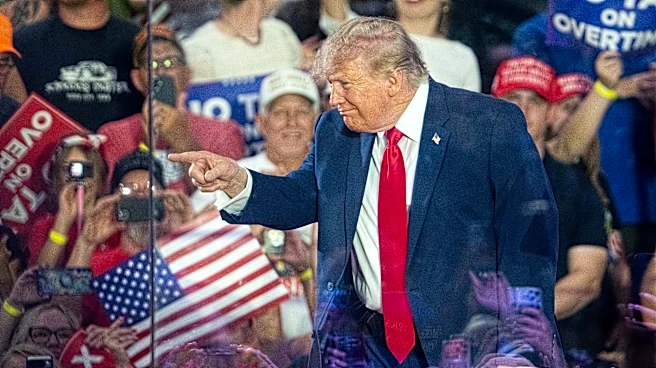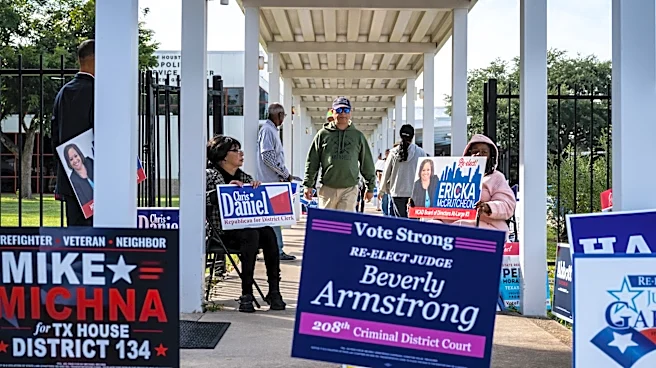

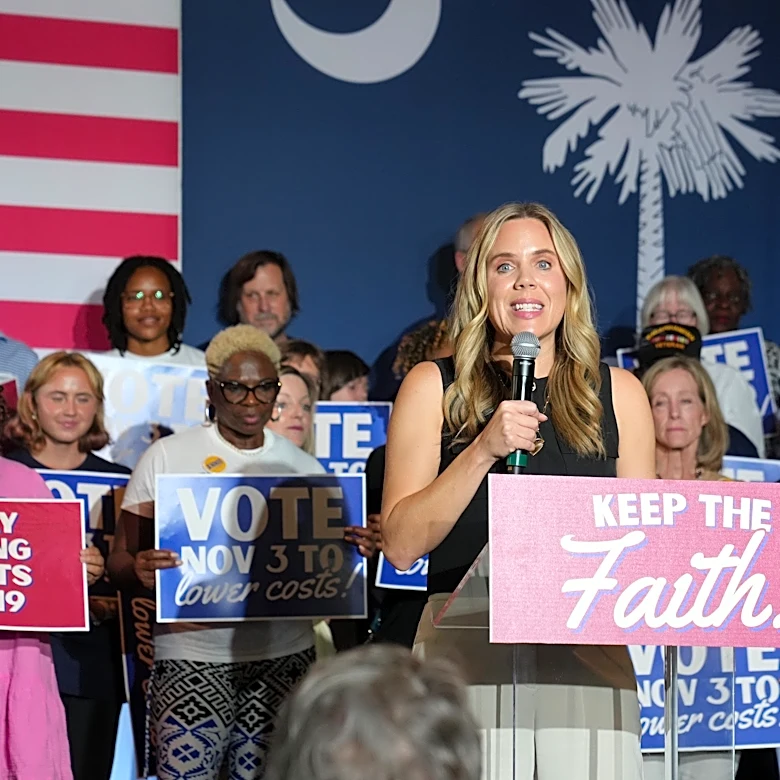

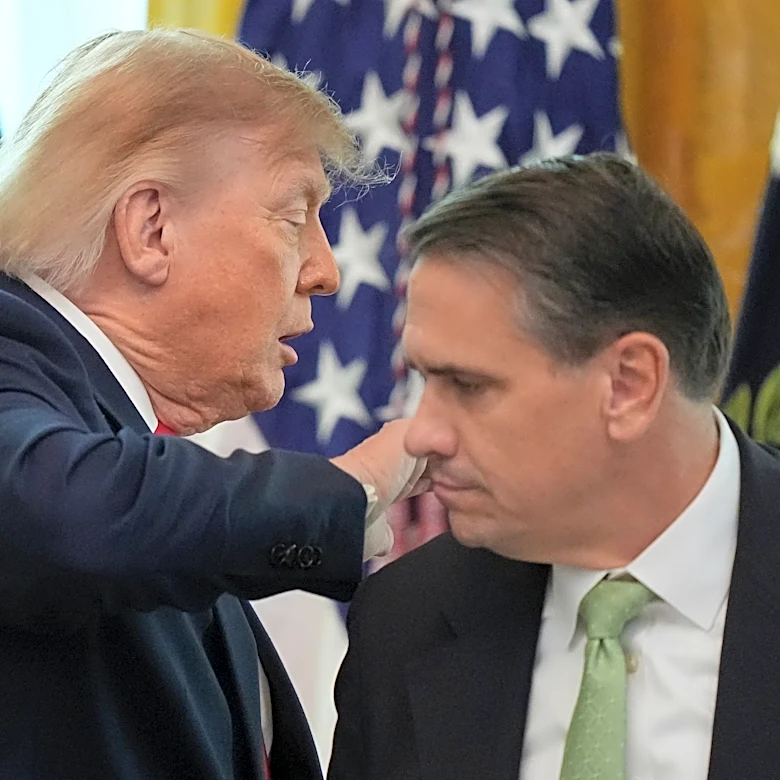

Democratic optimism heading into the pivotal 2026 midterms is being met in some quarters with a creeping skepticism that pollsters are overestimating their chances for a sweeping victory in November.
Every poll asking voters which party they will vote for in Congress since 2025 has given Democrats the edge amid President Donald Trump's plummeting job approval numbers.
Statistician Nate Silver, known for his accurate odds-making in several elections, is giving Democrats a 94% chance of retaking the House of Representatives and a 75% possibility in flipping the Senate. Most Americans believe Republicans will lose the House while half think they will lose the Senate, an October Pew Research Center survey showed.
A week before the election, Jennica
Pounds, a conservative activist behind the X account DataRepublican, warned GOP to "brace yourself" for the outcome. She declined to share her election forecasts in an Oct. 25 post, saying they would have an "effect on morale" if she made them public.
But experts are warning that survey results remain imprecise yardsticks, even with historical trends in midterms favoring the party out of power.
"We need to recognize that polls are not predictions of the future; they're snapshots in time," Tatishe Nteta, a political science professor at the University of Massachusetts Amherst and director of the UMass Poll, said in an interview.
"We're not soothsayers, we are not telling Julius Caesar that he is going to die on the Ides of March, but what we can tell you is that Caesar is probably in trouble."
Several races rated as toss-ups in states the president won by double-digits two years ago, such as Texas, Ohio and Iowa, could swing either way.
Those contests, observers say, are made harder to measure for even reputable polling firms due to lower turnout in off-year elections, uncertainty around voting mechanics such as mail-in voting and and reluctant Republican voters being more likely to ignore pollsters.
In 2016, a Suffolk University/USA Today poll gave Democratic presidential nominee Hillary Clinton 9-point edge head-to-head against Trump with less than two weeks until Election Day. In a blow to leading pollsters, Trump won an Electoral College majority, while losing the popular vote by about 2 percentage points.
Similarly in 2024, the aggregate of polling consistently showed former Vice President Kamal Harris with a roughly one and a half percentage point lead that Trump ultimately flipped on its ear to win his return to power.
"Historically the polls have always tended to favor the Democrats, and we've always outpaced the polls for the last couple of cycles," Republican National Committee Chairman Joe Gruters told USA TODAY.
"If I believe polls, the president never would have been elected either time."
Some polls of 2026 Democratic primaries showed the more progressive candidate performing much better than they did on Election Day. In Michigan, the polls had Abdul El-Sayed winning the Democratic Senate primary there by double digits. He ultimately won by 1 percentage point over Rep. Haley Stevens. And in Wisconsin state Rep. Francesca Hong, a democratic socialist, lost to Milwaukee County Executive David Crowley by less than half of a percentage point in an outcome that none of the statewide polls foreshadowed.
However, polling errors have also overstated Republican performance. Ahead of the 2022 midterms GOP leaders boasted about flipping up to 60 House seats given former President Joe Biden's 40% approval and a 22% approval for Congress at the time, according to Gallup. The GOP only eked out a net gain of nine seats in the House and lost a Senate seat to Democrats.
The same thing happened during the New Jersey and Virginia gubernatorial contests last year that started the Democratic comeback. In Virginia, Gov. Abigail Spanberger's polling lead in the final two weeks was about 9 percentage points on average but she defeated Republican Lt. Gov. Winsome Earle-Sears by 15 percentage points.
Polling averages in New Jersey during the final leg of that cycle showed Gov. Mikie Sherrill ahead by about 5 percentage points, but she throttled Republican Jack Ciattarelli by 14 percentage points.
Pollsters warn of confusion, inaccuracies ahead of midterms

Leaders of prominent polling firms have admitted the Nov. 3 elections Congress have presented the profession with new challenges.
In anOct. 14 op-ed for The Hill, Pew Research Center President Michael Dimock said there are fewer high quality firms in the field and rising new entrants using cheaper methods.
"It’s become more challenging over time, and 2026 has a swirl of unknowns compounding the challenge — a perfect storm ripe for confusion," Dimock said. "Any one of these factors could yield surprises that are impossible to predict, even for the highest quality polls."
Among the biggest problems, he said, are studies showing groups having more "bogus respondents" from AI bots slipping into some of their surveys, which makes it harder for voters to trust the system.
A group called Wedgewood Polls admitted to releasing fake results beginning in June on races in Georgia, Michigan, Texas and other states that could determine control of the Senate. Its numbers appeared in news articles and polling compilations.
These concerns are magnified during midterm elections where lower turnout and unpredictable local dynamics make voter sentiments difficult to track.
When seeking to monitor likely voters, for instance, many firms have adjusted their "weighting" or statistical techniques to better capture underrepresented groups. Earlier this year, The New York Times/Siena Poll announced adjustments to get a better representation across multiple categories including a person's method of voting in 2020.
That choice tends to overestimate one group versus another and cannot with 100% accuracy show how "undecided" voters might break during a given election.
"Trying to reach populations of color and young people has been problematic, and rural voters are also a problematic population to reach," Nteta, the UMass Poll director, said. "It's a reflection of the declining trust in institutions that we're seeing across our political landscape and social landscape."
Reputable groups that are nonpartisan and non-ideological, he said, must do more to educate the public on their goal of capturing the country's mood while also calling out bad actors in the profession.
"We're working on it, and it is a question of trying to communicate and include those folks in our sample, and to build bonds of trust," Nteta said. "And that is a long-term project.
GOP could hold Senate even if polls are right
Many of the states Trump won decisively have a history of ingrained partisanship and there races are well within the margin of error, experts point out, meaning those races are a virtual tie that could still go to the Republicans if polls are overstating Democratic performance by just a few points.
Patrick Ruffini, a founding partner at Echelon Insights, suggested to Politico on Oct. 19 that his colleagues are expanding the 2026 map by "intentionally" oversampling Democrats in several red state races.
"What I am more skeptical of is… the ability of any major party in this polarized era that we’re in to rack up significant gains in states that went double digits for the other side," he told the outlet.
The president won Iowa, for instance, by 13 percentage points in 2024 but an aggregate by Silver Bullentin, which is operated by Nate Silver, shows Democrat Josh Turek with less than a one percentage point lead over Republican Ashley Hinson, which is much less than the average poll's margin of error.
The most recent polls also show Republicans may be gaining ground in red state races where they lagged. The president won Texas by 14 percentage points in 2024 and a new Fox News poll of likely voters released Oct. 21 shows Democrat James Talarico and Republican Ken Paxton tied at 49%. A month ago the same survey showed the controversial GOP nominee trailing by 2 percentage points.
Part of the reason it is harder to take an accurate snapshot may be that Trump has made the GOP more popular among less educated voters, who tend to be less highly engaged and more likely to vote only in presidential elections.
Republican leaders point to a massive spending edge thanks to mega-donors, such as Elon Musk. They argue those fundraising advantage, coupled with Trump's penchant for turning out less engaged voters, makes them uniquely positioned to defy forecasted "blue wave" losses.
"We have more money than we've ever spent before, and we have the president going out there and helping us," Gruters, the RNC chairman, told USA TODAY. "He's always been our secret weapon in terms of delivering these low propensity voters and getting enthusiasm up."
Democrats see edge in early voting surge but remain cautious

Roughly 32 million Americans have already cast their ballots for Congress using early by mail or in person voting, according to the Election Lab at the University of Florida.
Democratic enthusiasm appears to be significantly higher, at least among the states that measure turnout by party registration. The lab's analysis shows Democrats have cast about 45% of early ballots in those states compared to the roughly 30% of ballots from GOP voters.
"We're not nervous about the polls getting it wrong because we've seen the enthusiasm on the ground with volunteers and with early voting," Jane Kleeb, a Democratic National Committee vice chair, told USA TODAY.
Kleeb, who leads the state party in Nebraska, is pointing more to the overall midterm environment which is historically anchored to the incumbent administration. She said this year feels more like the 2006 cycle when Democrats gained 31 House seats and six Senate seats in a wave election against President George W. Bush.
"Voters are definitely talking about the obvious things: the increase in gas prices, grocery prices, the war in Iran," she said. "They're concerned, especially in agricultural states, about family farms going bankrupt because of the closed trading markets. Nobody really mentions a poll."
But other Democrats are expressing nerves ahead of the midterms in ways that underscore how the party has underestimated Trump's staying power over the past decade.
Former President Barack Obama reportedly warned donors in early October that the party "could end up losing all" of the Senate toss-up races, for instance.
TargetSmart CEO Tom Bonier, a Democratic data and polling expert, said he's watching for larger indicators such as Hispanic voters swinging away from Trump. A review of Texas' turnout shows the Hispanic share has exceeded the 2024 presidential levels fueled largely by younger voters.
"The risk for Republicans is that their voters just stay home because they believe that there's no chance," he said.
"I'd say that anyone should be nervous at this point," Bonier added. "If you're basing your analysis solely on polling data, even though it looks good for Democrats at this point it's not as if Democrats are running away with it where the leads are consistently outside of the margin of error."
Contributing: Sara D. Wire
This article originally appeared on USA TODAY: What if polls are wrong? Projected Dem wins depend on their accuracy