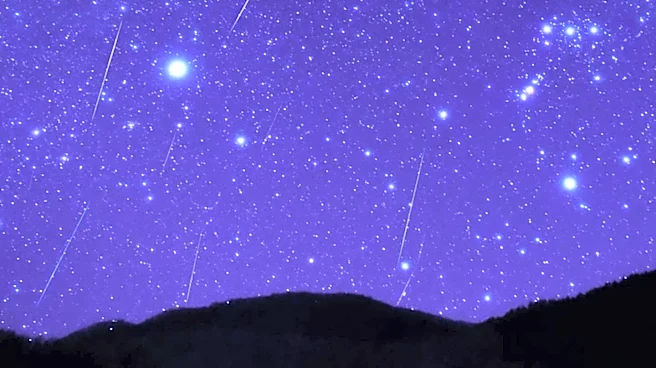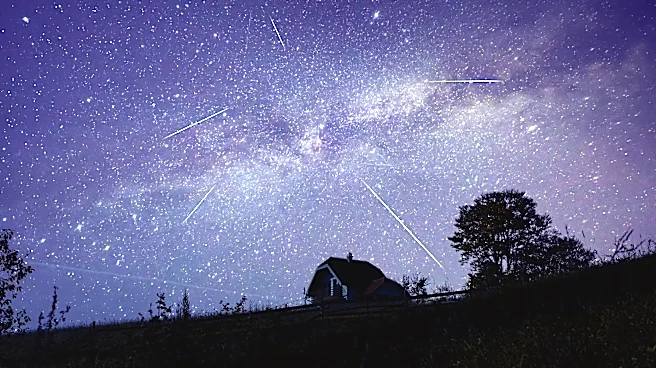





Skywatchers, get ready for a celestial show as the Leonid meteor shower nears its peak. Under dark, clear skies, viewers could see up to 10 to 15 meteors per hour, according to EarthSky.
The Leonids meteor shower has been active all month. It will be at its strongest on the evening of Nov. 17-18. The annual event takes place when the Earth travels throughComet 55P/Tempel-Tuttle's debris field. Every year, the Earth travels through the debris track and the fragments strike the Earth's atmosphere.
While brighter meteors should remain visible, moonlight from a first-quarter moon may wash out some of the fainter streaks this year, potentially reducing the number visible to observers, according to the American Meteor Society.
Where to see the Leonid meteor shower at is best
Look up late on Nov. 17
and through sunrise on Nov. 18 for the best chance to catch the Leonids, according to EarthSky. While meteors may streak across any part of the sky, they'll appear to originate from the constellation Leo the Lion in the eastern sky, which is how the shower got its name.
Unable to view our graphics? Click here.
How many Leonids can you see? Light pollution may impact your view
Light pollution can significantly reduce the number of meteors visible, even during a shower's peak. Observers under dark rural skies may see far more meteors than those in suburban or urban areas, where artificial light often obscures fainter streaks.
Sky darkness is measured using the nine-level Bortle Scale, with 1 indicating the darkest skies and 9 the highest level of light pollution. In general, the darker the sky, the better the meteor viewing.
How to get the best views of the Leonid meteor shower
The ideal moment to see the Leonids is around midnight local time. Lay flat on your back, if possible, orient yourself facing east and look up, taking in as much of the sky as you can.
- No lights: Find a spot away from city lights. Your eyes will need to adjust to the darkness, which could take 15 to 20 minutes.
- Dress for the weather: Bring blankets or a camping chair to make the viewing comfortable.
- Locate the radiant: The higher the radiant is in the sky, the more meteors you are likely to see. Watching meteor showers can take time, so be patient – it's worth the wait.
SOURCE: EarthSky.org, American Meteor Society and NASA
This article originally appeared on USA TODAY: The Leonid meteor shower is coming. Here's where to get the best views