




Perhaps George Orwell was 42 years too early. Big Brother’s eyes are upon you – and they know where you’ve been and what you’ve been doing.
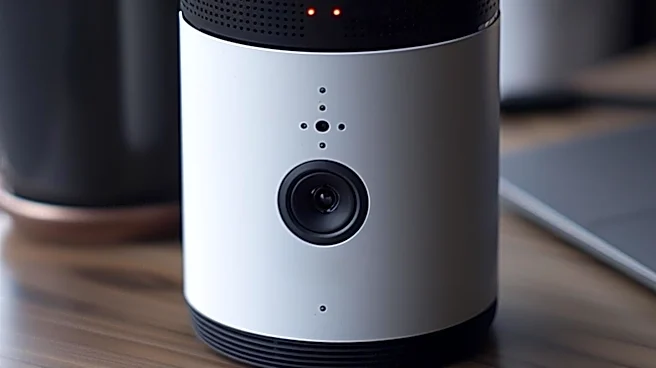
Thousands of cities in 49 states now use Flock cameras to record the color, make, model and license plate number of every vehicle that passes by their all-seeing eyes.
Unlike old-fashioned surveillance cameras, information gleaned from images captured by Flock cameras – including time, date and place – is stored as searchable text in databases. Law enforcement agencies can then mine the data without a warrant.
The American Civil Liberties Union says the cameras can even record the bumper stickers slapped on the back of your car. Think about the First Amendment implications of that uninvited interaction with
government snoops.
Frustration over Flock cameras is growing as the debate rages on
Invasion of privacy concerns have ostensibly motivated vandals across the country to sabotage the cameras. And while I don’t condone breaking the law, I do understand the opposition to unwelcome government surveillance.
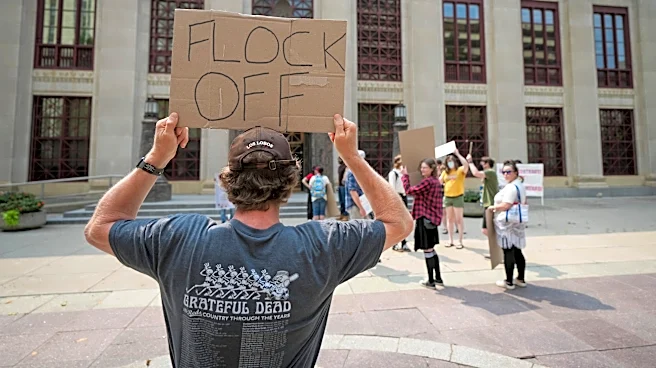
Frustration with the cameras is so strong that a group calling itself DeFlock has planned a national week of action from Aug. 16 to Aug. 22 to demand that police stop using automated license plate readers.
Proponents of the cameras say they help police capture dangerous fugitives, stop car thefts and reduce other crimes.
But there is a necessary tension between public safety and our constitutional rights, including the right to privacy. We restrict law enforcement agencies’ power for good reason.
While much of the attention has focused on law enforcement agencies’ use of the cameras, Flock says it has more than 5,000 customers in the private sector, where use of the data and images is even less transparent.
So I’m glad we’re having the debate now, before the use of advanced surveillance cameras coupled with artificial intelligence makes us all feel like Winston Smith.
Local communities push back on Flock amid reports of police misuse

News stories have cropped up across the country about misuse of the cameras. In 2025, police in Lenexa, Kansas, were accused of using the city’s license plate readers to track the movements of a man who wrote a guest column for the Kansas City Star criticizing the police department.
In Millcreek, Utah, city leaders recently removed a Flock camera that they say was installed by an unidentified party on municipal property without authorization.
“Who’s accessing the footage of the cameras?” Sarah Whitley, whose daughter plays nearby, told CBS News affiliate KUTV. “I don’t think we have a clear idea of who that is.”
The Institute for Justice recently reported on 39 cases across the country where police have been accused of using license plate readers to track spouses, ex-romantic partners and others who caught their attention.
In February, police in Sherwood, Arkansas pulled over a couple after a Flock camera erroneously identified their vehicle as stolen. The couple was held at gunpoint, with their infant in the vehicle, before officers realized their error.
Flock Safety's platform, privacy changes aren't enough
In fairness, these examples are only a small sample given the massive use of Flock cameras and other automated license plate readers across the country. But they do show that the technology can trigger serious abuses of power and dangerous mistakes.
And all of this has happened without the public having a say on the use of the technology or, in many cases, even being made aware that the cameras are in use.
Public backlash is now growing, with more than 20 communities cutting ties with Flock in July alone.
Yet, with more than 7,000 police agencies contracting with the company and more than 80,000 cameras in use, there’s a lot of prying eyes still watching your movements.
In response to public pressure, Flock Safety said Aug. 13 that it will reduce the time that vehicle information is stored in databases from 30 days to seven days. It also will deploy technology to identify and lock out users whose data searches are considered to be “abnormal.”
Those changes are welcome, but Big Brother is still watching, and he knows (or at least thinks he knows) if you’ve been naughty or nice.
In theory, and perhaps in time, our government could watch and record every move we make, every breath we take outside our homes in the name of public safety.
But then will a free people be truly free?
Tim Swarens is a former deputy opinion editor for USA TODAY and former opinion editor of The Indianapolis Star.
This article originally appeared on USA TODAY: Flock camera pushback is growing. It may be too late. | Opinion