

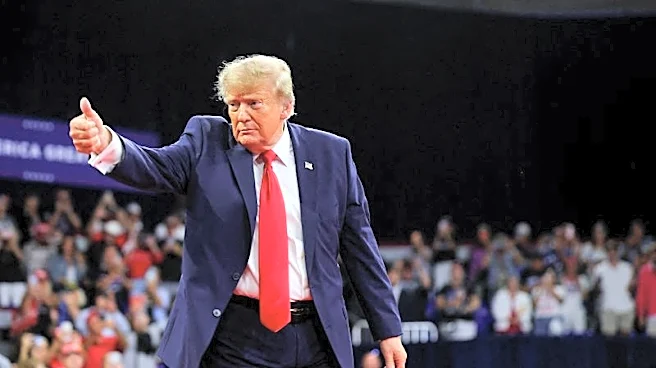

With a week to go until a fiercely contested Election Day, Republicans and Democrats are making the same closing argument to voters: These midterms are all about President Donald Trump.
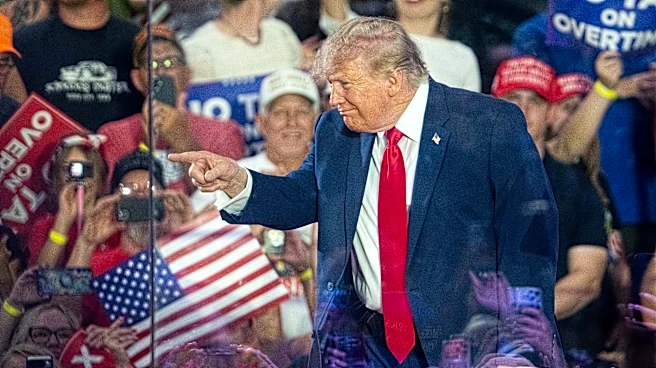
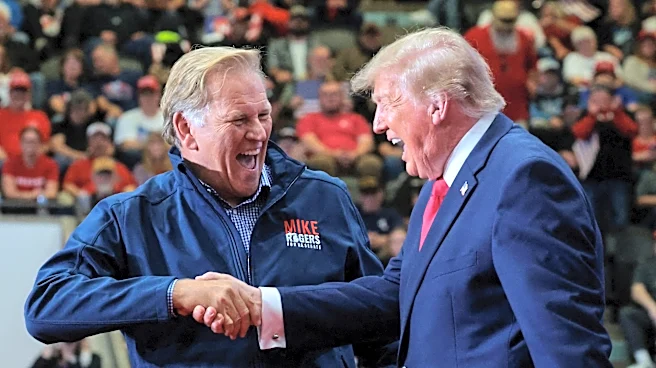
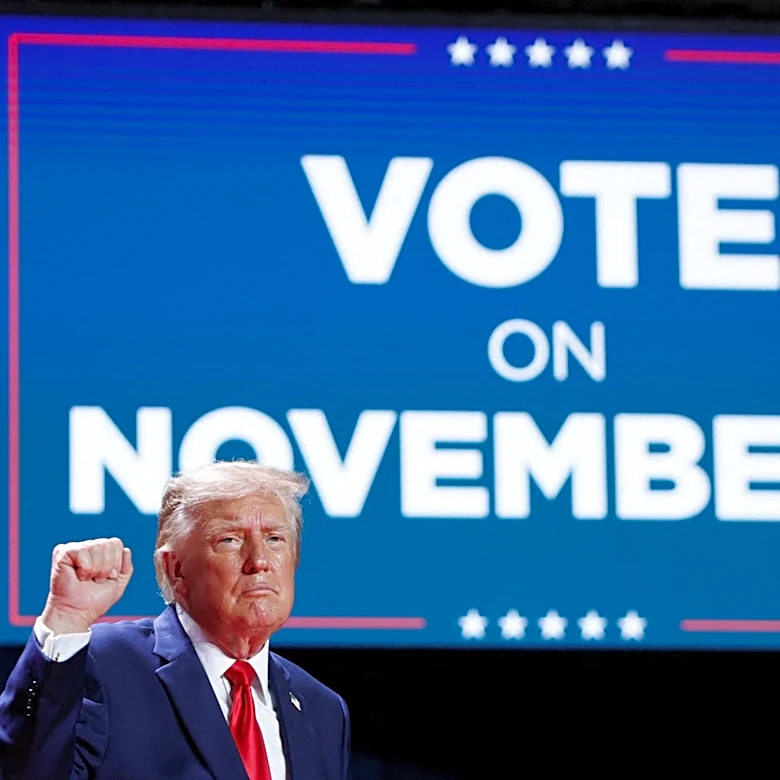
"So I'm asking you to pretend that I'm on the ballot," Trump urged an enthusiastic crowd at an Oct. 25 rally in Port Huron, Michigan. He was just five minutes into a speech that would stretch for nearly an hour and a half. "When I'm not on the ballot, people don't show up."
"Please show up and vote," he added, warning that otherwise the opposition would "take everything away" that he has done in office.
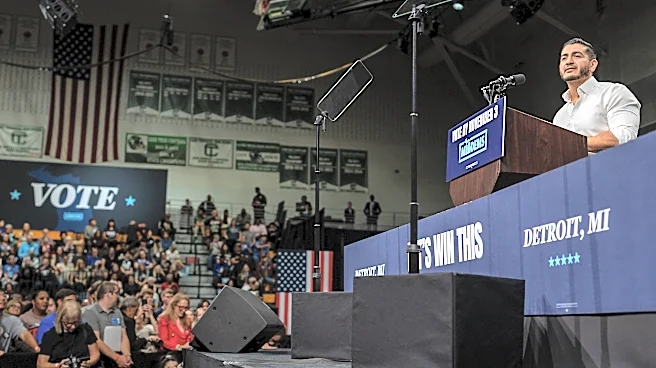
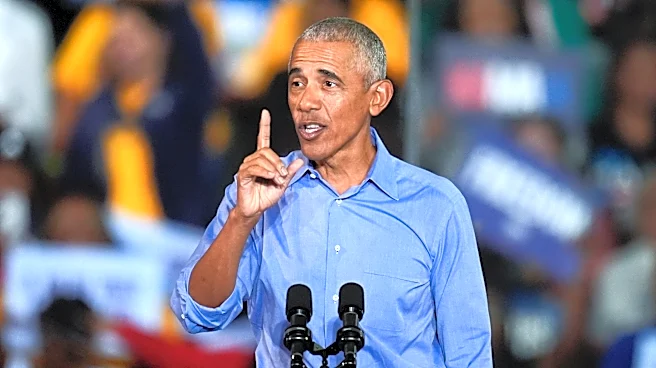
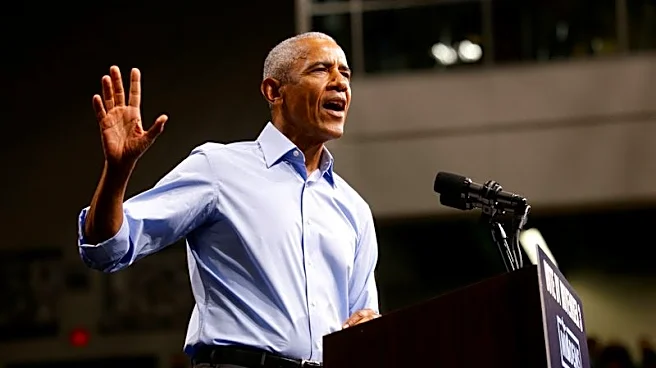
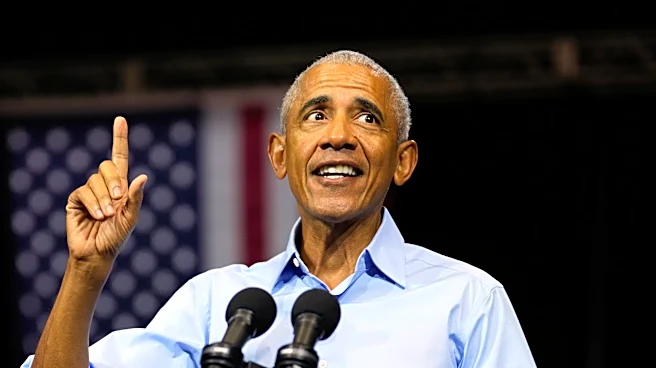
A day earlier and 60 miles away in Detroit, former President Barack Obama characterized the stakes of the election − that is, Trump's legacy − in a similar way.
"After 10 years of chaos and cruelty and corruption and incompetence, tomfoolery, nonsense the likes of which this country has not seen in modern times, at least − you get to say, 'Enough is enough,'" he declared in remarks punctuated with shouts of "Yeah!" from the audience. "We’re voting for change right here in Michigan."
The dueling Wolverine State rallies by the most senior figures of the two major parties underscored how much the 2026 midterms stand as a referendum on whether to continue or reverse the course Trump has set for the country over the past two years.
That's often the case with midterms, especially when a president's popularity has collapsed. What's rare this time is that Trump is encouraging voters to see it that way.
Biden in 2022: 'This is not a referendum'
"This is not a referendum," then-President Joe Biden had insisted when he cast his early ballot in Delaware in the 2022 midterms, arguing that his sagging approval rating, then about 40%, shouldn't be held against Democratic candidates.
Democrats lost control of the House and Senate seats that year anyway.
In the 2014 midterms, when Obama's approval rating had sunk to the low 40s, he told vulnerable Democratic candidates they should feel free to keep their distance from him. "You know what, you do what you need to do to win," he said. They did: Only one Senate candidate, Gary Peters of Michigan, campaigned with Obama that year.
Democrats lost control of the Senate and House seats anyway.
At the time, Obama acknowledged that, like it or not, the durability of a president's actions was often at stake in the midterms. An electoral rebuke could embolden critics to target whatever he had achieved.
"I am not on the ballot this fall," Obama said a month before the 2014 midterms in a speech about his economic record. "Michelle's pretty happy about that. But make no mistake: These policies are on the ballot. Every single one of them."

On that, he and Trump agree − though unlike Obama, Trump issued no dispensation to his GOP critics to break with him.
"We'll have a Merry Christmas if you get out and vote," Trump declared, taking credit for restoring the holiday greeting during his first term. (In his first midterm, in 2018, Republicans lost control of the House but gained seats in the Senate.) "All you have to do is get out and vote because we have the numbers."
He credited his political impact as historic, saying that he had appeared at 26 rallies in about 12 days.
"There's never been anything like this in the history of politics anywhere," he said. "Make America Great Again. It's very simple. Very early, very simple. Make America, there's never been anything like it. There's never been rallies like this."
At the Port Huron rally, Trump mentioned his own name five times. That was four times more than Obama said "Trump" in his Detroit speech. Instead, he referred to Trump as "the current occupant of the White House" or simply as "he," his meaning clear from context.
Trump appears in ads, but now mostly Democratic ones
During the GOP primaries earlier this year, more than 7 in 10 ads for Republican House and Senate candidates mentioned Trump, according to AdImpact, which monitors political advertising.
But in the general election this fall, Democratic candidates have been more likely than Republican ones to invoke Trump's name in ads, and by an overwhelming ratio of 11 to 1.
In other words, Trump this year has been an ambidextrous turnout operation, the biggest motivator for both his supporters and his opponents.

Democrats are happy to embrace that, but it does mean the victories they score in the midterms may be based more on a message against the Republican president, not in favor of the Democratic Party. That could complicate the task of claiming a mandate to act if they win — or finding consensus ahead of the 2028 presidential election.
In Gallup's latest Governance Poll, taken in September, most Americans had an unfavorable view of the Democratic Party — just 43% had a favorable one.
On the other hand, the Republican Party, at 35% favorable, was even lower.
This article originally appeared on USA TODAY: Trump and Obama agree on this. The midterms are all about Trump