


Sports gambling and marijuana were both legalized on the promise that vice is safer as a regulated industry than as a black market. Turns out we didn't have to choose. We got both. Legalization hasn't squashed the black market for either vice, and it has exposed far more Americans to the harm.
"Legalization would protect the integrity of sports by converting activity that currently occurs in the black market into a legitimate, well-regulated leisure activity," Guy Bentley, the Reason Foundation's director of consumer freedom, wrote in 2018.
That same year, the Supreme Court struck down the federal ban on sports betting, and 39 states have since legalized it. But the legal industry hasn't delivered the reduction in harm its backers promised. Instead
of shrinking the harm, it has spread it.
Nor has it killed the black market. Bettors pay income tax on their winnings, and some states take up to 51% of sportsbooks' gambling revenue. Illegal bookies dodge both, which keeps them in business. The American Gaming Association, an industry group, reported in 2025 that the illegal market had grown 22% over three years and still accounted for roughly a third of U.S. gambling.
Legalization has also spread gambling culture to states where online betting is still illegal. Their residents drive across the border to place legal bets, turn to illegal bookies or wager by another name on "prediction markets" – anything to get in on the action.
On sports betting and legal weed, young men are paying the price

The toll has been devastating.
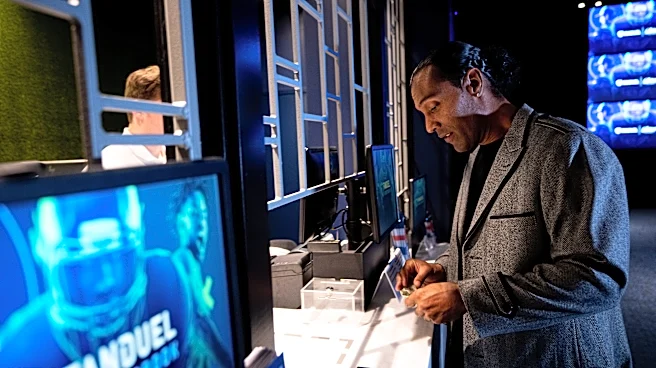
More than half of men ages 18 to 49 have an account with a major sportsbook. Among online sports bettors, 68% have reportedly engaged in at least one "problem behavior," such as borrowing money to gamble or letting gambling wreck their finances, and more than half have engaged in two or more.
The Federal Reserve has linked legal sports betting to falling credit scores, and in states that allow it, the rate of gambling disorder has climbed from 3.0 per 100,000 to 4.8.
The case for legal marijuana was broader, resting on criminal justice and personal liberty as much as anything. But it came with the same promise: A regulated market would be safer for consumers than an illegal one.
"With pot out of the black market, states can have a serious discussion about use and abuse," New York Times columnist Timothy Egan wrote in November 2012, as Washington and Colorado became the first states to legalize recreational marijuana.
But pot never left the black market.

The sharp libertarians at the Reason Foundation understand why. Taxes and regulations that push legal prices above black market prices "may both prolong the presence of black market suppliers and reduce government tax receipts as consumers flee to illegal marijuana markets," wrote Reason research director Geoffrey Lawrence in 2020.
Even at those prices, legalization has grown the market. In 2013, about the time the first states legalized recreational pot, just 7% of Americans smoked marijuana. Today, 17% do.
Make legal weed cheaper, as Reason suggested, and that percentage only climbs. Meanwhile, hospitalizations for marijuana-related conditions rose 16% between 2025 and 2026, and teen use has been linked to depression, anxiety, bipolar disorder and schizophrenia.
The legal market hasn't come close to killing the illegal trade. If anything, it has opened new doors for traffickers. Illegal sellers undercut legal shops on taxes and skip the regulations that weigh them down. And for some buyers, legal weed turns out to be the real gateway drug – a first taste that sends them looking for a cheaper fix from illegal dealers.
In California, illegal sales still outnumber legal ones, and buyers often can't tell whether what they're getting came through regulated channels or a bootleg operation.
Bans come with costs, but prohibition limits the damage
Bans have their costs, of course, including black markets and predatory bookies. Legalization was supposed to fix those problems, and it hasn't, because they were never really about the law.
They come with the vice.
Legal pot and sports betting haven't ended the black market, but they have made vice respectable and spread its harm, especially among the young.
What do we get in return? Freedom, supporters say. But an addict isn't any freer for getting to pick his poison, and the government has every reason to rein in industries this harmful.
Legalization advocates and I agree on one thing: These are questions for the states. Most states have gone too far, and now that they're hooked on the tax revenue, putting the genie back in the bottle won't be easy. But states that voted themselves into depravity can vote their way back out.
Legal sports betting and recreational marijuana have failed. Public opinion on both has started to sour. Here's hoping the states take the hint.
Dace Potas, a law student, is an opinion columnist for USA TODAY. Follow him on X: @DacePotas
This article originally appeared on USA TODAY: The case for legal weed and sports betting has fallen apart | Opinion
Advertiser disclosure: USA TODAY may earn a commission when you sign up through links on this page. Commissions never influence our editorial coverage or rankings. Offers and odds were accurate at publication and are subject to change; terms apply — see the operator’s site. This is general information, not betting, legal or financial advice. To the fullest extent permitted by law, USA TODAY is not liable for losses arising from your use of it.
Must be 21+ (18+ where permitted). Sports betting and casino gaming are not legal everywhere; complying with the laws where you are located is your responsibility. Gamble only with funds you can afford to lose. Gambling problem? Help is available 24/7 — call or text 1-800-GAMBLER, or call the National Problem Gambling Helpline at 1-800-MY-RESET. State helplines and responsible gaming resources.